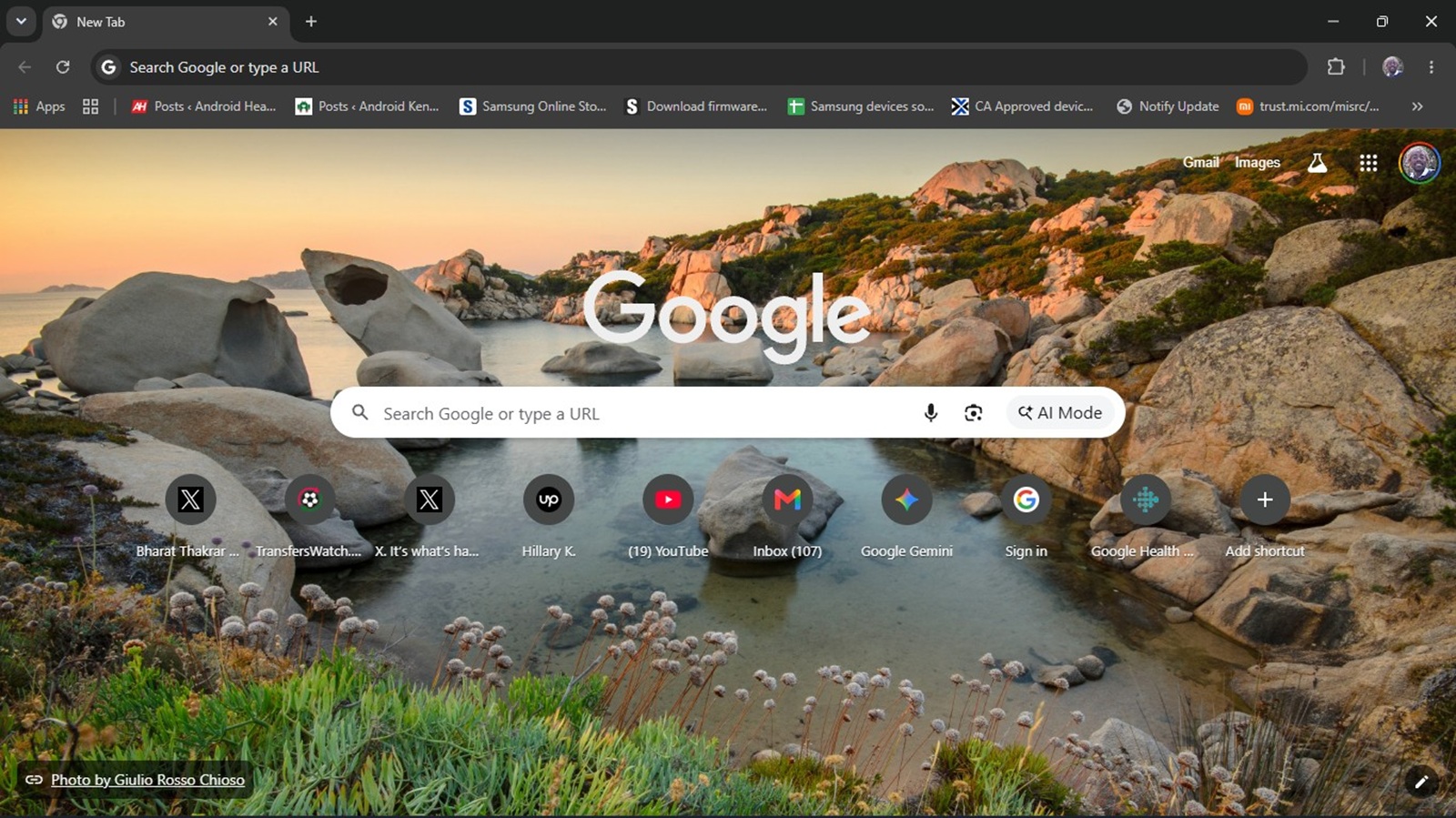
For most Chrome beta users, June has been about the Manifest V2 flag for uBlock Origin and other ad blockers. But for Chromebook users, it’s about finally getting on the same train.
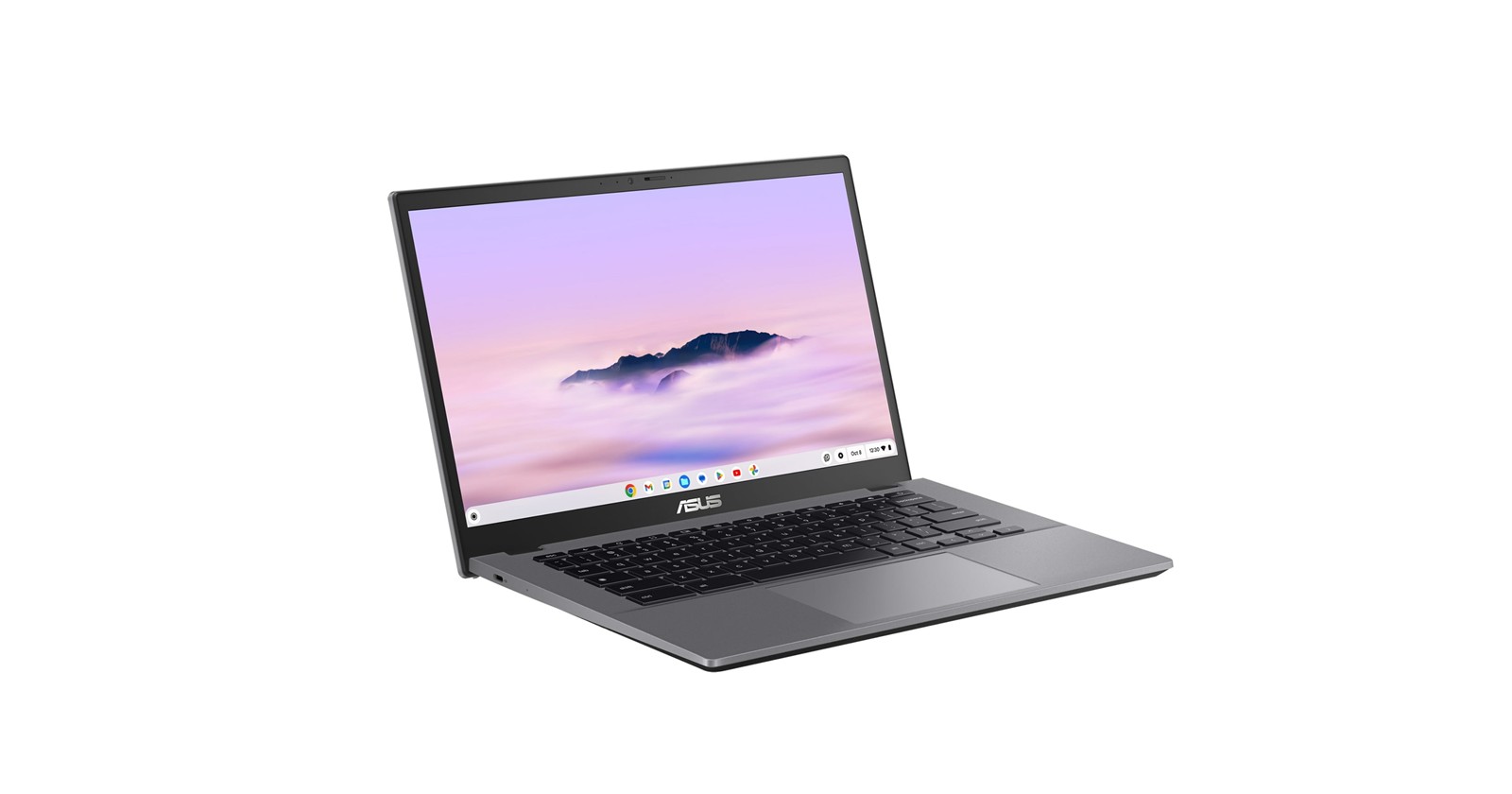
Google has officially pushed the first Chrome 150 beta release to ChromeOS, bringing Chromebooks onto the same major version already being tested across Android, iOS, Windows, Mac, and Linux. The move marks an important milestone in the Chrome 150 rollout, even if Google isn’t talking much about what’s actually changing.
The timing is what makes this release interesting.
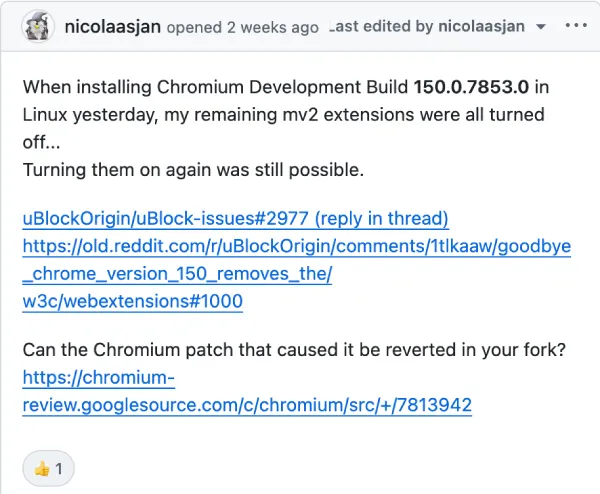
Chrome 150 beta first became available earlier this month on desktop and mobile platforms. Since then, Google has continued refining the release through multiple beta updates. Android users are now on Chrome Beta version 150.0.7871.28, iPhone users have reached version 150.0.7871.35, and desktop users on Windows, Mac, and Linux are receiving version 150.0.7871.24.
In other words, while most Chrome beta testers are already receiving their third Chrome 150 beta refresh, Chromebook owners are only now making the jump from Chrome 149.
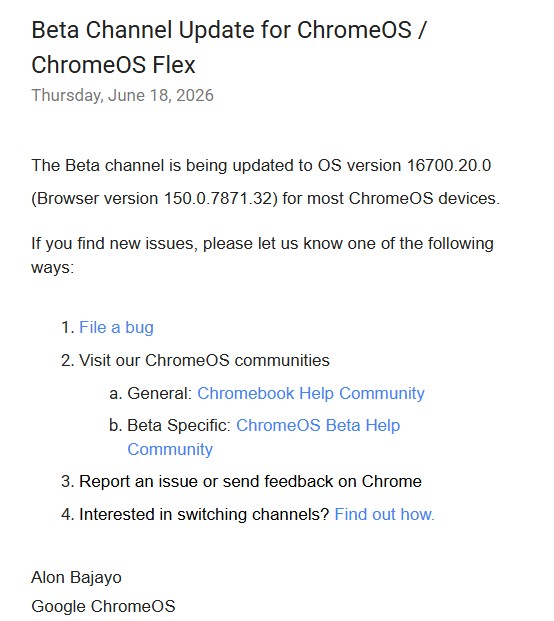
The new Chrome beta update increases the browser version from 149.0.7827.136 to 150.0.7871.32. It also bumps the underlying ChromeOS build from version 16667.40.0 to 16700.20.0.
Curiously, Google isn’t highlighting any new features, fixes, or user-facing improvements in its release announcement. The company simply notes that the Beta Channel has been updated and encourages users to report bugs through the usual feedback channels.
That doesn’t mean nothing has changed.
Looking at the corresponding Chromium development logs across Android, iOS, and desktop reveals thousands of code changes accumulated between the early Chrome 150 beta releases and the latest builds. As is often the case with Chrome beta updates, much of the work happens behind the scenes. Performance tuning, security hardening, compatibility fixes, stability improvements, and platform-specific bug fixes typically make up the bulk of these changes long before they appear in polished release notes.
For Chromebook users, the lack of a flashy feature list may actually be a good sign. It suggests Google is focusing on stabilizing the Chrome 150 branch before it eventually graduates to the Stable Channel in the coming weeks.
For now, ChromeOS users joining the beta channel shouldn’t expect major visible changes the moment the update installs. Instead, they’re getting access to the same evolving Chrome 150 codebase that desktop and mobile beta testers have been helping Google refine throughout the month.
And if history is any guide, the most noticeable improvements may be the ones users never see at all: fewer crashes, better performance, and a smoother browsing experience when Chrome 150 eventually reaches stable release.


Hillary Keverenge
2723 Posts
Tech has been my playground for over a decade. While the Android journey began early, it truly took flight with the revolutionary Lollipop update. Since then, it's been a parade of Android devices (with a sprinkle of iOS), culminating in a mostly happy marriage with Google's smart home ecosystem. Expect insightful articles and explorations of the ever-evolving world of Android and Google products coupled with occasional rants on the Nest smart home ecosystem.
Next article View Article