
Brave just pushed its highly requested Containers feature into the beta channel for desktop users. That means the stable release is right around the corner. The company confirmed the beta transition on X while replying to a user asking about the timeline.
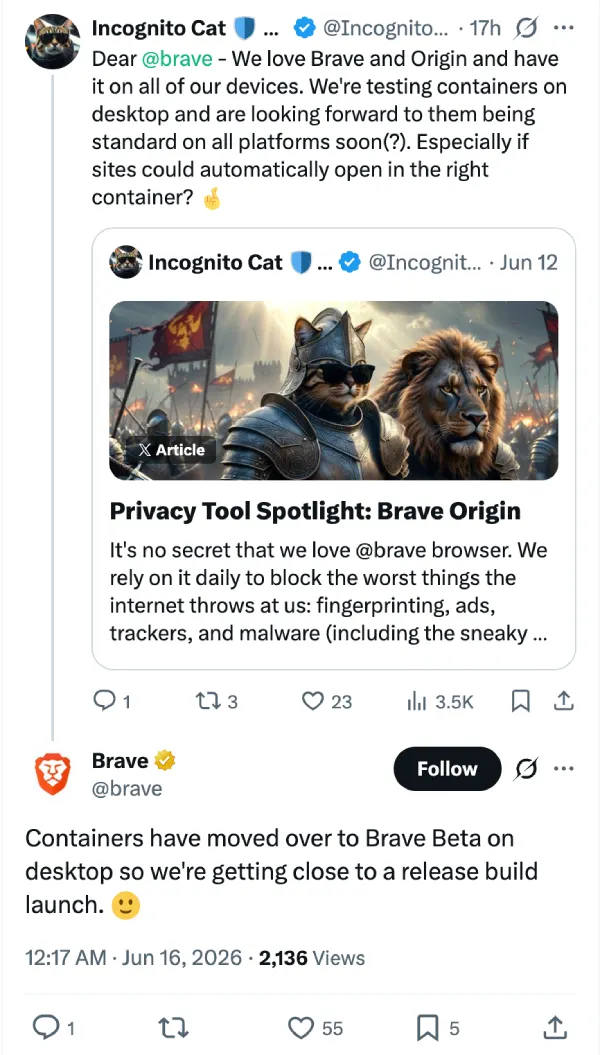
Privacy advocates have begged for native container support for years. Containers isolate your browsing data into separate environments. You can log into a work Google account in one tab and a personal Google account in another without them talking to each other. They also prevent aggressive tracking scripts from following your activity across different websites.
The company is pushing hard on privacy features lately. They recently rolled out Brave Origin to the stable channel to give users a completely stripped-down, bloat-free desktop experience. Adding native containers to the main browser feels like a natural next step for that same privacy-focused audience.
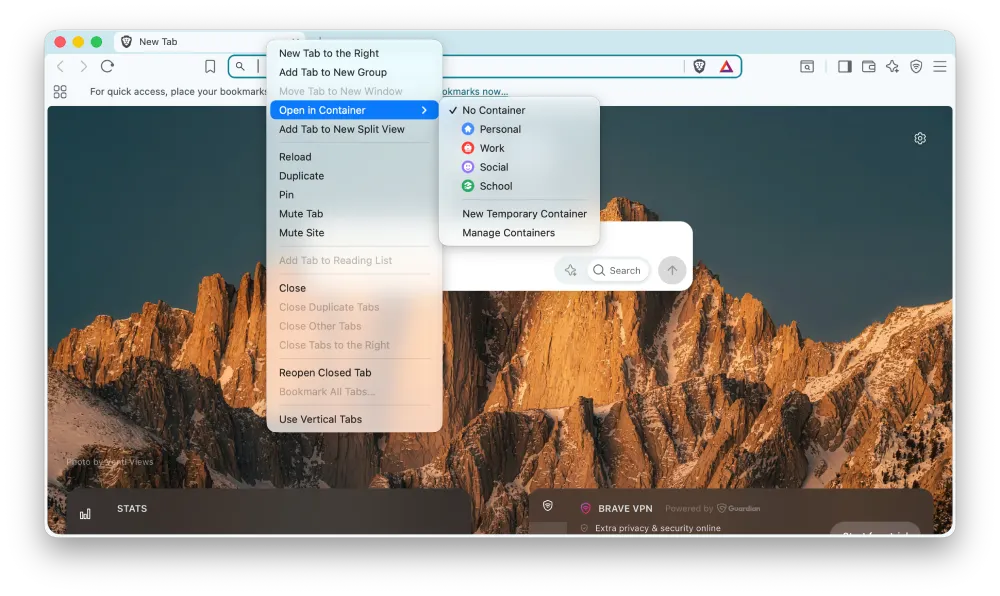
That said, while the Brave team has not laid out exactly when the stable release will happen, folks in the comments are also throwing in their own feature requests. A popular idea right now is the ability to automatically route specific websites to designated containers. Someone clicking a Facebook link would automatically open that tab in an isolated social media container. That sounds like something I could get behind too.
Still, you can download the Brave Beta to test the current implementation today. You should expect a few minor bugs since it isn’t the final code.
But that’s not all the team is working on. They are also pushing a major upgrade for its built-in crypto tools. Sooraj manages the Wallet and Nightly programs at Brave, and he just announced they’re assembling a small focus group of hardcore Zcash users.
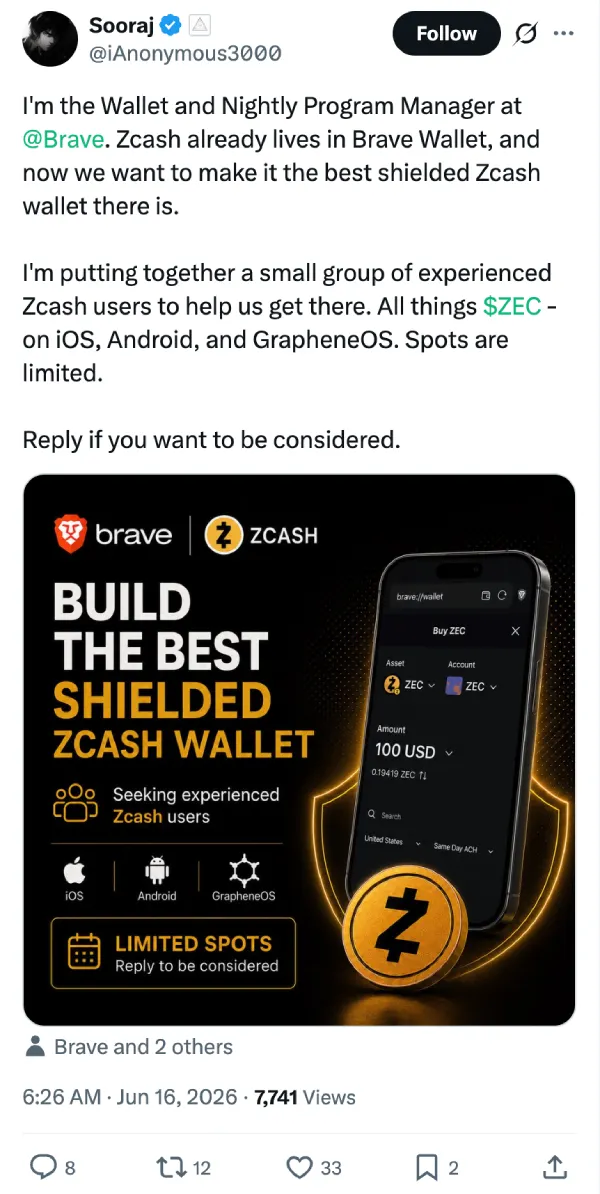
Zcash already functions inside the native Brave Wallet. The development team now wants to transform it into the absolute best shielded Zcash wallet available, so they decided they need real users to guide that complex engineering process.
Shielded Zcash transactions completely hide the sender, receiver, and amount. They’re famously hard to run on phones because the math requires massive processing power. Most mobile wallets just default to regular public transfers to save memory.
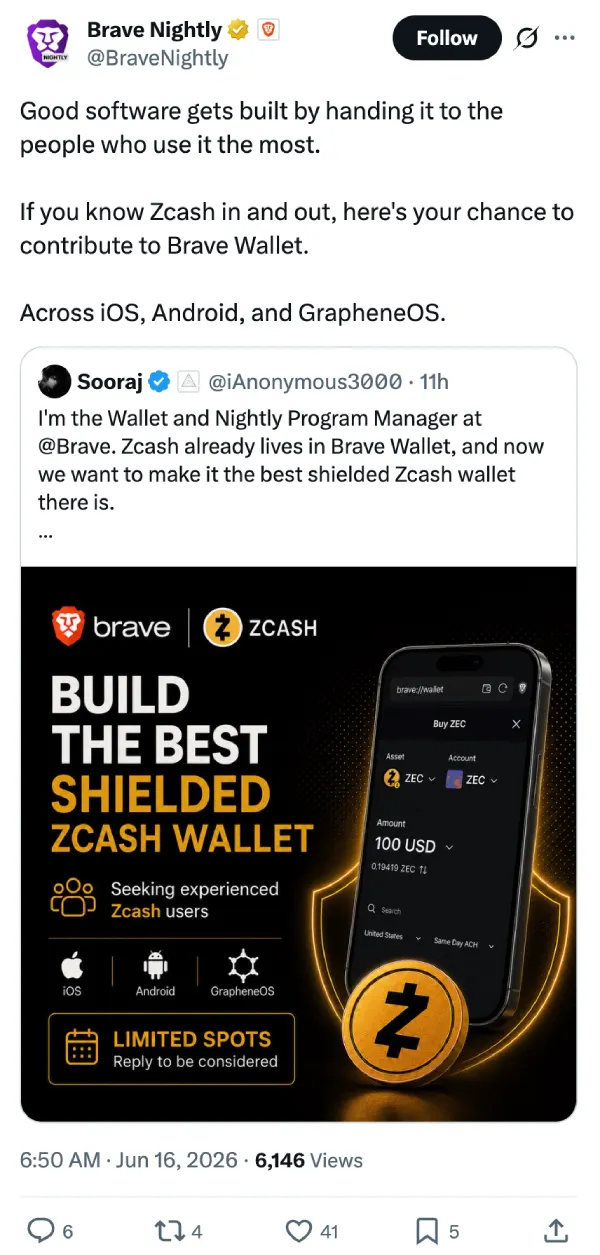
Brave wants to fix this exact problem. The Brave Nightly account shared the open call and noted that good software needs input from real users. A private mobile wallet fits perfectly with people who already run secure operating systems like GrapheneOS.
This major push lines up perfectly with the company’s recent focus on the coin. Brave recently started exploring the addition of dynamic fees for Zcash transactions directly inside the native wallet to bypass stuck transfers.
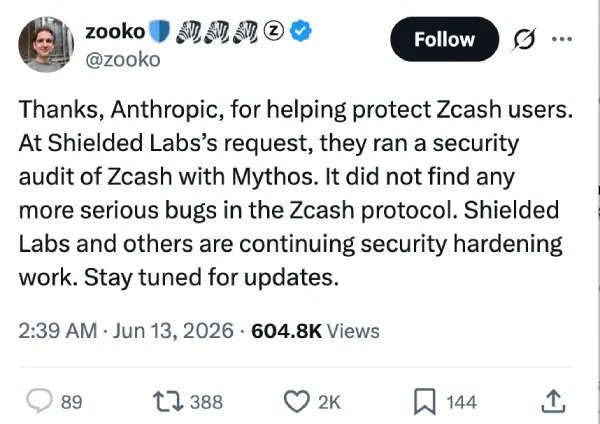
This new project arrives at a great time for Zcash overall. The coin just saw a 25 percent price spike, and Anthropic recently used the infamous Mythos model to audit the Zcash code and found no major bugs, according to the Head of Product.
So this could be a big win for Zcash fans out there.


Dwayne Cubbins
3055 Posts
I cover fast-moving stories across apps, online platforms, and everyday tech — phones, wearables, consoles, and whatever else people are fighting with this week. Bugs, rollouts, scams, policy enforcement, and the occasional internet-culture rabbit hole are all fair game. My goal is simple — make confusing tech news readable. When I'm not working, I'm working out or chilling with my dog. Got a tip? You can find me on X @dcubbins.
Next article View Article