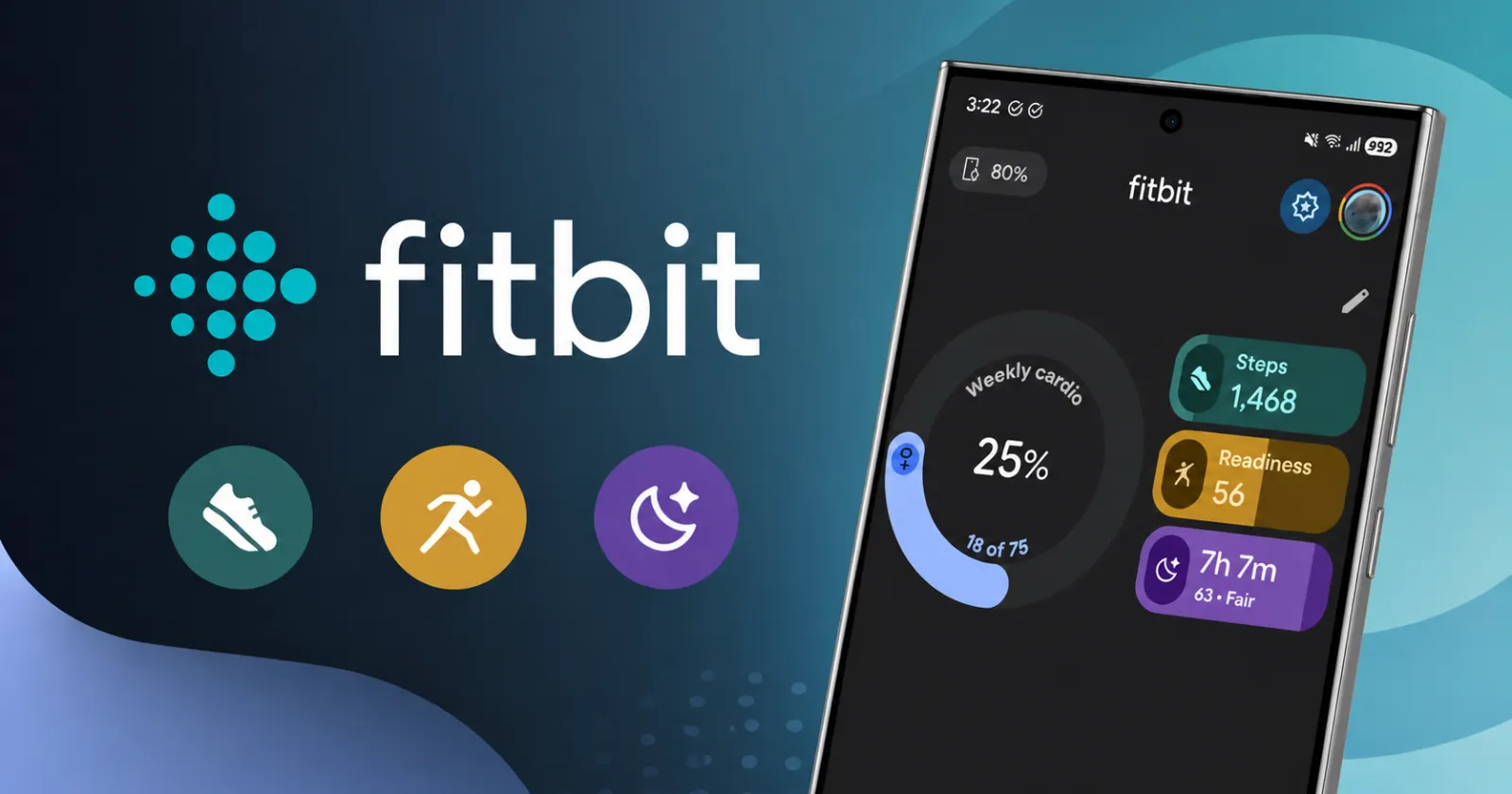
Google’s redesigned Google Health app is bringing a major shake-up to the Fitbit experience — and not all of the changes are going down well with longtime users.
While Google has heavily marketed the new app around Gemini-powered coaching, redesigned tabs, and deeper integrations, the company has also quietly confirmed that several classic Fitbit features are being removed entirely, downgraded, or significantly changed during the transition from the Fitbit app to Google Health.
And for many users, this growing list helps explain the Google Health app backlash and comparisons to the Sonos app fiasco.
According to Google’s official support page, the transition affects health tracking, social features, fitness tools, sleep insights, and even Premium perks.
Health and wellness features disappearing or changing
Some of the biggest removals affect Fitbit’s long-standing health tracking features.
Google confirms that minute-by-minute skin temperature data is going away. In the redesigned app, users will only see daily and weekly trends instead of detailed, granular readings.
Estimated Oxygen Variation (EOV) is also being removed entirely. Users will still be able to view overnight SpO2 data in the Health tab, but EOV tracking itself is no longer supported.
Blood glucose tracking is also losing functionality. Users will no longer be able to add symptoms or configure reminders to check glucose levels.
Food Plans are another casualty. Fitbit’s older calorie-target system through Food Plans is being retired, although users can still manually configure calorie and macronutrient goals inside the Nutrition section.
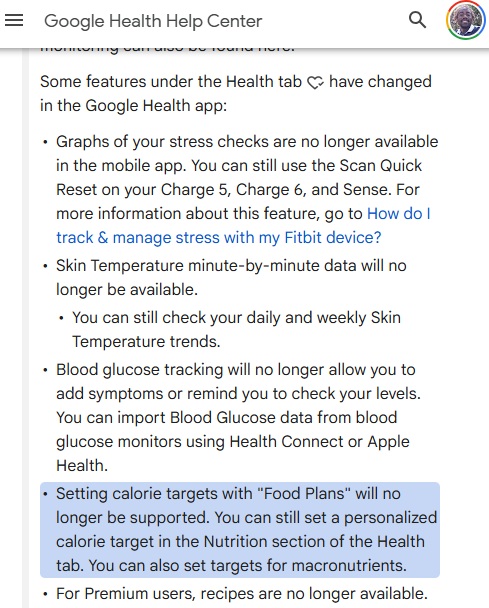
Premium users are also losing access to Recipes, a feature that previously offered guided meal content inside Fitbit Premium. Meanwhile, Fitbit Sense and Versa 3 users are losing Snore Detection support altogether.
Google is also changing several familiar health feature names:
- Health Metrics becomes “Vitals”
- Menstrual Health becomes “Cycle Health”
- Stress Score becomes “Resilience”
Instead of numerical stress scores, users will now see labels like “Optimal,” “Balanced,” or “Low.”
Sleep Profile and Fitbit sleep animals are going away
One of Fitbit Premium’s most recognizable features is also disappearing.
Google confirms that Sleep Profile will no longer be available in the redesigned Google Health app, meaning users will stop receiving the monthly sleep animals that became surprisingly popular among Fitbit users.
Instead, Google says Premium subscribers can ask the Gemini-powered Google Health Coach questions about their sleep habits and receive AI-generated responses.
This removal comes at a time when users are already criticizing the app’s new sleep interface and customization limitations, including complaints regarding the inability to properly prioritize sleep tiles in the redesigned layout.
Social and community features are being removed
The social side of Fitbit is also being scaled back dramatically.
Google confirms that Groups and the Community Feed are being removed entirely. Direct messaging between users is also disappearing, along with related notifications.
Usernames and profile photos are changing too. Instead of unique Fitbit usernames and custom profile pictures, profiles will now use Google Account names, emails, and profile images.
Several social privacy controls are also disappearing. Users will no longer be able to manage sharing preferences tied to details like sex, height, weight, location, or friends lists. Kid accounts are also losing the ability to add friends.
Fitbit badges are being deleted
Another major casualty is Fitbit’s badge system.
Google says badges will no longer be supported, historical badges will be deleted, and new badges will stop being generated altogether. Instead, the company says Google Health Coach will “celebrate your progress and accomplishment.”
For longtime Fitbit users who spent years collecting achievement badges, this is likely to be one of the more emotional removals.
Fitness changes: day-by-day plans removed
Google is also retiring Fitbit’s older day-by-day fitness plans for Public Preview users. The company says completed plans can still be downloaded or deleted, but the older structured daily plan system is going away in favor of Gemini-powered adaptive weekly coaching plans.
The redesigned app is also replacing Fitbit’s traditional daily cardio goals with weekly cardio load targets, which Google says offer more flexibility.
VO2 max terminology is replacing “cardio fitness score,” and future calculations will rely more heavily on GPS run data and third-party integrations instead of demographic factors like height and weight.
Third-party support changes
Google also confirms that connections to Lifescan devices will no longer be supported. Meanwhile, several integrations are still incomplete.
As we recently reported on Google Health’s Apple Health syncing limitations, the app currently reads data from Apple Health but does not yet write Fitbit or Google Health data back into Apple’s ecosystem. Google says support for writing data back to Apple Health is coming later in 2026.
Data deletion deadline users should know about
Importantly, Google says data tied to removed features will only remain downloadable until July 15, 2026. After that date, the company says it will begin deleting the associated data from its systems.
That means users who want to preserve historical badges, removed health data, or other discontinued information may want to export their data sooner rather than later.
The redesign keeps gaining features, but also losing Fitbit’s identity
The redesigned Google Health app clearly represents Google’s attempt to turn Fitbit into a broader AI-powered health ecosystem.
But as the company pushes harder toward Gemini coaching, adaptive guidance, and centralized health management, many longtime Fitbit users feel the transition is sacrificing features that made Fitbit unique in the first place.
And judging by the ongoing backlash across Reddit and community forums, many users are still deciding whether the tradeoff is actually worth it.


Hillary Keverenge
2723 Posts
Tech has been my playground for over a decade. While the Android journey began early, it truly took flight with the revolutionary Lollipop update. Since then, it's been a parade of Android devices (with a sprinkle of iOS), culminating in a mostly happy marriage with Google's smart home ecosystem. Expect insightful articles and explorations of the ever-evolving world of Android and Google products coupled with occasional rants on the Nest smart home ecosystem.
Next article View Article