Google has been quietly downloading a roughly 4GB Gemini Nano AI file model to users’ devices without explicit consent, which triggered privacy concerns. Following backlash, the company revised the wording, and it no longer explicitly states that data isn’t sent to Google servers.
The model was stored within the Chrome user profile, and it powered on-device features such as scam detection and some developer APIs. Security researcher Alexander Hanff reported the behavior after observing the file automatically appearing on a clean profile.
The lack of upfront disclosure or a notification prompted significant backlash, and Google later stated to the media that an opt-out toggle is also available in Settings. Disabling the toggle prevents further downloads.
Chrome no longer explicitly states that Chrome would use AI models running on the device “without sending your data to Google servers.” That specific assurance has now been removed, as reported on Reddit in r/chrome.
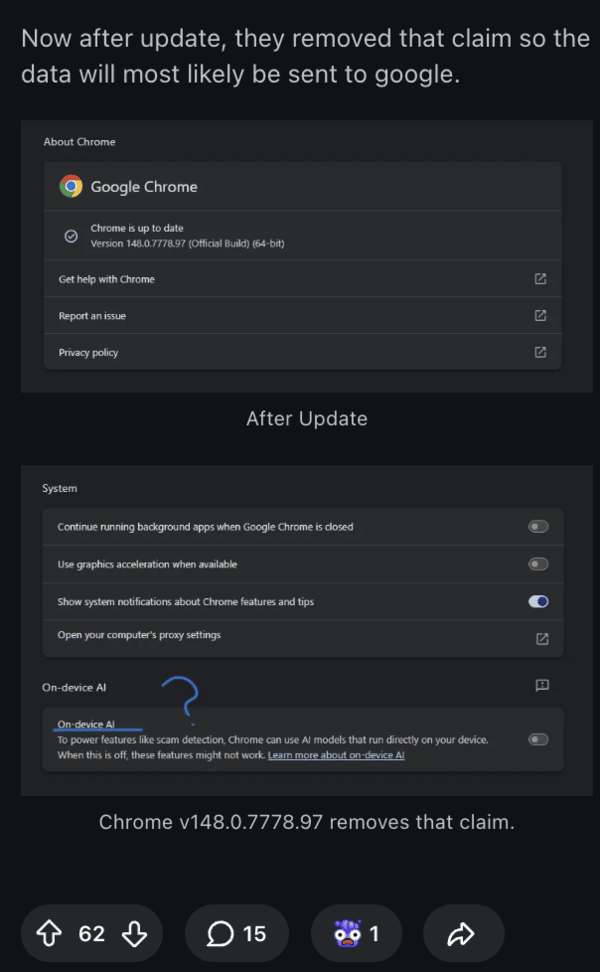
Chrome’s VP Parisa Tabriz addressed some user concerns in an X thread, emphasizing that on-device AI forms a core part of the browser’s experience. She reiterated that Gemini Nano processes data locally. Google claims that the wording adjustment only avoids potential confusion, but doesn’t reflect a shift in the actual data handling processes.
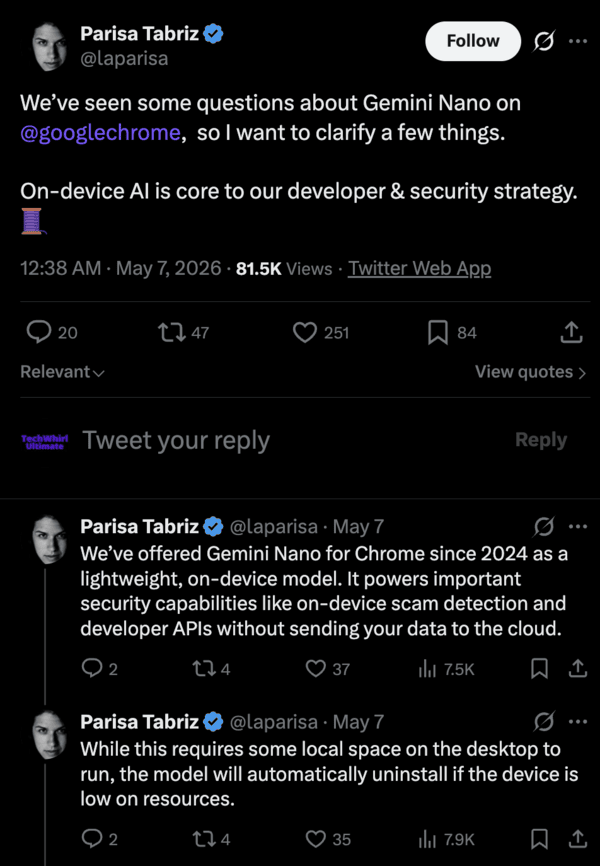
Despite Google’s claims that the data is still processed locally, the removal of “without sending data to Google servers” has fueled skepticism among many users.
Tabriz further elaborated that Gemini Nano has been available since 2024 as a lightweight, on-device model. The model requires local storage space on the desktop, but it’s designed to automatically uninstall if the device runs low on resources.
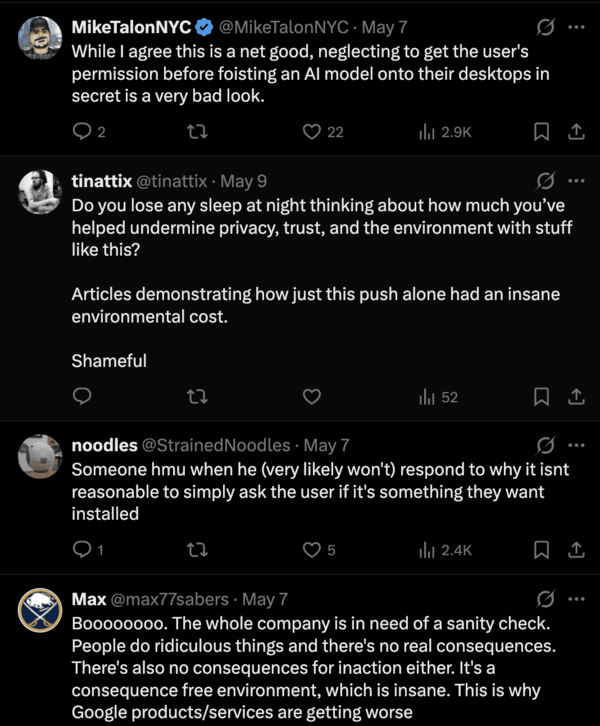
As expected, nobody was satisfied with this explanation. Most of the comments enquire why this was forced on users without asking them in the first place. Trust is really difficult to win back once it’s lost. A lot of people using Chrome work with limited data quotas, and installing a whole 4GB model without at least notifying users definitely isn’t going to be ignored.
It doesn’t look like a great week for Google Chrome. There’s a UX issue where the bookmarks bar persistently stays visible even when users turn off the toggle. You can read about that here.


Sudhanshu K
341 Posts
I have been a consumer technology enthusiast for over 5 years. Thanks to my experience in software beta testing and product reviews, I've understood and learnt a lot about what bugs and issues bother people, and I spend time trying to simplify their solutions. I cover smartphones, software, social media, apps, AI, and most consumer tech gadgets. Actively pursuing a Computer Science bachelor’s degree. I'm mostly active on Twitter/X (@TechWhirlUlt), drop a DM or tag me if you want to share info or connect!
Next article View Article