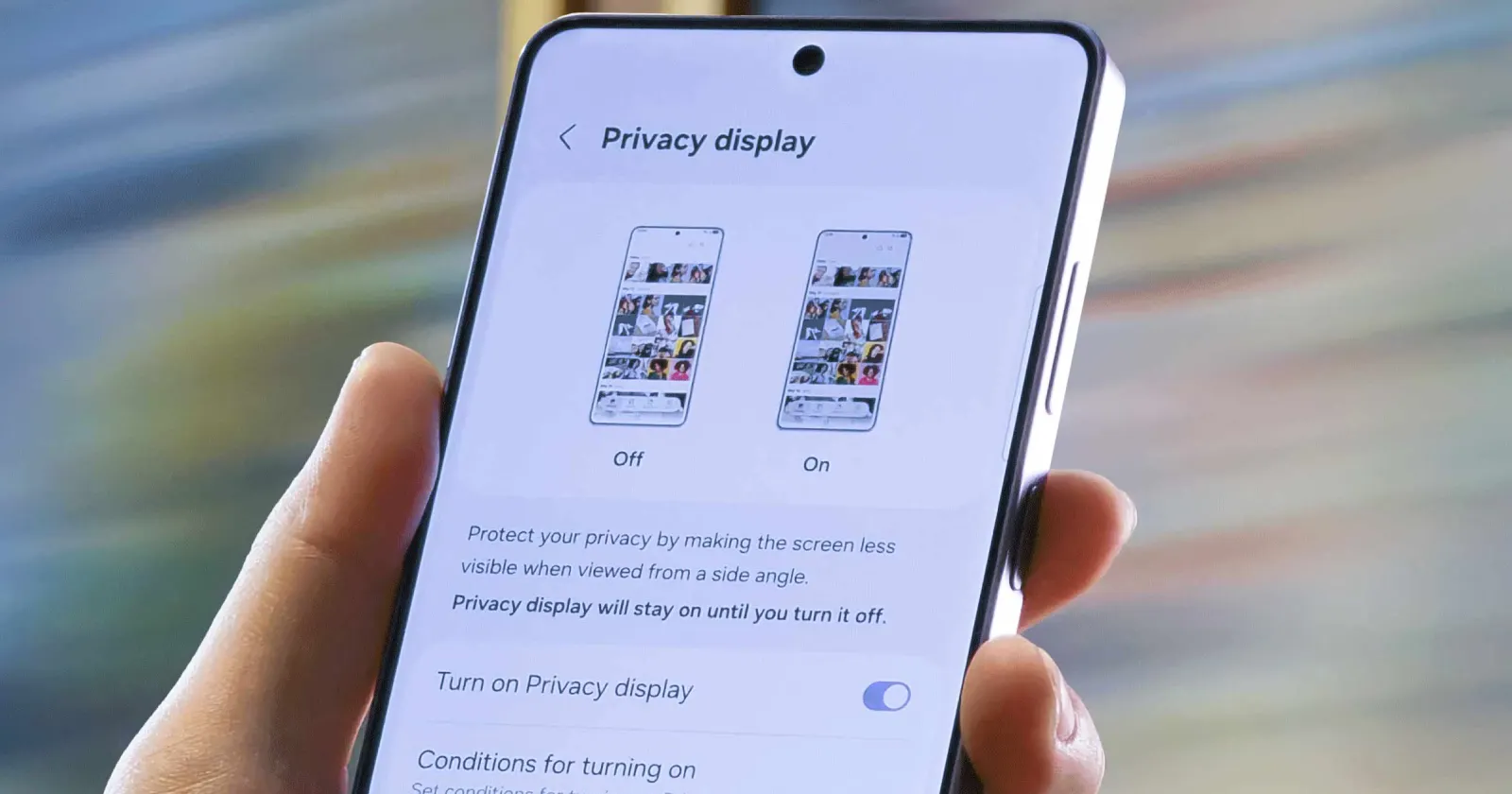
People can’t seem to stop talking about the Galaxy S26 Ultra’s new display, but not in a way that Samsung would have hoped. The company built the flagship device’s entire pitch around its built-in Privacy Display, and there was a lot of hype around it leading up to the launch. Things, however, quickly turned sour once the Galaxy S26 Ultra started making its way to buyers and reviewers.
Instead of attracting praise, we started seeing complaints about the display popping up on various forums, subreddits, X, and even YouTube videos.
The most common complaints center around fuzzy text, a faint grain or sand-like texture across the UI, and a general softness that becomes obvious when reading rather than watching video. Interestingly, a lot of users noted the effect is present even with Privacy Display turned off, which made things a little harder to brush aside as a simple settings issue. Take these images recently shared on Reddit. The OP compared the S26 Ultra’s screen with the S23 Ultra:
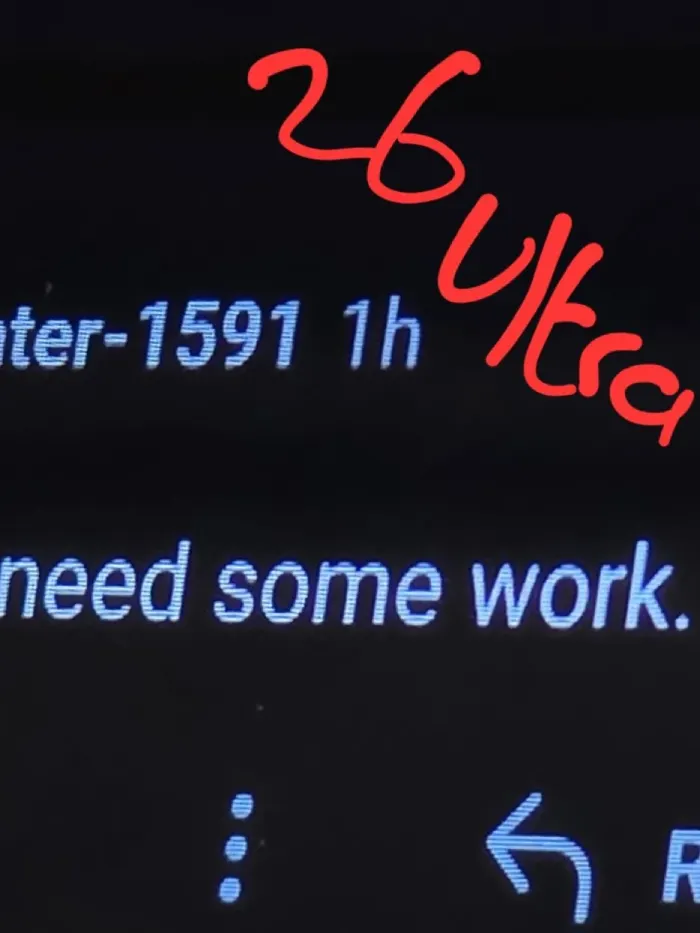
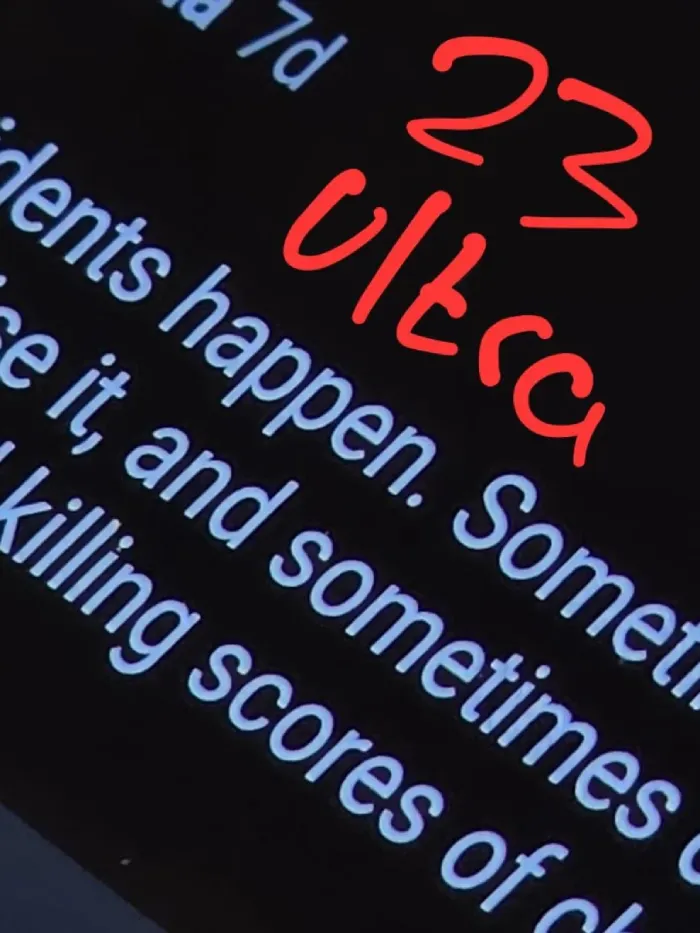
The images clearly show that the text on the S26 Ultra appears fuzzy, but I suspect this dramatic difference could simply be due to the camera angle. Nevertheless, it’s not something to throw under the rug either.
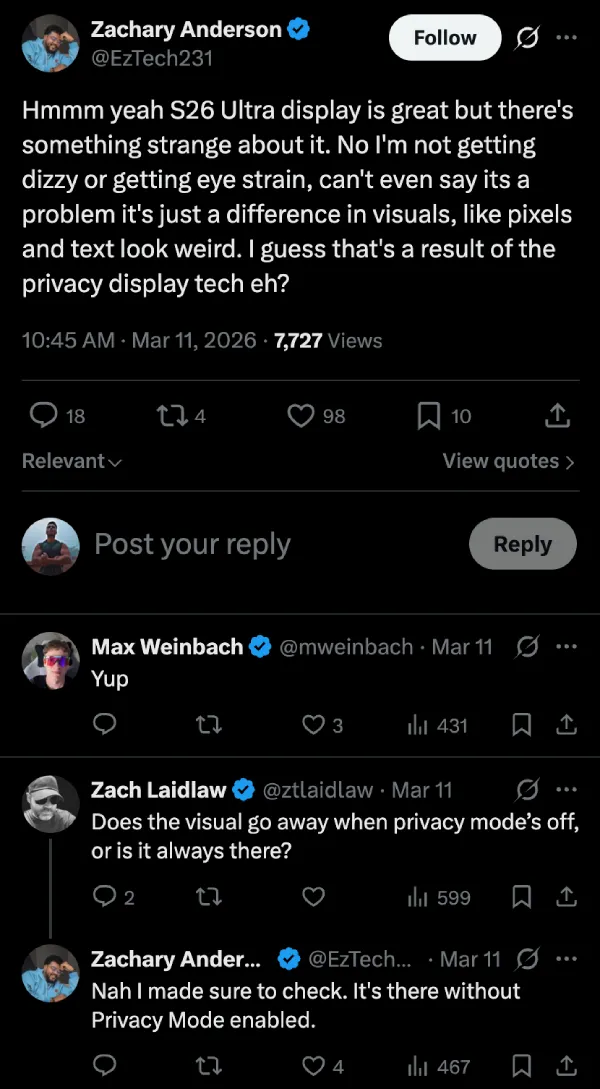
Tech YouTuber Zachary Anderson also shared his observations with the screen in a post on X. While he says he doesn’t have any issues with eye strain, he did notice that the pixels and text look a bit off, and asked if this is due to the Privacy Display. Other tech enthusiasts jumped in the comments, confirming what Zach suspected.
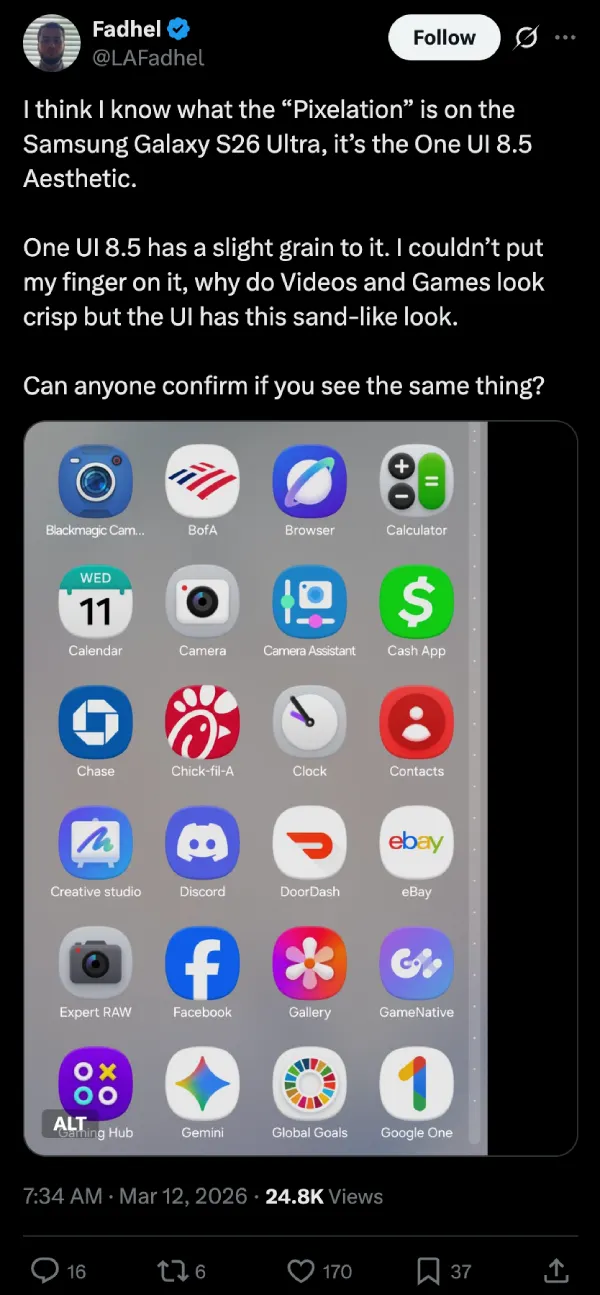
Meanwhile, another Galaxy S26 Ultra user, @LAFadhel, suspected the fuzziness might also be tied to the software. He thinks a slight clarity dip, combined with a sand-like texture in One UI 8.5’s interface elements, is making the problem look worse than it actually is, particularly for users who spend a lot of time in the home screen and app UI.
We already did a deeper dive on various concerns users highlighted initially with the Galaxy S26 Ultra’s Privacy Display. And since then, some early buyers have even decided to return the phone due to how the screen looks even when the Privacy Display feature is turned off.
In his review of the phone, MKBHD mentioned, “even in everyday use, this display is slightly worse.”
Adding to that, Mrwhosetheboss also pointed out that the Privacy Display, while a good idea, still doesn’t really offer all that much privacy since the content on the screen remains visible for the most part to people around you, but the screen just appears dimmer. This is something an earlier leak also pointed towards. So it’s not just a niche group of users who have noticed the problem.
On the technical side, Samsung’s Privacy Display works at a hardware level, using a different pixel structure to control how light spreads across the panel and limit what people sitting beside you can see. That physical arrangement does not simply switch off when you disable privacy mode, which is likely why the softness persists.
The 8-bit display controversy added more fuel. Reports confirmed the S26 Ultra uses an 8-bit panel with temporal dithering to simulate 10-bit color depth, which Samsung had not been fully upfront about.
That said, the company has disputed the more dramatic reports with concerns about the Privacy Display and said most users will not notice a meaningful difference under normal use. In a statement to Tech Advisor, they said, “This change does not affect viewing comfort.”
Either way, the complaints keep piling up. For a phone that costs upward of $1,300 and was marketed largely on the strength of its display innovation, “most people probably won’t notice” is not exactly a great position to be defending.


Dwayne Cubbins
3055 Posts
I cover fast-moving stories across apps, online platforms, and everyday tech — phones, wearables, consoles, and whatever else people are fighting with this week. Bugs, rollouts, scams, policy enforcement, and the occasional internet-culture rabbit hole are all fair game. My goal is simple — make confusing tech news readable. When I'm not working, I'm working out or chilling with my dog. Got a tip? You can find me on X @dcubbins.
Next article View Article