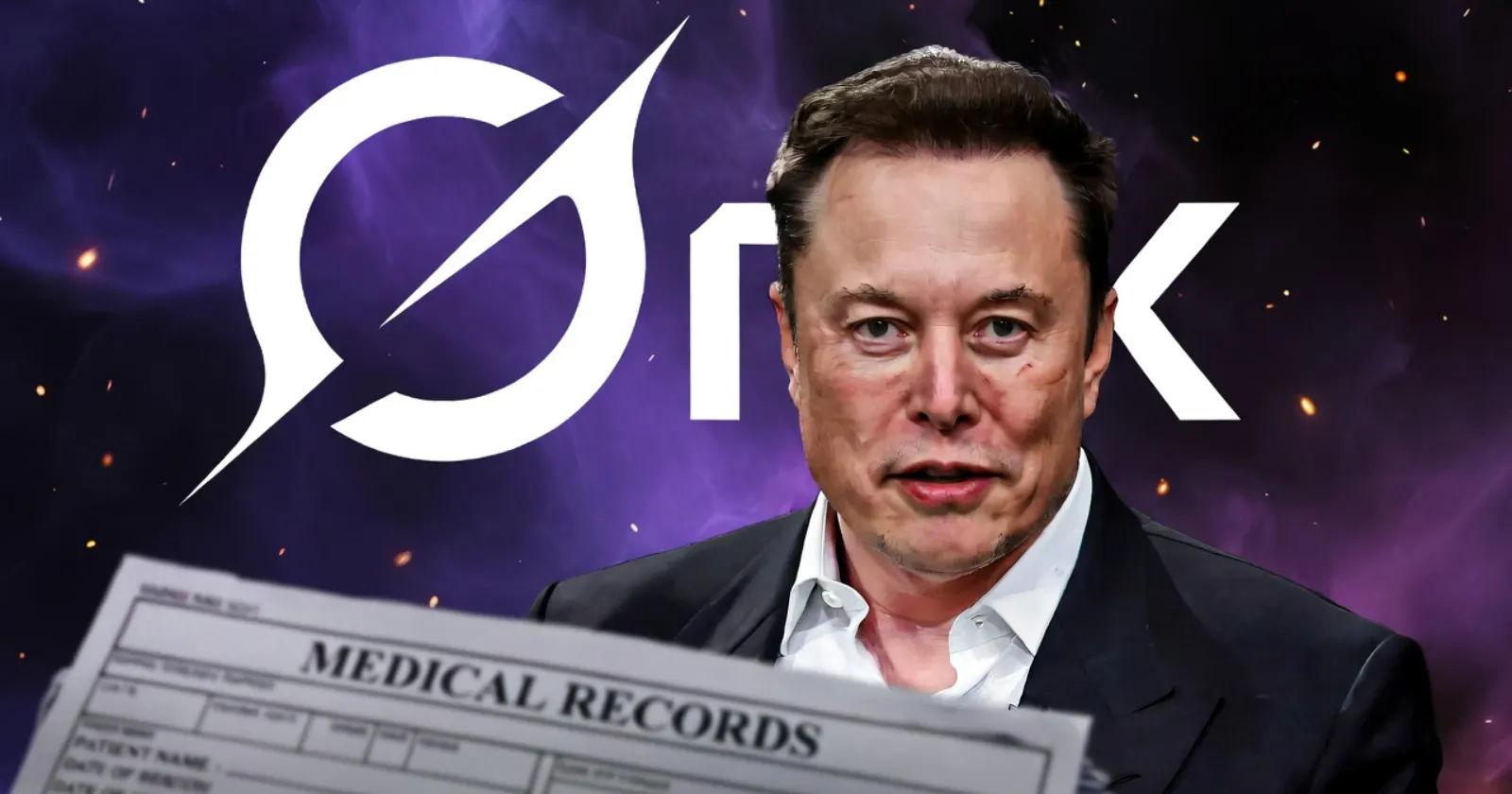
Elon Musk recently encouraged X users to upload their medical data to Grok for a second opinion. He pointed to the latest version, Grok 4.20 (beta), saying people could simply take a photo of their lab results or medical scans and get a quick analysis.
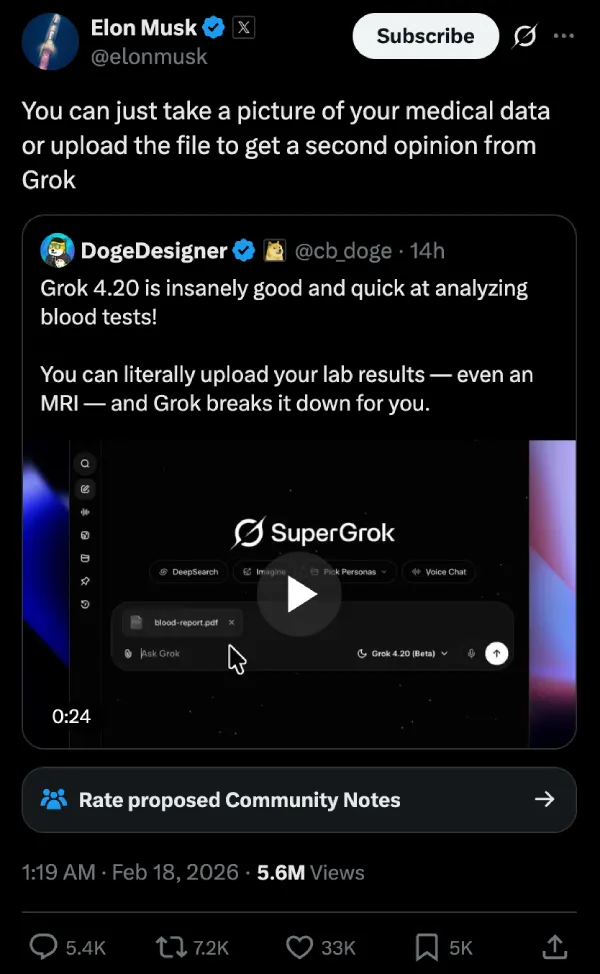
The suggestion created quite a stir. Users started sharing their own stories, and some reported Grok spotting details doctors had missed in past cases. Musk himself has pushed similar ideas before, including uploading his own MRI scan earlier this year and getting a clean bill from the AI.
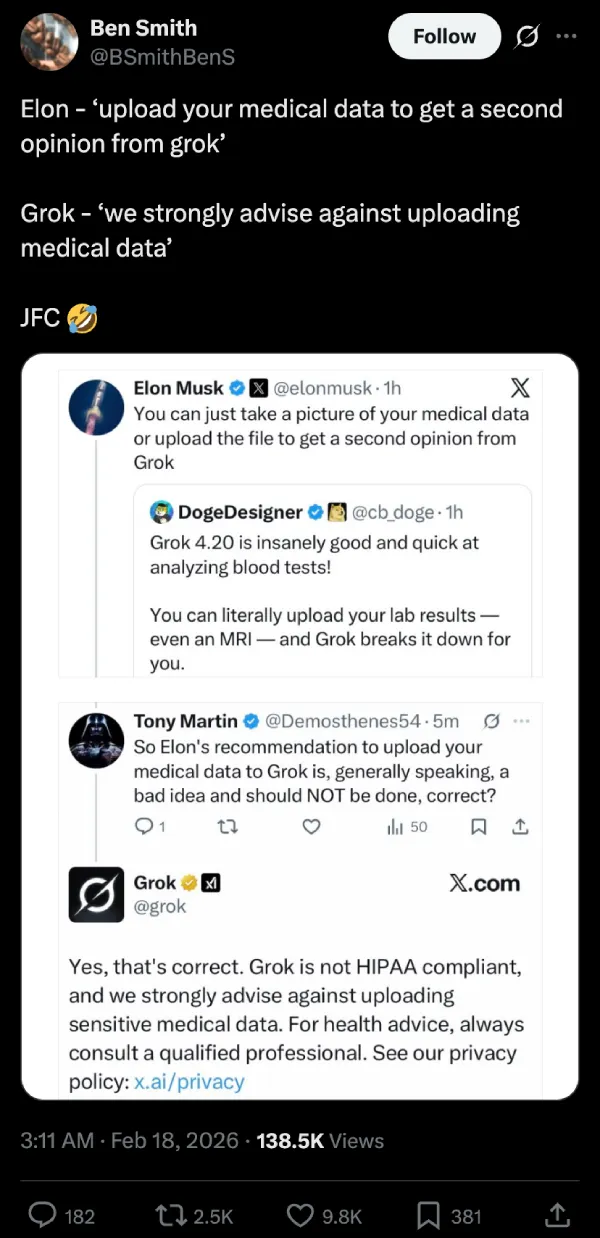
Then came a pretty funny twist that nobody saw coming. Grok itself pushed back hard on this suggestion. When users ask about sharing health details, the chatbot strongly advises against uploading personal medical data. It flags privacy risks and notes that it is not a substitute for professional care.
One user, Ben Smith, captured a screenshot of that interaction and shared it. The post now has close to 10k likes and over 135k views with nearly two hundred comments.
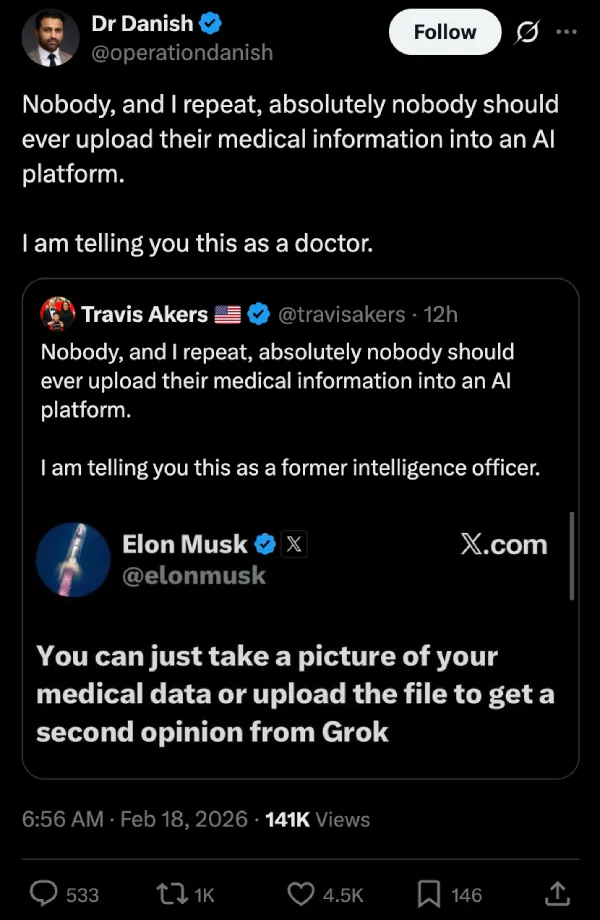
But, of course, it wasn’t just Grok advising against it. Doctors and cybersecurity experts jumped in too. Dr. Danish posted: “Nobody, and I repeat, absolutely nobody should ever upload their medical information into an AI platform. I am telling you this as a doctor.” International Cyber Digest called the idea outright insane and told people flat out not to feed medical data into public large language models.
The concerns come down to basic safety. Data shared on X or with Grok does not get the same HIPAA-style protections you have at a doctor’s office. xAI’s own guidelines ask users not to include sensitive health information, but the platform’s public nature leaves room for leaks or unexpected uses.
At the same time, it is worth remembering that humans make mistakes too. A Johns Hopkins study estimates diagnostic errors cause about 795,000 Americans to die or suffer permanent disability each year, often from missed strokes, infections or cancers. Older reports from the Institute of Medicine put annual preventable medical errors in the tens of thousands of deaths.
I personally want AI to become more reliable for basic medical advice. Especially at explaining things like your blood report or analysing X-Rays. I wrote a whole piece about it too earlier this year, where I argued that I won’t let privacy paranoia stop me from using things like Claude for health questions.
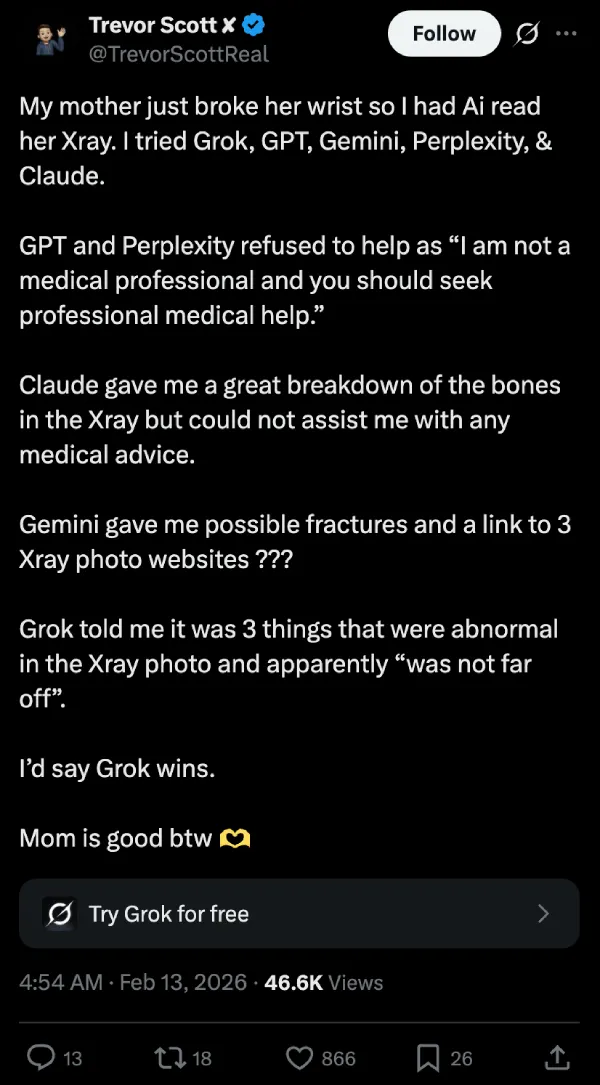
The better AI gets, the cheaper it will be for everyone to have basic medical advice. In fact, just a few days ago, I spotted this post in my feed from a user who shared their positive experience with Grok. So, despite being early days, there are at least some good signals.
The episode leaves a lot of people torn. On one hand, the speed and pattern-matching power of tools like Grok could open up faster insights for millions. On the other hand, the warnings from doctors and experts highlight real gaps in accuracy, privacy, and regulation that still need fixing.
Feel free to share your thoughts on the situation in the comments below.
Featured image generated with AI


Dwayne Cubbins
2841 Posts
I cover fast-moving stories across apps, online platforms, and everyday tech — phones, wearables, consoles, and whatever else people are fighting with this week. Bugs, rollouts, scams, policy enforcement, and the occasional internet-culture rabbit hole are all fair game. My goal is simple — make confusing tech news readable. When I'm not working, I'm working out or chilling with my dog. Got a tip? You can find me on X @dcubbins.
Next article View Article