





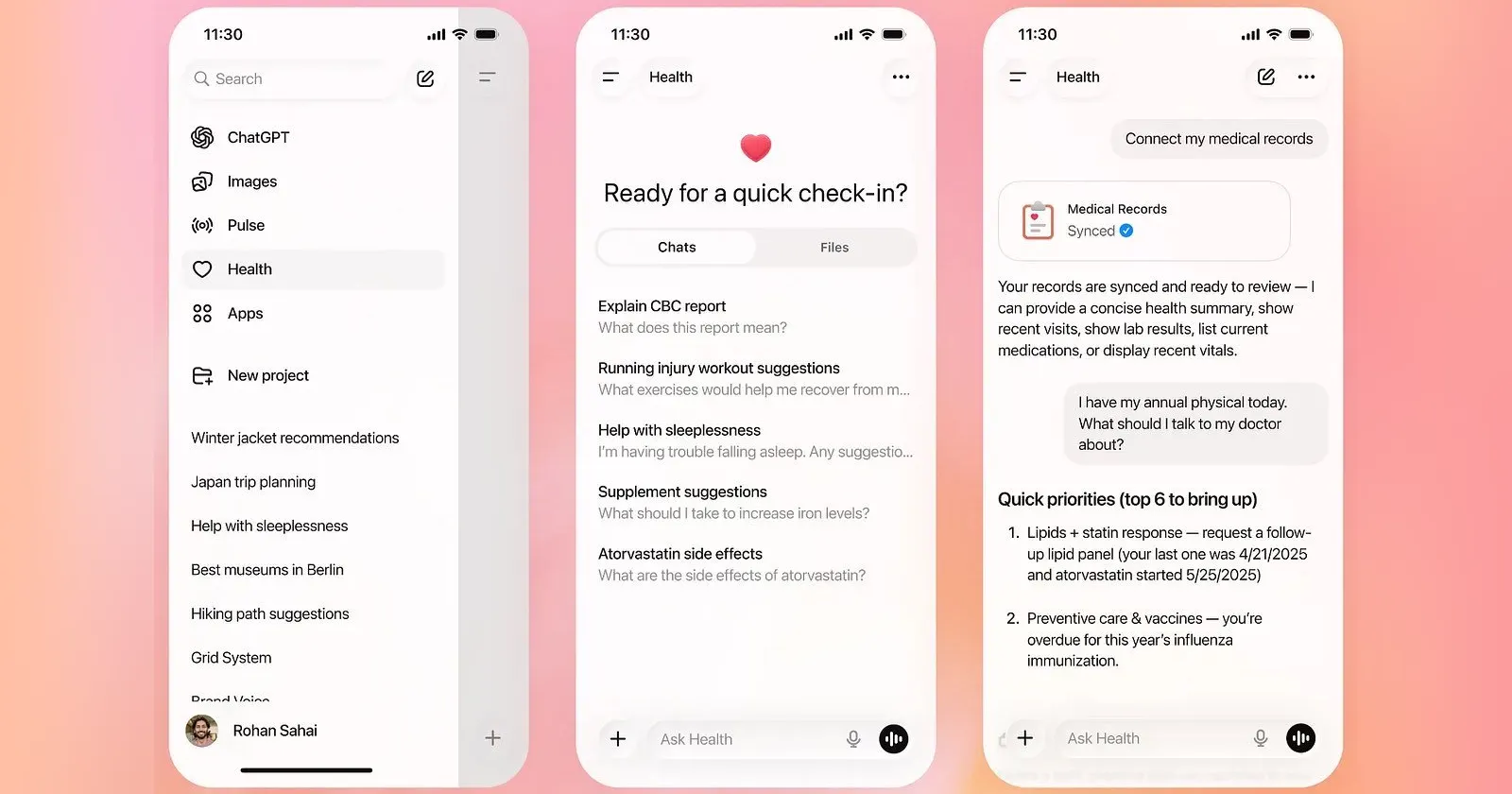
Here’s something that’ll probably get me ratioed (or cussed in the comments): I’m genuinely excited about ChatGPT Health, and I plan to feed it my medical data without losing sleep over it.
OpenAI rolled out this new feature that lets you plug in your health records, sync up fitness trackers, and get AI-powered medical insights. Predictably, the internet is having a meltdown about privacy. Count me out of that panic party.
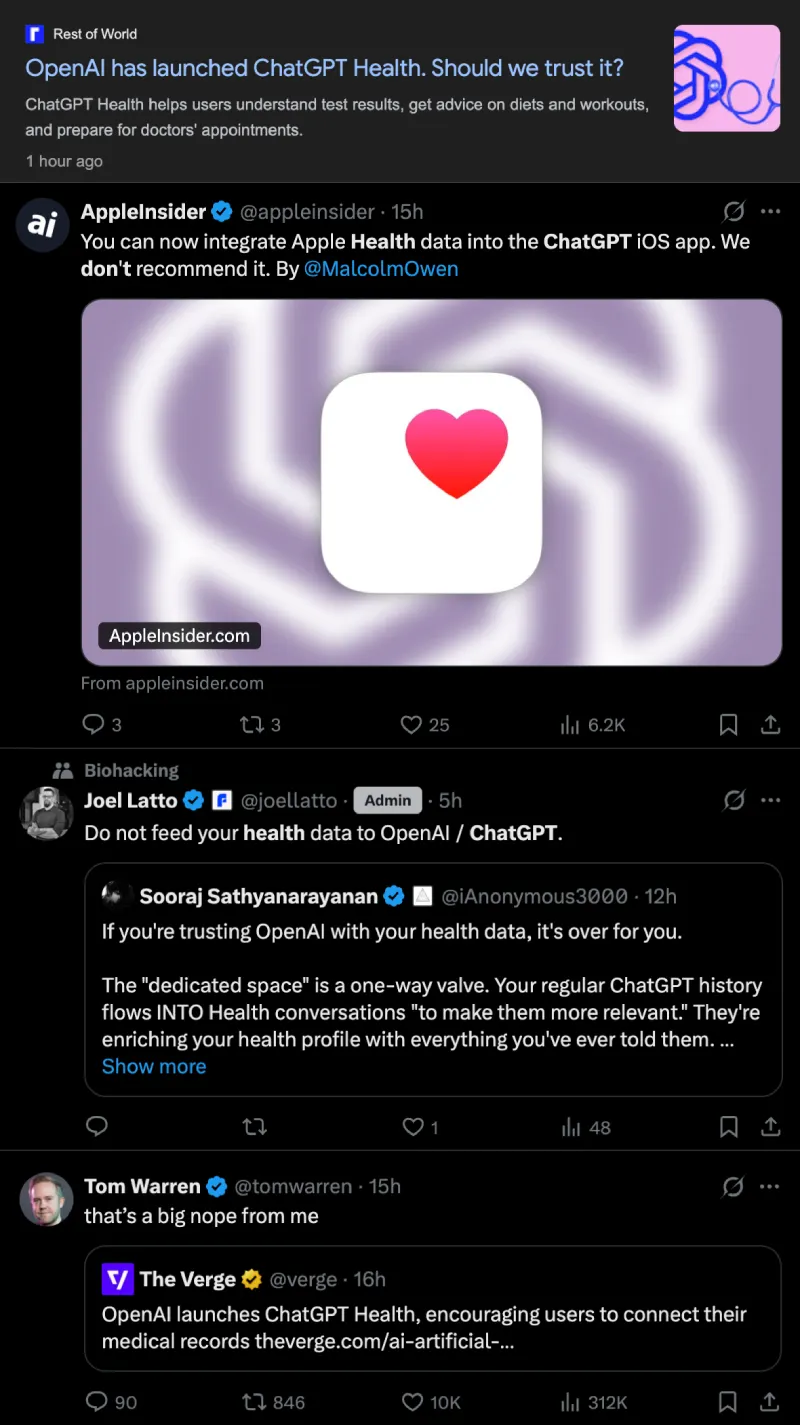
Before you write me off completely, hear me out. I actually want to know if I’m wrong here. Not the lazy “but Big Tech bad” argument or vague hand-waving about privacy. Give me concrete reasons why this is dangerous. I take privacy seriously when it matters. But when there’s a tool that could genuinely improve my health? That’s where I draw a different line.
This isn’t theoretical for me. About a year back, doctors diagnosed me with Rheumatoid Arthritis. If you don’t know what that is, it’s an autoimmune disorder that decided my joints were the enemy. Picture trying to maintain any kind of fitness routine when your knees decide to balloon up and hurt like hell. Of course, I was treated to bring down the swelling, but my rheumatologist’s long-term “solution” was simple: stop lifting, quit the gym, and ditch protein and creatine supplementation.
I wasn’t ready to wave the white flag on my fitness routine. That’s where ChatGPT came in. I uploaded lab results and started asking questions. It helped me read and understand dozens of research papers on RA and supplementation to get a better understanding of how to go about things.
Now hold on, I’m not suggesting you ignore your doctor’s orders or pretend AI is a replacement for medical school. I check and recheck everything these tools (Grok too) tell me. But they helped me spot patterns in my bloodwork that I’d completely overlooked. Fast forward to now and those markers have improved. I’m still training. My day-to-day feels better.
So what’s the actual nightmare scenario everyone keeps warning about? Someone at OpenAI sees that my uric acid was elevated last year, and does what exactly? Hunts me down? The way some people react, you’d think medical records contain your exact weakness for supervillains to exploit. What I see is a path toward making decent health information accessible without burning through your savings on specialist visits. The stronger these models get, the more people benefit from better baseline advice. If things get serious, you go to a hospital, not a chatbot.
I’m not printing my health data on T-shirts. But I do think OpenAI and similar companies have enough to lose that they’re incentivized to keep this data secure. They’ve also said Health conversations won’t be used to train AI models and they’ve built purpose-built encryption and isolation specifically for health data. Over 260 physicians from 60 countries collaborated on this feature over two years. They screw this up once and their reputation is cooked.
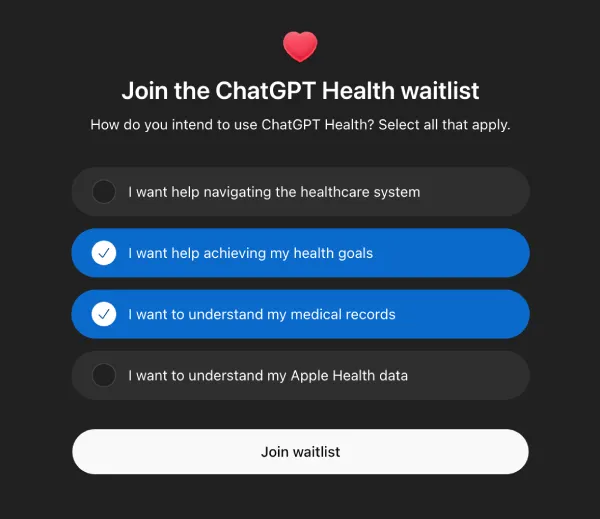
Meanwhile, I’ve already joined the waitlist for ChatGPT Health. My end goal is to just live a healthier life. If ChatGPT or any other AI platform helps me make improvements that I’d otherwise miss or not pay attention to, then you bet I’m going all in.
Call this take naive if you want. But what I want from you is to just explain why you (if you do) think it’s wrong instead of shouting about privacy in the abstract. And if you share the same opinion as me, feel free to drop a comment below too.


Dwayne Cubbins
3055 Posts
I cover fast-moving stories across apps, online platforms, and everyday tech — phones, wearables, consoles, and whatever else people are fighting with this week. Bugs, rollouts, scams, policy enforcement, and the occasional internet-culture rabbit hole are all fair game. My goal is simple — make confusing tech news readable. When I'm not working, I'm working out or chilling with my dog. Got a tip? You can find me on X @dcubbins.
Next article View Article
