After months of anticipation and a few technical hurdles, GrapheneOS has officially graduated its support for the Google Pixel 10 series from “experimental” to “stable.” The milestone comes just days after the developers addressed critical issues that were holding back the full release.
Back in November, GrapheneOS kicked off experimental support for the Pixel 10 lineup. While early adopters could flash the privacy-focused OS, it came with the usual “experimental” caveats. For the last two months, users have been eagerly awaiting the stability that GrapheneOS is known for, but the road wasn’t entirely smooth.
Earlier this month, the team had to explain why the stable rollout was taking longer than expected, citing ongoing work to achieve feature parity, specifically regarding the camera, and other stability requirements. The situation seemed to get complicated just last week when the project hit a new snag, even as a major fix for USB functionality was arriving.
However, it appears the team has successfully cleared those final hurdles.
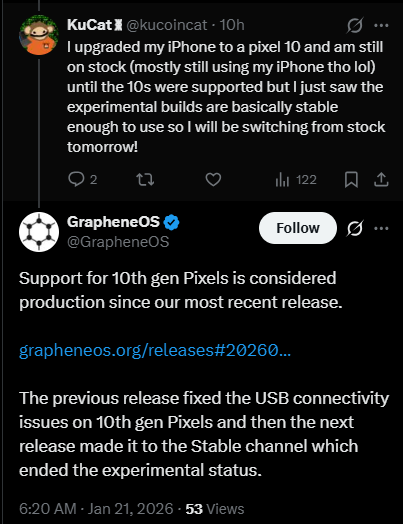
GrapheneOS has confirmed that the “experimental” tag is gone. The turning point was release 2026011000, which successfully patched the nagging USB issues that were impacting 10th-generation Pixels. With that blocker removed, the OS has entered the stable channel.
In response to user inquiries on X (formerly Twitter), the GrapheneOS team clarified the new status:
Pixel 10 users can now download the first official stable build, version 2026011300, which is rolling out now.
For those who held off on flashing GrapheneOS onto their shiny new Pixel 10s due to the experimental warning, the green light has officially been lit. As always, existing users on the experimental track should be able to update to the stable release seamlessly, provided they are on the appropriate channel.


Hillary Keverenge
2723 Posts
Tech has been my playground for over a decade. While the Android journey began early, it truly took flight with the revolutionary Lollipop update. Since then, it's been a parade of Android devices (with a sprinkle of iOS), culminating in a mostly happy marriage with Google's smart home ecosystem. Expect insightful articles and explorations of the ever-evolving world of Android and Google products coupled with occasional rants on the Nest smart home ecosystem.
Next article View Article