Google Pixel 10 owners hoping to ditch stock Android for the privacy-focused GrapheneOS have been playing the waiting game for months. While the custom ROM entered its experimental phase for the device back in November 2025, a stable release has remained elusive. Now, just as the developers have squashed the biggest bug holding back the project, a new regression has appeared to reset the clock.
For those following the development, the journey has been long. GrapheneOS officially announced experimental support for the Pixel 10 series in late November. However, the transition to the “Stable” channel, where most average users feel comfortable installing the OS, stalled.
Earlier this month, we reported that the primary culprit behind the delay was USB connectivity. The GrapheneOS team was transparent about the issue, noting that while the OS was functional, USB reliability was the main barrier keeping the “Experimental” tag in place.
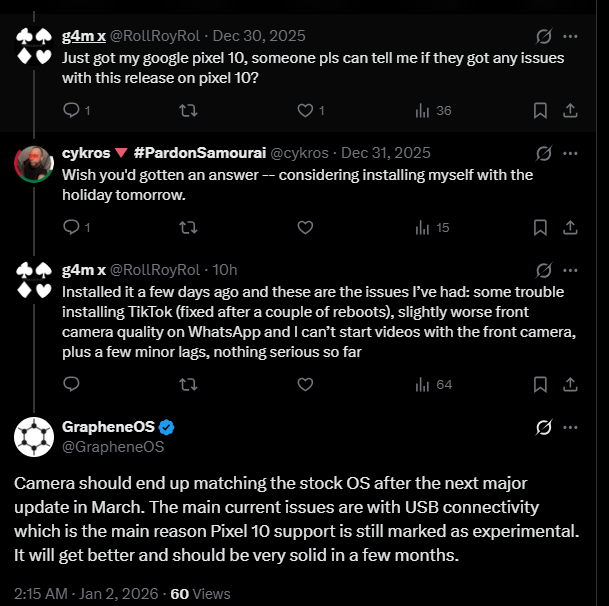
USB issues are fixed, but there’s a new regression
In a fresh update shared on X (formerly Twitter) over the weekend, GrapheneOS confirmed that they have finally cracked the USB problem.
According to the developers, the current release in the Alpha channel has USB connectivity “working properly.” For users who rely on wired data transfer, Android Auto, or hardware accessories, this is a massive milestone that brings the Pixel 10 significantly closer to a daily-driver experience without compromises.
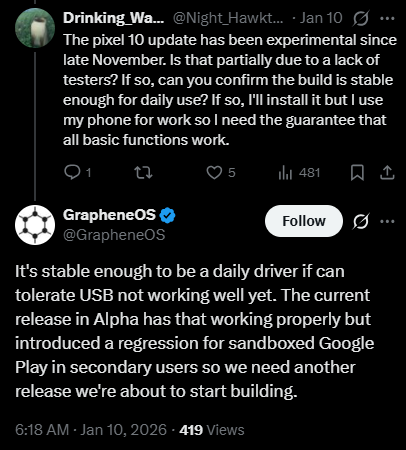
However, software development is rarely a straight line. In the same breath, the team revealed that the Alpha build containing the USB fix inadvertently introduced a new bug.
“The current release in Alpha introduced a regression for sandboxed Google Play in secondary users,” GrapheneOS explained.
Sandboxed Google Play is a cornerstone feature of GrapheneOS, allowing users to run Google services with reduced privileges. Breaking this functionality, specifically for secondary user profiles, is a significant enough issue to halt the rollout. As a result, the team cannot simply promote this Alpha build to the Stable channel.
The developers are already moving to address the regression. The team stated they are “about to start building” another release to patch the Sandboxed Play Services issue while keeping the USB fix intact.
For the impatient, the team offers a bit of perspective on the current state of the OS. If you are willing to brave the experimental builds available right now (prior to the upcoming fix), the device is usable.
“It’s stable enough to be a daily driver if [you] can tolerate USB not working well yet,” the team noted.
Essentially, you have two choices: flash the current experimental build and live with flaky USB connectivity, or wait a little longer for the next build that promises to fix both the USB hardware and the software regression.
With the team actively compiling a new release, the hope is that the jump to Stable is finally on the horizon—provided no other gremlins pop up in the code.


Hillary Keverenge
2723 Posts
Tech has been my playground for over a decade. While the Android journey began early, it truly took flight with the revolutionary Lollipop update. Since then, it's been a parade of Android devices (with a sprinkle of iOS), culminating in a mostly happy marriage with Google's smart home ecosystem. Expect insightful articles and explorations of the ever-evolving world of Android and Google products coupled with occasional rants on the Nest smart home ecosystem.
Next article View Article