Update (Feb 2): Another piece of evidence has emerged, adding weight to previous speculation that Google may have shifted the Pixel 6 and Pixel 7 series of phones from monthly to quarterly security updates.
More details here.
Original article follows:
When the Pixel 7a finally began receiving the January 2026 security update, it quietly closed a gap that had bothered users for weeks. The device had missed the December 2025 patch entirely, leaving many units — including ours — stranded on the November build while the rest of the Pixel lineup moved forward.
Google never acknowledged the omission. There was no delayed rollout notice, no follow-up explanation, and no confirmation that anything had gone wrong. And that silence is precisely what makes this situation worth examining more closely.
Because the Pixel 7a’s absence doesn’t look like an isolated mistake, it looks like part of a longer, deliberate shift in how Google now treats older Pixel devices — a shift that has been unfolding quietly for months.
How Pixel updates used to work
For years, Google’s Pixel update model was one of Android’s strongest selling points. If your device was still supported, you received monthly security patches without exception, regardless of whether the phone was new or nearing the end of its lifecycle.
A Pixel 2 in its final year received updates on the same predictable schedule as a brand-new Pixel 4. The cadence was consistent, the messaging was clear, and deviations were rare enough to be newsworthy.
That reliability helped set Pixels apart from the wider Android ecosystem, where update schedules often depended on region, carrier, or manufacturer priorities.
When the cracks started to show
That model began to show cracks in mid-2025. The first widely noticed disruption came in July, when Google failed to release initial builds for the Pixel 6 and Pixel 6 Pro alongside the rest of the lineup. This happened once again with the October 2025 update, and now the January 2026 update, this time alongside the Pixel 7 and 7 Pro.
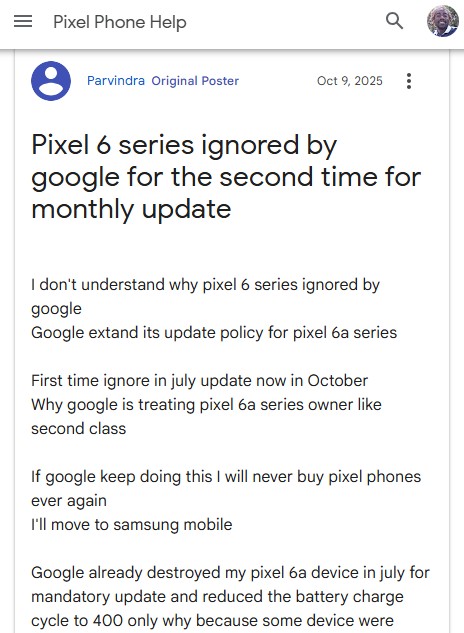
At the time, it was easy to dismiss as one-off delays. But in the months that followed, other oddities appeared. Some monthly updates arrived with fewer listed security patches. Others skipped entire device generations. More importantly, Google stopped clearly explaining why.
By the time the Pixel 7a missed December’s update, the pattern had become difficult to ignore.
Community speculation around the Pixel 7a delay largely centered on a possible Wi-Fi stability issue. It’s a plausible explanation, especially given Google’s history of halting rollouts when serious bugs are discovered late in the process.
But even if such an issue existed, it doesn’t explain why Google chose silence over transparency. In past years, delayed Pixel updates were usually accompanied by acknowledgments, revised timelines, or at least vague statements about “ongoing investigations.”
This time, December simply passed.
A quieter explanation begins to emerge
Behind the scenes, a different explanation has been circulating. According to information reportedly shared by Google’s support team, Pixel devices may now transition to a quarterly update cadence once they reach a point where roughly two years of official support remain.

This would represent a significant philosophical change.
Under this approach, devices are still considered “supported,” but they no longer receive full monthly security updates. Instead, non-critical fixes are bundled into quarterly releases, while only urgent vulnerabilities are addressed in between.
Seen through this lens, recent omissions begin to make more sense.
The Pixel 6 series quietly slipped into irregular updates. The Pixel 7 and 7 Pro are missing from the January 2026 rollout altogether. And the Pixel 7a, sitting in an awkward middle ground, skipped December but reappeared in January, possibly because one or more fixes crossed Google’s internal “critical” threshold.
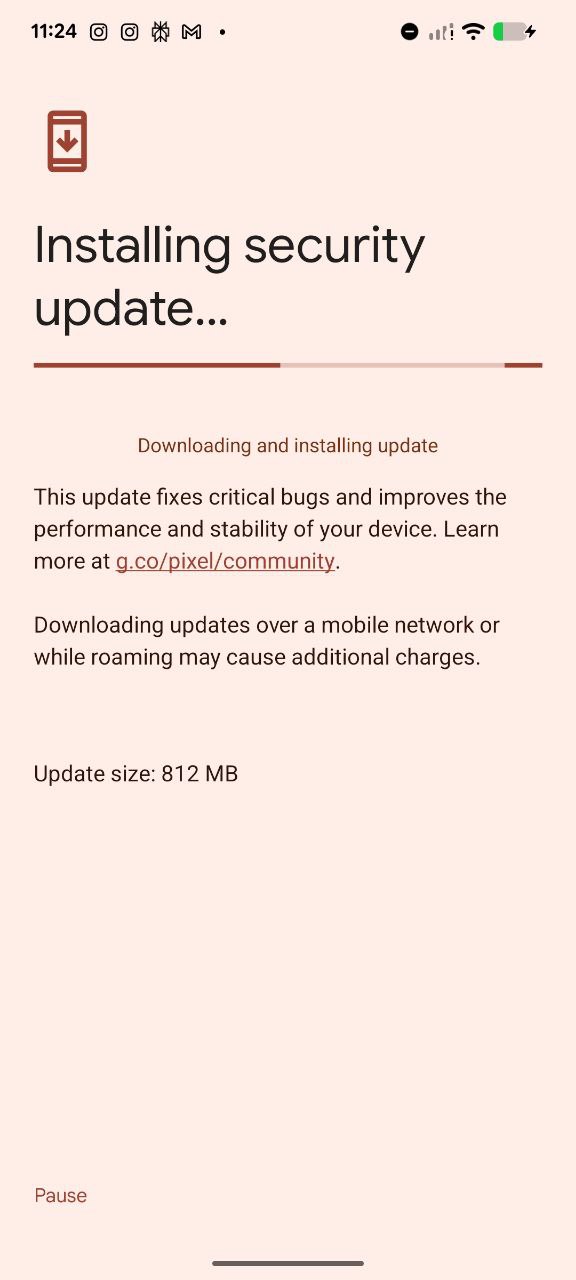
If Google has indeed moved to a quarterly model for older Pixels, the issue isn’t just about update frequency. It’s about expectations.
Google still markets Pixel phones with a promise of long-term updates, and most users reasonably interpret that as monthly patches for the full duration. Nowhere is it clearly stated that the experience changes once a device crosses a certain age threshold.
That lack of clarity leaves users guessing whether a missing update is a temporary delay, a device-specific issue, or simply the new normal.
The Pixel 6’s July and October, and the Pixel 7a’s December absence, may end up being remembered less as a glitch and more as an early warning. It showed how easily a device can fall out of the monthly cycle without explanation, and how little communication accompanies that change.
Yes, the January 2026 update has now arrived. But the bigger question remains unanswered: will the Pixel 7a receive a February update at all?
If history is any guide, Pixel owners may soon discover that “supported” no longer means what it used to, and that the era of guaranteed monthly updates for every Pixel, right up until the end, may already be over.


Hillary Keverenge
2723 Posts
Tech has been my playground for over a decade. While the Android journey began early, it truly took flight with the revolutionary Lollipop update. Since then, it's been a parade of Android devices (with a sprinkle of iOS), culminating in a mostly happy marriage with Google's smart home ecosystem. Expect insightful articles and explorations of the ever-evolving world of Android and Google products coupled with occasional rants on the Nest smart home ecosystem.
Next article View Article