



The CEO of Vivaldi, Von Tetzchner, believes that most users don’t want AI in their browsers. He makes the argument that companies should focus on giving people more control and customization instead of pushing many AI features.
During a Web Summit in Lisbon, the CEO spoke to Cybernews regarding the topic. That also serves as the main source for the information in this article. He said that Vivaldi asked its users whether they wanted AI features, and the response was pretty negative. He believes people want to browse the internet on their own terms without the interference/shoehorning of AI assistants.
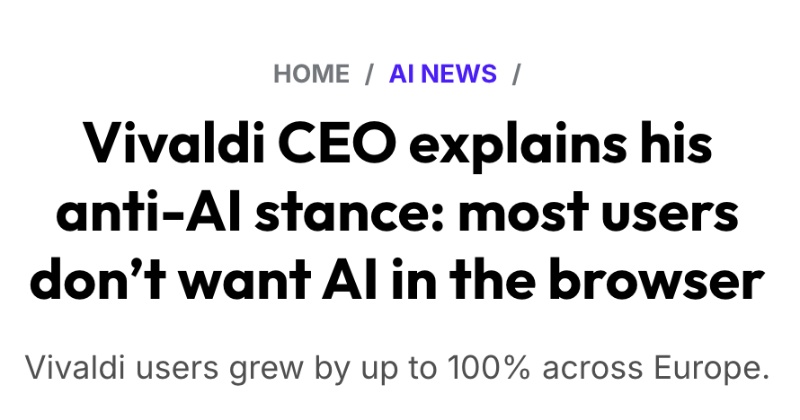
The CEO also revealed that the user base grew between 50% and 100% across several European countries over the past year, and the browser also has growing interest in North America. We can’t attribute that entirely to AI, but it might have played a role.
So far, Vivaldi has maintained a firm stance against integrating generative AI into the browsing experience. Competing browsers such as Chrome and Edge have a ton of AI features, and plenty of them feel forced because they have multiple buttons for the same thing, especially Google Chrome, with multiple buttons for Gemini everywhere.
Von Tetzchner also argues that AI in browsers often comes with additional data collection, which could potentially allow companies to track user activity. Furthermore, it could keep users stuck with a chatting tool instead of freely exploring the web.
The original source also reports that Vivaldi prefers having human engineers write the code instead of relying on vibe coding, because the developers should understand the code they write, especially when security is involved. Further concerns were expressed about AI tools being a potential security risk as well.
It’s worth noting that the CEO doesn’t entirely position himself as anti-AI. He acknowledges some use cases such as research and translation, but strongly questions the use of AI integrated directly within browsers.
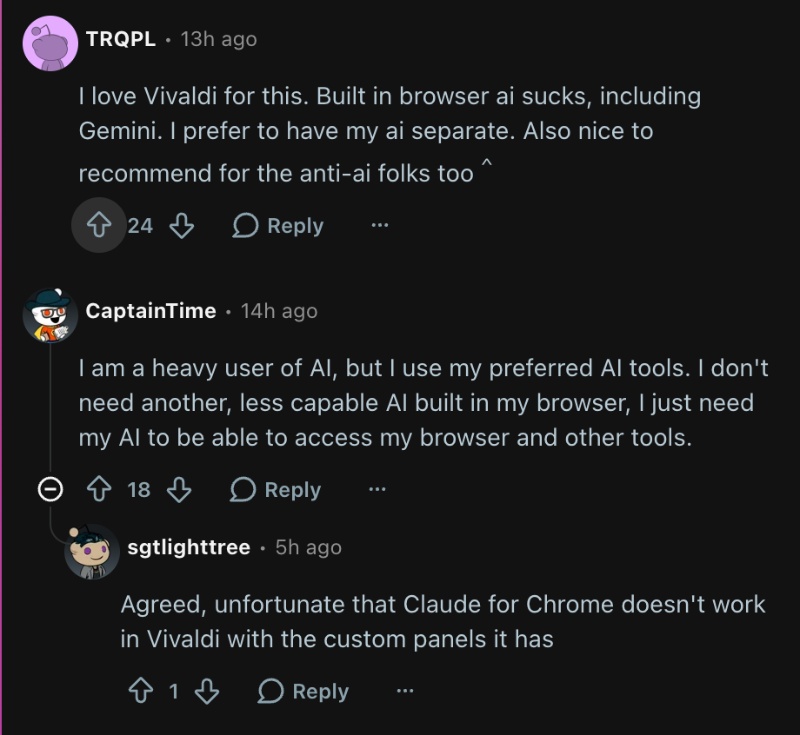
Reactions on Reddit to this interview suggest that Vivaldi’s stance resonates with the community. Many people argued that AI should remain an optional tool that users can access when needed. Even people who are regular AI users don’t want it shoehorned into the browser.
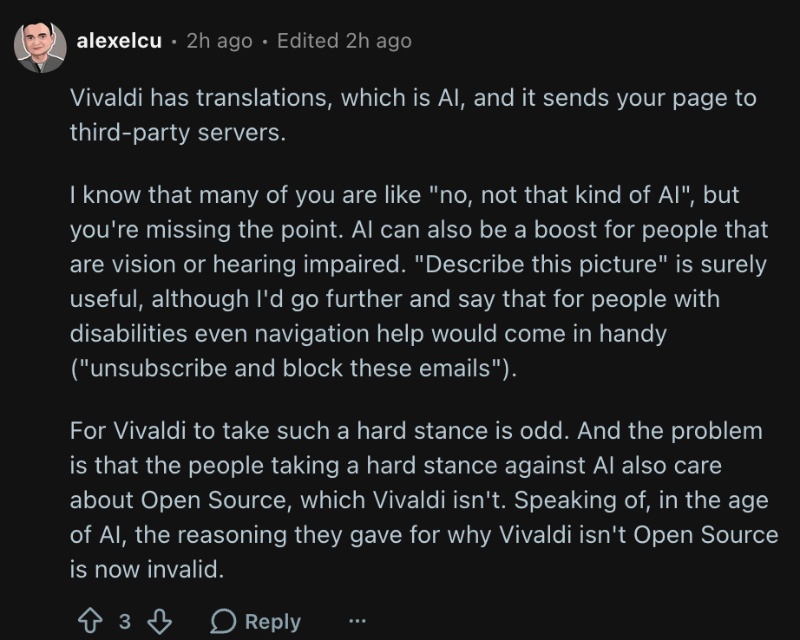
However, there’s also some criticism of this stance. For example, Vivaldi offers a translation feature built into the browser, and that does use AI to collect and send data. That technically goes against the anti-data-collection narrative. Others questioned whether a browser built on Chromium can even realistically avoid AI entirely.


Sudhanshu K
385 Posts
I have been a consumer technology enthusiast for over 5 years. Thanks to my experience in software beta testing and product reviews, I've understood and learnt a lot about what bugs and issues bother people, and I spend time trying to simplify their solutions. I cover smartphones, software, social media, apps, AI, and most consumer tech gadgets. Actively pursuing a Computer Science bachelor’s degree. I'm mostly active on Twitter/X (@TechWhirlUlt), drop a DM or tag me if you want to share info or connect!