





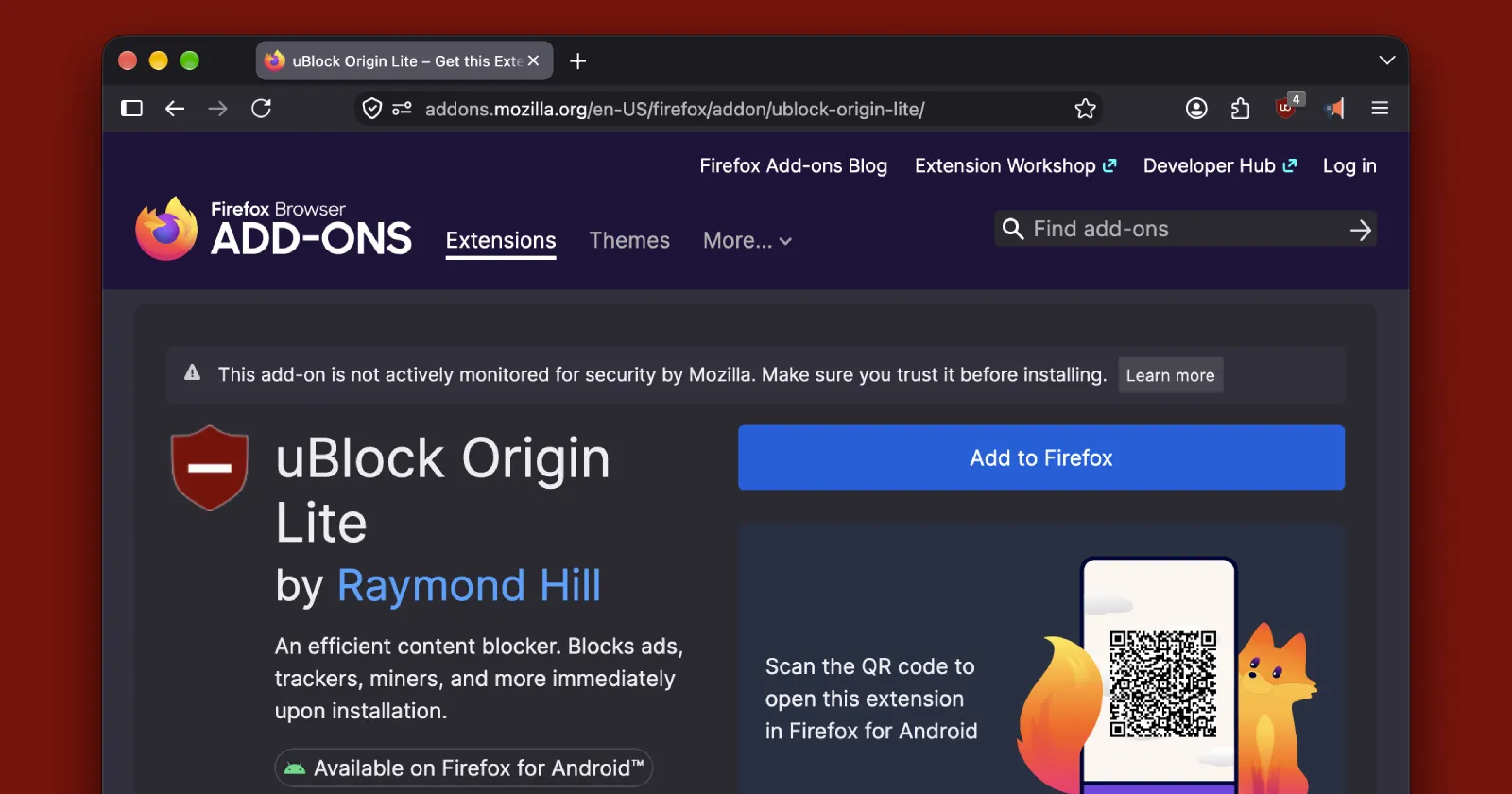
uBlock Origin Lite has returned to Mozilla’s add-on directory after a two-year absence. Its removal followed a bitter dispute between developer Raymond Hill and store reviewers. The listing is now live under Hill’s name, giving Firefox users an official way to install the streamlined blocker without building it from source.
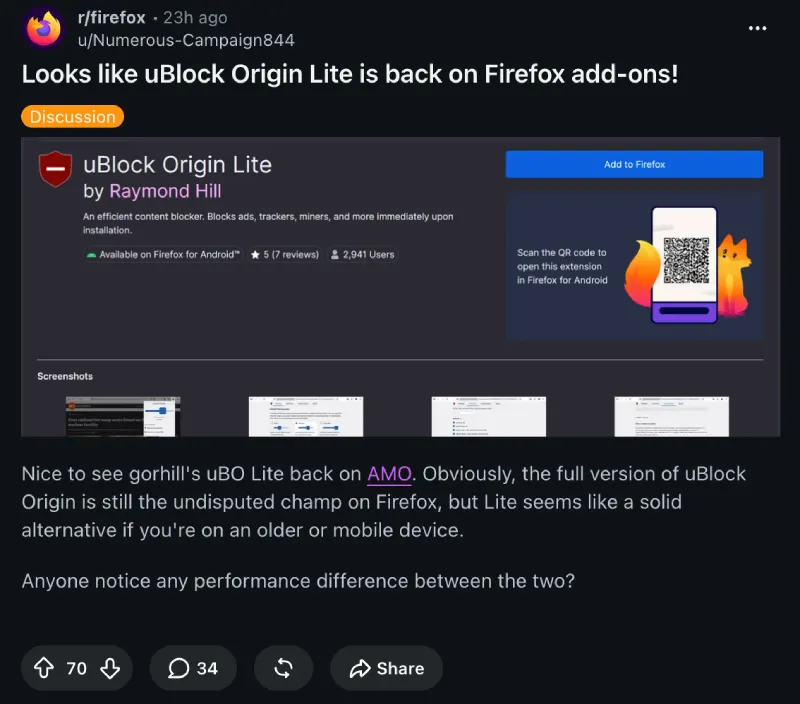
One eagle-eyed user spotted it back in the store and shared it on Reddit. We can confirm that it’s indeed the real deal.
For those who missed the whole saga, it all started in 2024 when Mozilla reviewers mistakenly flagged the extension for collecting user data and including unapproved code. Naturally, that annoyed Hill, who called the feedback “nonsensical and hostile” while pointing out that the flagged files were harmless stubs used in the original extension for years.
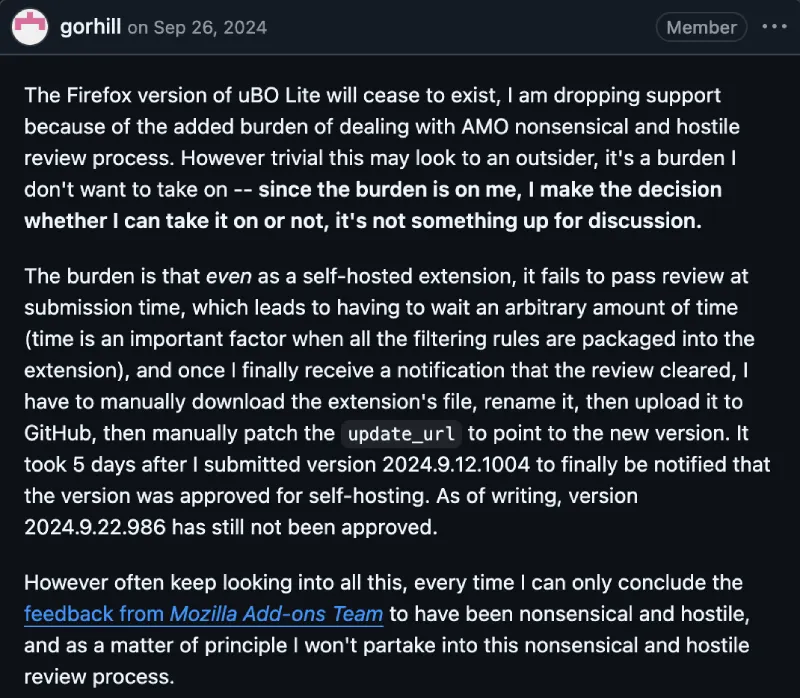
Mozilla later admitted it had made the wrong call and restored Hill’s add-on. By then, though, the damage was done: fed up with the red tape, Hill removed the project from the store and stopped maintaining Firefox builds.
This whole situation was ironic, given that browser makers like Google were meanwhile trying to encourage MV3-based extensions. As we reported when Chrome removed Manifest V2 extensions, users on Chromium browsers have mostly been forced onto cut-down Manifest V3 versions like uBO Lite.
So while Chrome users were forced to use uBO Lite, Firefox didn’t even have the option to install it from the official store until now.
Still, developer relations with Mozilla have felt fragile at times, especially with the massive review delays that left updates stuck in Mozilla’s review queue for nearly two months earlier this year.
Nevertheless, it’s good to see the extension back on the store, even if most power users will probably stick with the original version. You can grab it here.


Dwayne Cubbins
3087 Posts
I cover fast-moving stories across apps, online platforms, and everyday tech — phones, wearables, consoles, and whatever else people are fighting with this week. Bugs, rollouts, scams, policy enforcement, and the occasional internet-culture rabbit hole are all fair game. My goal is simple — make confusing tech news readable. When I'm not working, I'm working out or chilling with my dog. Got a tip? You can find me on X @dcubbins.