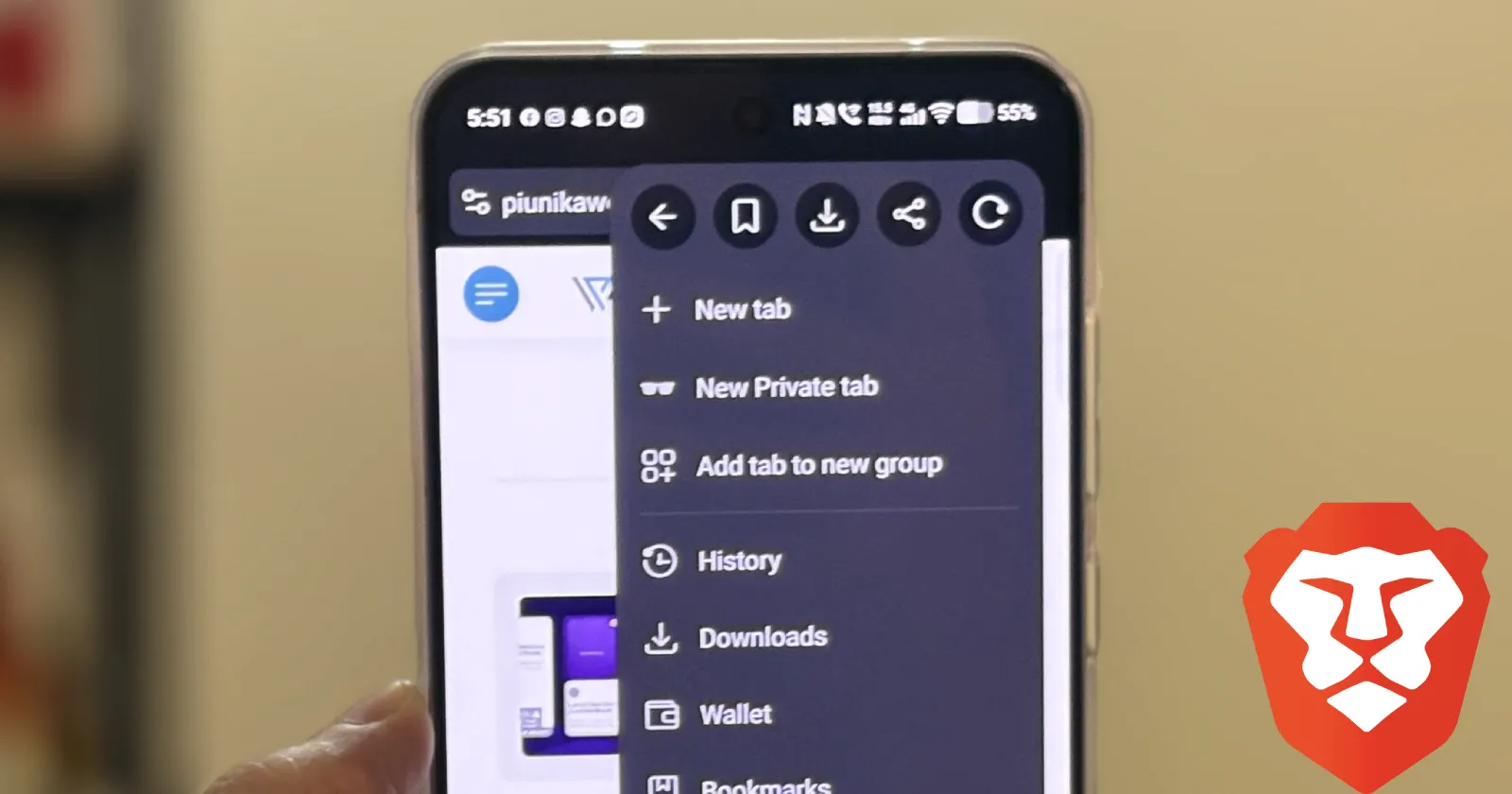
When Brave launched its stripped-down Origin browser, many fans and enthusiasts in general were skeptical of the pay-to-remove-bloatware approach. Charging $60 to disable ‘premium’ features didn’t sit right with the free and open-source software community, even though Linux users were exempt.
Now it looks like the company is prepared to extend the same generosity to de-Googled privacy-conscious mobile users as well, if recent tweets by founder Brendan Eich are any indication.
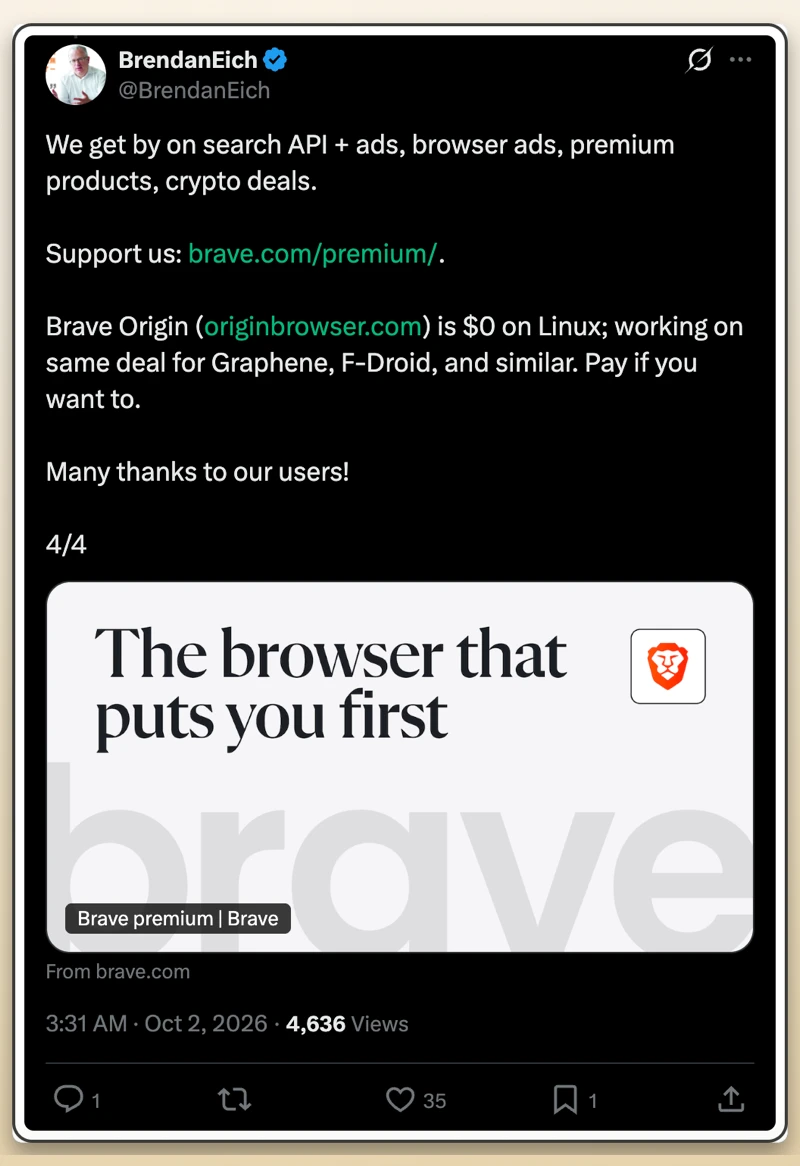
Eich spoke out on X about Brave’s funding model while simultaneously announcing some welcome news for people who want a non-tracking alternative to Android.
While talking about revenue from search APIs and browser ads, the CEO said Brave Origin is already free for Linux users and that they plan to bring this to other mobile platforms soon.
In the tweet, Eich announced that the company is “working on same deal for Graphene, F-Droid, and similar.” The CEO followed up with a reminder that users can always “Pay if you want to.”
This is an important point, as anyone who has paid attention to the custom Android ROM and open source repository scene will know that GrapheneOS users and the maintainers of F-Droid are especially wary of any corporate affiliation.
When we last wrote about the topic, Origin’s official launch on desktop and mobile was positioned as a good choice for users who wanted minimal tracking and ads without having to suffer through Brave’s rewards, talk UI overlays, and Web3 push.
The main issue with the mobile version was that it wasn’t a standalone app. Users who wanted a separate browser had to link a payment method to their Google account, which discouraged many privacy-focused users.
That tension seemed to ease earlier this year when Brave began considering a standalone Origin mobile app, as the company recognized users’ desire for an independent client rather than toggling a couple of experimental flags in the main browser.
Offering a free version of Brave Origin on F-Droid and GrapheneOS solves this issue. Since F-Droid doesn’t allow apps with paywalls, making payment optional is the only way to get Brave Origin listed there.
There is no timeline for when these versions of Brave Origin will become available. However, providing a privacy-first browser without forcing users into a pay-to-win economy is, hopefully, a sign of more to come from the company.
Apart from this, Eich also revealed that Brave reached 128.28M monthly active users in September, up from 126.25M in August. The browser also saw its highest-ever daily active user growth rate in 2026, with 52.97M DAUs in the month.
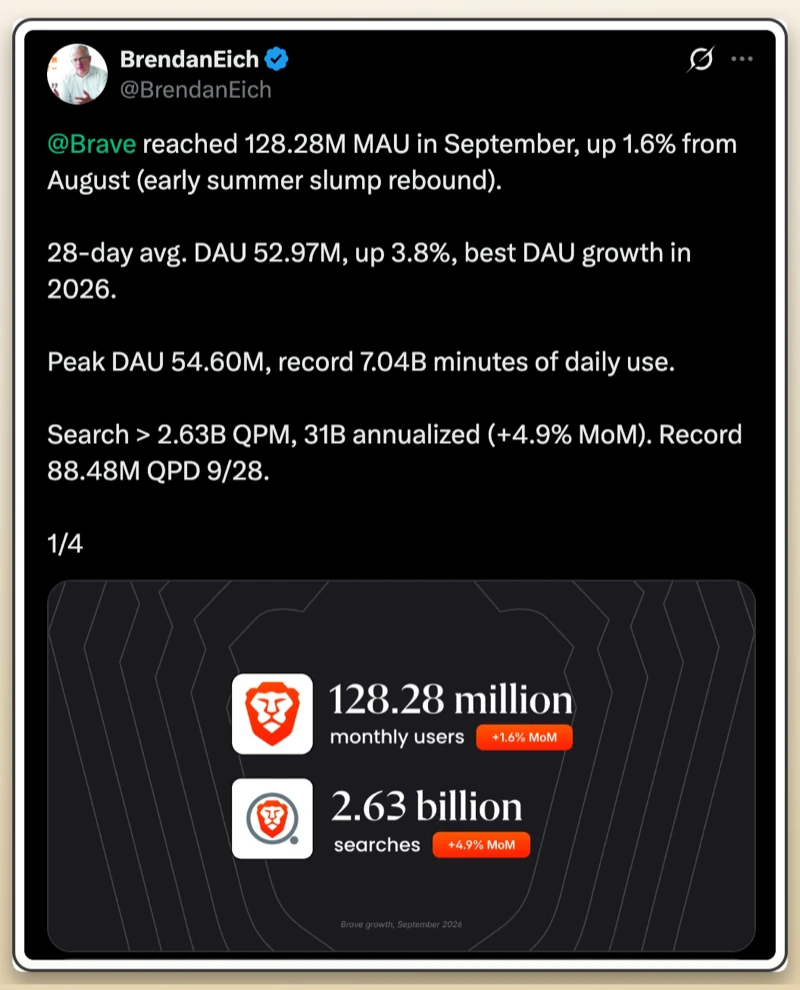
Brave is still growing its user base, which shows the browser’s popularity despite ongoing monetization debates. However, custom ROM and FOSS communities demand more transparency. Users on de-Googled systems like GrapheneOS prioritize clean, auditable software free from corporate tracking.
A dedicated Brave Origin build without paywalls or proprietary accounts is crucial to gain their trust. If Brave meets F-Droid’s anti-feature rules and releases a lightweight client, it could set a positive example for mainstream browsers engaging with privacy-focused communities.


Dwayne Cubbins
3078 Posts
I cover fast-moving stories across apps, online platforms, and everyday tech — phones, wearables, consoles, and whatever else people are fighting with this week. Bugs, rollouts, scams, policy enforcement, and the occasional internet-culture rabbit hole are all fair game. My goal is simple — make confusing tech news readable. When I'm not working, I'm working out or chilling with my dog. Got a tip? You can find me on X @dcubbins.
Next article View Article