While the Orion browser by Kagi is primarily available on Apple devices, the company has been making steady progress on the Windows implementation.
In an article posted on X, various new features and refinements were shared, including cross-platform sync, improved extension support, and more.
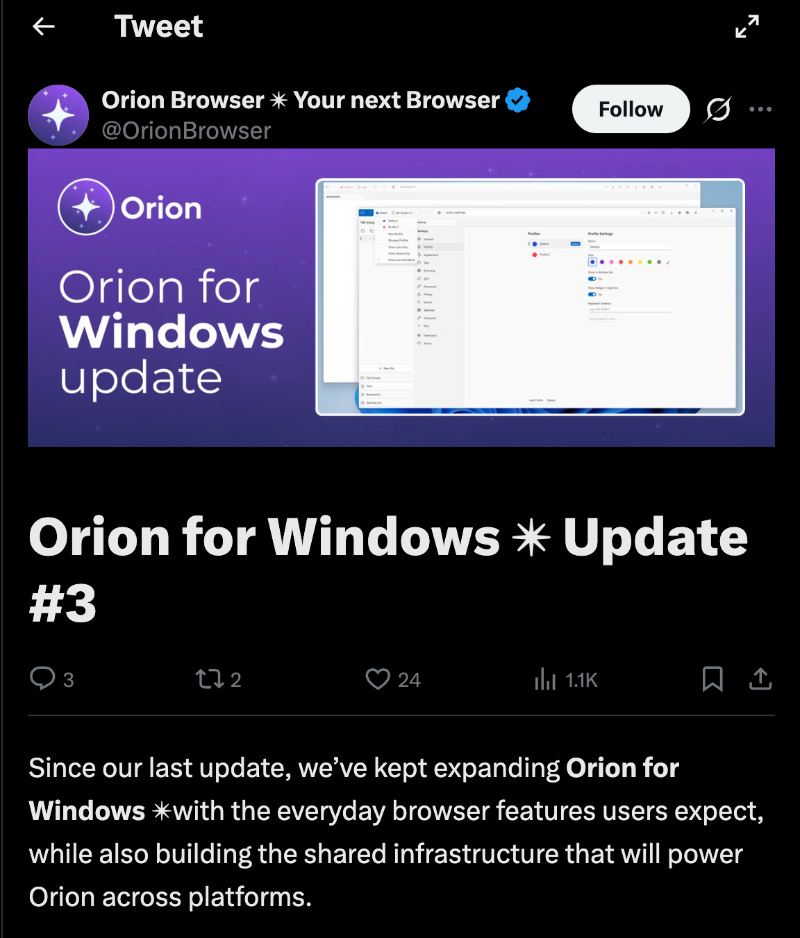
You can view a screenshot of the changes they’ve announced below.
Orion is advertised as a true “zero-telemetry” browser, with a built-in ad and tracking blocker. It’s a privacy-focused browser that uses Apple’s WebKit engine instead of relying on Chromium or Gecko. What makes Orion unique is that it still supports Chrome and Firefox extensions natively.
It’s worth noting that Orion hasn’t announced a publicly downloadable beta or a specific release date just yet. The post on X merely serves as an update on the development progress. All we know is that the Windows version should publicly come out in late 2026, as we detailed in previous coverage. For those unaware, the browser is already available for Linux users.
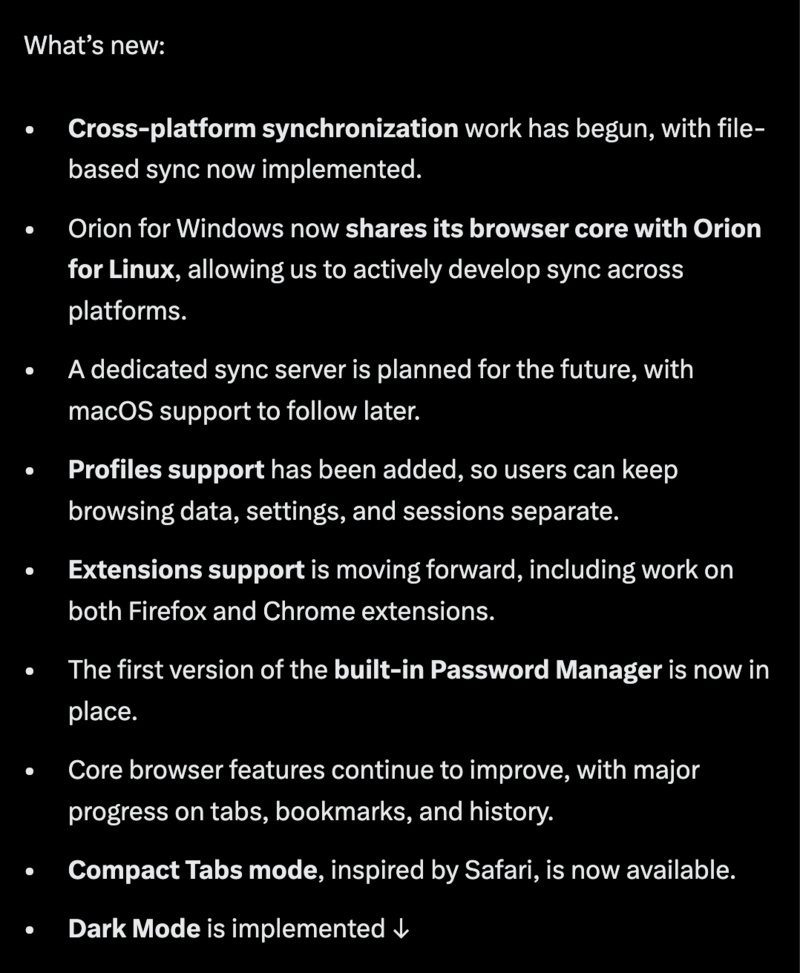
These are the major improvements that the company has detailed:
- Work on cross-platform sync has begun, and file-based sync has been implemented.
- The browser core is now matched by Orion for Linux, so the company can develop cross-platform sync more effectively. In the future, a dedicated sync server is planned.
- Support for Profiles has now been added.
- Extensions support is now better for both Chromium and Firefox extensions.
- First version of the native password manager has been implemented.
- Progress on major browser features such as tabs, bookmarks, and history.
- Compact Tabs is available.
- They’ve also added Dark Mode for the browser.
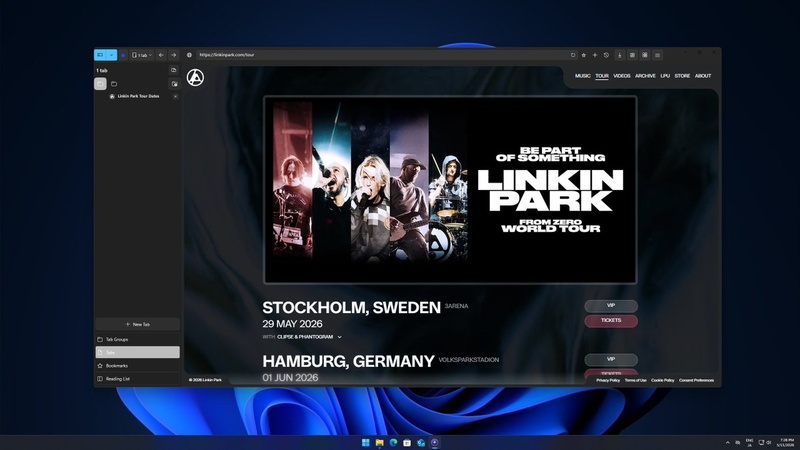
Image via Orion on X.
As we inch closer to Q4 2026, Orion on Windows is starting to look like a complete browser, as the company has noted in the post.
Additionally, Orion has stated that the current UI design and other aspects aren’t final yet, since the browser isn’t even in beta yet. It’s still in an “alpha” stage, so the company will polish up the look before the release.
Finally, the company also encouraged users to share feedback and bug reports with them directly.


Sudhanshu K
331 Posts
I have been a consumer technology enthusiast for over 5 years. Thanks to my experience in software beta testing and product reviews, I've understood and learnt a lot about what bugs and issues bother people, and I spend time trying to simplify their solutions. I cover smartphones, software, social media, apps, AI, and most consumer tech gadgets. Actively pursuing a Computer Science bachelor’s degree. I'm mostly active on Twitter/X (@TechWhirlUlt), drop a DM or tag me if you want to share info or connect!
Next article View Article