Two years after calling out Microsoft’s tactics around Edge, the same researchers are back with another look at Windows, and they say very little has changed.
Harry Brignull and Cennydd Bowles, working on a new report commissioned by Mozilla, tested Windows 10 and Windows 11 in the US, UK, Germany, and India. They wanted to see whether people could install another browser, make it their default, and continue using it without Microsoft nudging them back toward Edge.
According to the report, the answer was no across the board.
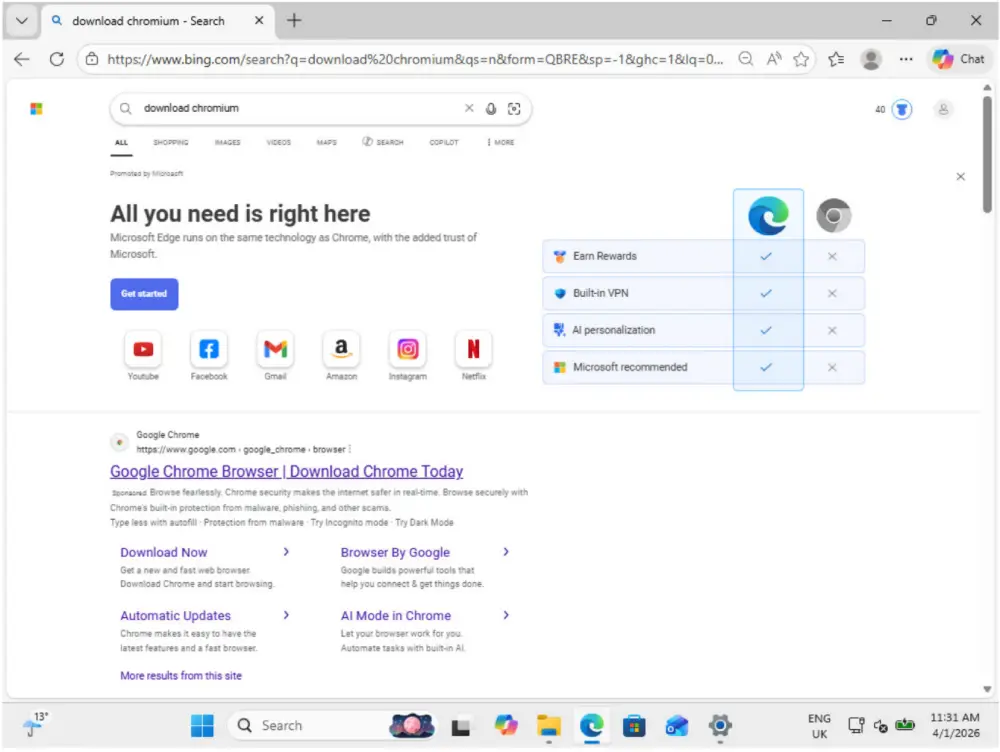
Some of the examples are the same ones Windows users have been seeing for years. Search Bing for something like “download Chrome” or “download Vivaldi,” and Microsoft may display a large banner promoting Edge before you even reach the browser you’re looking for. The report argues that these prompts are misleading because they advertise features such as AI personalization and Microsoft Rewards as though they’re unique to Edge, even though similar features exist elsewhere or aren’t tied exclusively to Microsoft’s browser.
One of the more surprising findings came from testing Microsoft’s Windows backup and restore process.
The researchers backed up a Windows 10 PC where Firefox was already installed and set as the default browser. After restoring that backup onto a fresh Windows 11 installation, Firefox was no longer the default. Edge had taken its place.
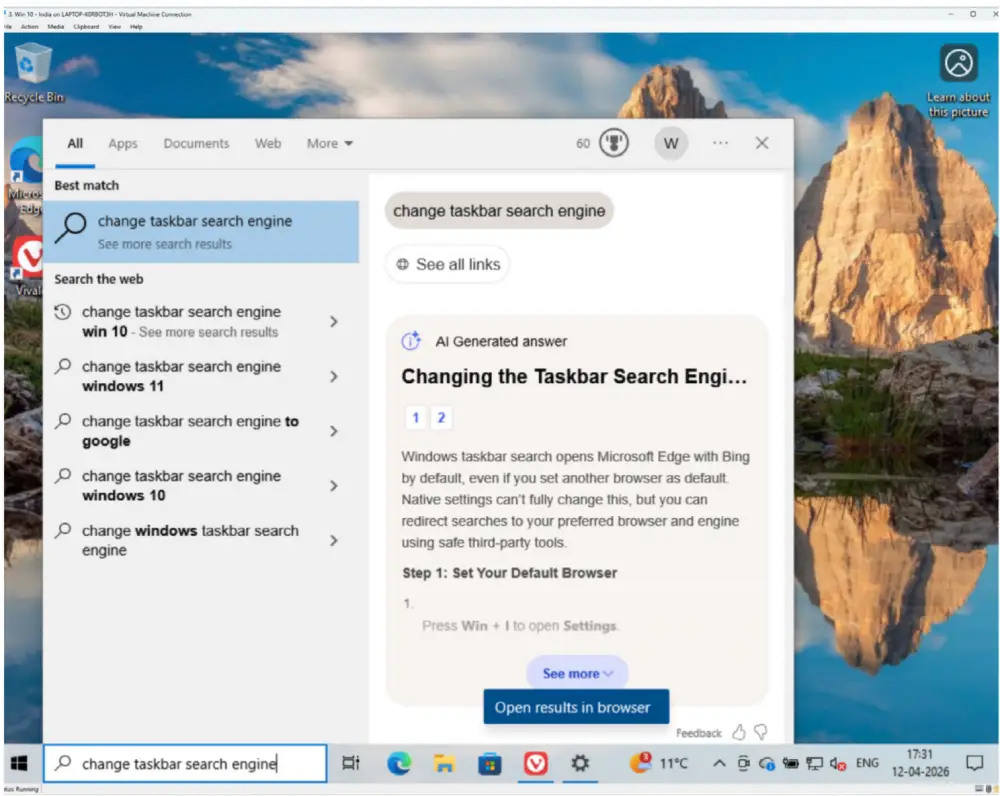
Firefox also appeared in Windows Search as if it were still installed. There was even an option to open it. Instead of launching Firefox, Windows redirected users to the Microsoft Store so they could download it again.
The report says this creates an uneven experience because Windows restores Microsoft’s own browser automatically, while competing browsers require extra steps before they can be used again.
Apart from this, Copilot was another point of criticism.
Even if users change their default browser to Chrome, Firefox, or something else, links opened from within Copilot still launch inside an Edge-based window instead of respecting the user’s browser choice. Microsoft has previously suggested this is necessary to provide the best Copilot experience, but the researchers argue that the explanation doesn’t justify ignoring the browser preference users have already selected.
Germany was the only country where the testing looked noticeably different. The researchers found fewer of these prompts and interruptions there, which they attribute to the European Union’s Digital Markets Act. They don’t believe Microsoft changed its approach voluntarily. Instead, they argue the company adjusted its behavior where regulation required it.
That matches concerns raised by the Browser Choice Alliance last month. In an open letter published in June, the group accused Microsoft of using Windows to steer people toward Edge and make switching to another browser more difficult.
Outside the EU, though, the researchers say those patterns are still easy to find.


Dwayne Cubbins
2997 Posts
I cover fast-moving stories across apps, online platforms, and everyday tech — phones, wearables, consoles, and whatever else people are fighting with this week. Bugs, rollouts, scams, policy enforcement, and the occasional internet-culture rabbit hole are all fair game. My goal is simple — make confusing tech news readable. When I'm not working, I'm working out or chilling with my dog. Got a tip? You can find me on X @dcubbins.
Next article View Article