Google is working on a small but useful change in Chrome that could make setting it as your default browser a lot less confusing on Windows.
Right now, clicking Make default in Chrome doesn’t actually finish the job. Instead, Windows opens its Settings app and expects you to change the default browser yourself. If you’ve done it before, you know it isn’t exactly obvious, and it’s easy to back out without completing the process.
Google seems to be trying to fix that.
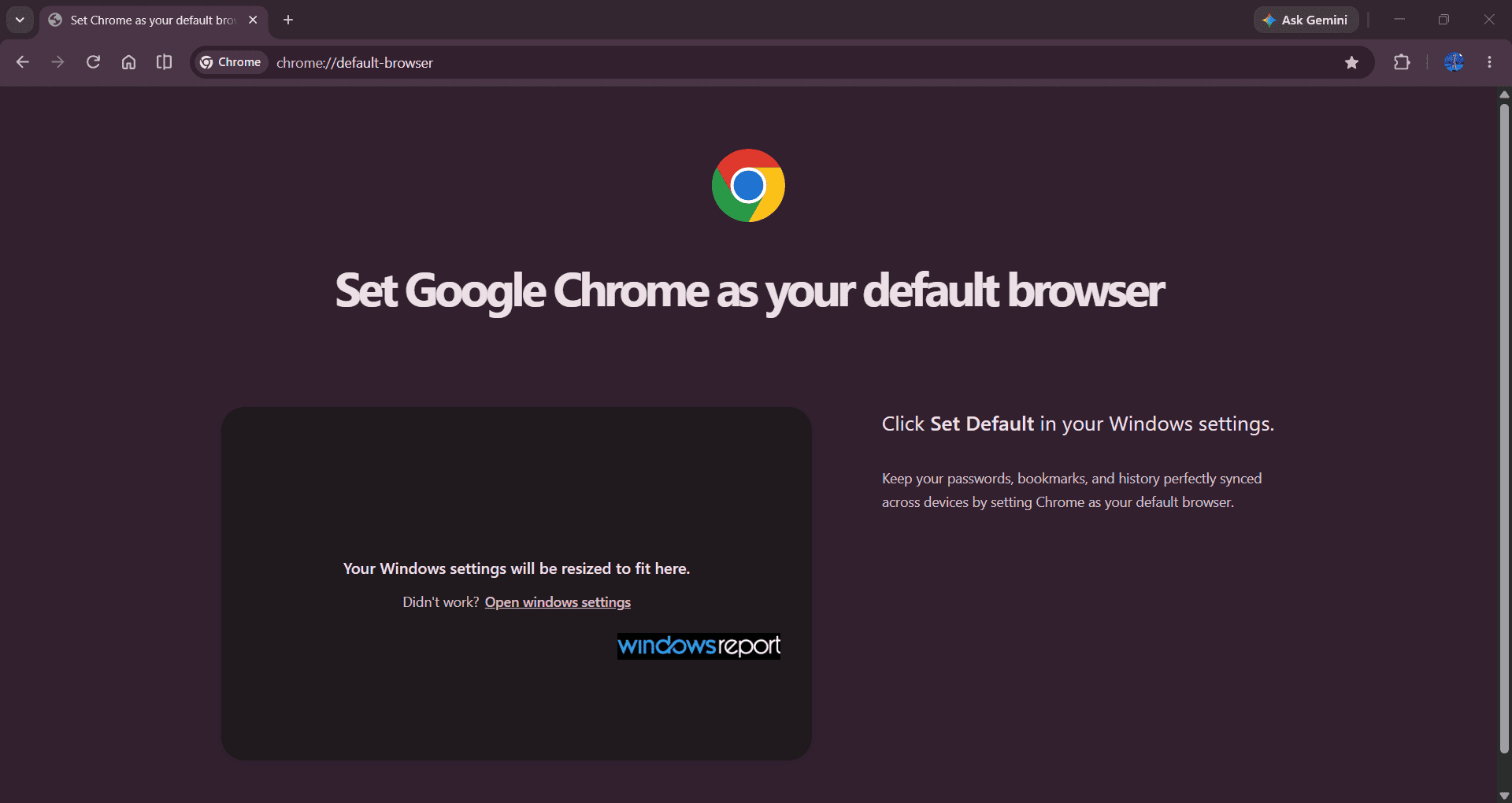
The company is testing a feature called Visual Guided Setter, which appears on the chrome://default-browser page. Instead of simply sending you to Windows Settings and leaving you on your own, Chrome guides you through the process and points you to the option you need to click. There’s also a fallback message in case the Settings page doesn’t load properly. Windows Report was the first to spot the feature while it was in testing.
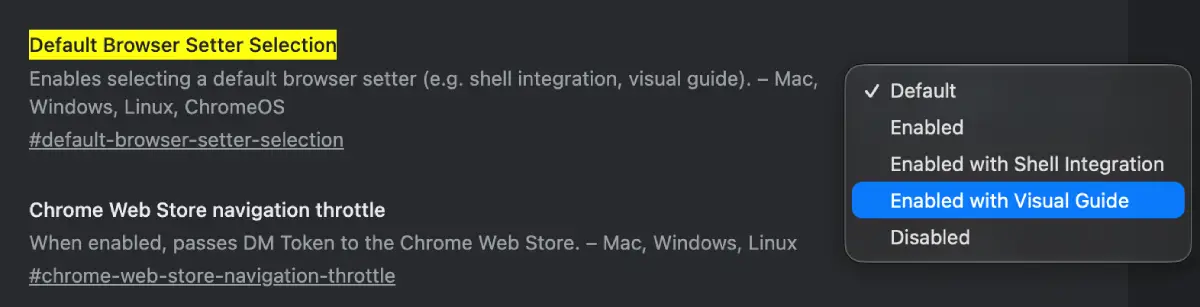
While looking around Chrome’s experimental flags, I noticed something interesting. The flag tied to this feature, called Default Browser Setter Selection, doesn’t only mention Windows. It also includes Mac, Linux, and ChromeOS as supported platforms, each with an option to enable the same visual guide.
Naturally, I tried enabling it on my Mac to see what would happen. Nothing changed. The flag is there, but the feature doesn’t seem to be active yet. That suggests Google is thinking beyond Windows, even if the Windows version is the only one that’s currently taking shape.
It’s a somewhat surprising feature to see from a browser that already dominates the market. Still, Google has more reasons than ever to keep people from switching elsewhere.
Some users have grown frustrated with the company’s growing focus on AI, and rival browsers have been benefiting from that. Brave recently crossed 117 million monthly active users, while DuckDuckGo reported a sharp increase in US installs following Google’s AI Search changes.
Google has also been tightening its grip on the Chrome Web Store, recently giving extension developers until August 1 to address privacy-related issues or risk losing their featured placement.
For now, Google hasn’t shared how this new guided experience will reach users. It could appear automatically when someone clicks Make default, or it might be introduced in another way in a future Chrome update, as speculated by Windows Report.
That part is still unclear, but the feature itself shows Google is willing to smooth out even the smallest hurdles when it comes to keeping Chrome as people’s browser of choice.


Dwayne Cubbins
3115 Posts
I cover fast-moving stories across apps, online platforms, and everyday tech — phones, wearables, consoles, and whatever else people are fighting with this week. Bugs, rollouts, scams, policy enforcement, and the occasional internet-culture rabbit hole are all fair game. My goal is simple — make confusing tech news readable. When I'm not working, I'm working out or chilling with my dog. Got a tip? You can find me on X @dcubbins.
Next article View Article