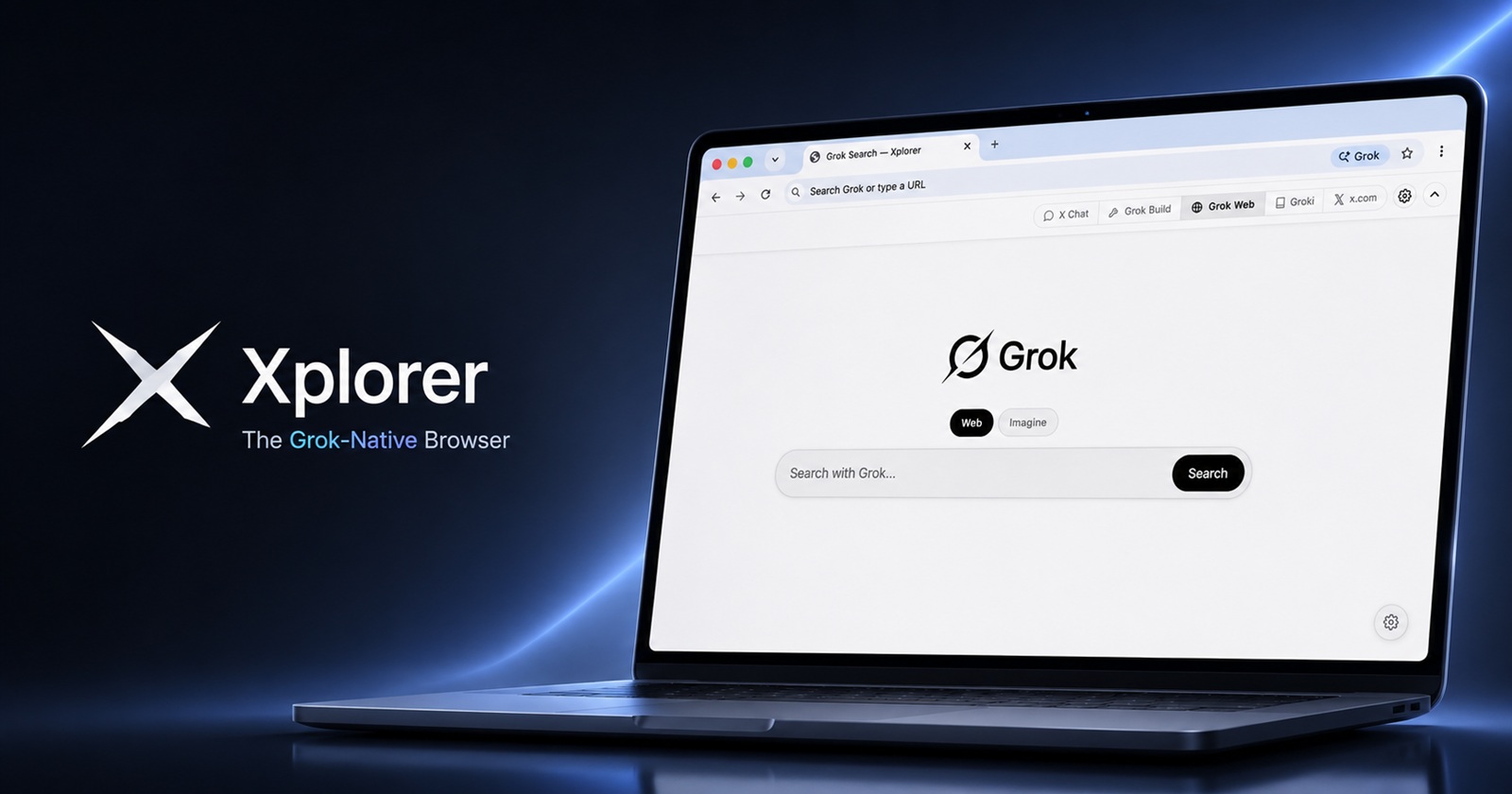
Xplorer, the new Chromium-based browser built around Grok AI, is evolving at a rapid pace. Barely a week after introducing itself as a Grok-native alternative to traditional browsers, its developer has already outlined several major features currently in development while shipping a series of updates that significantly expand the browser’s capabilities.
The biggest news is what’s coming next.
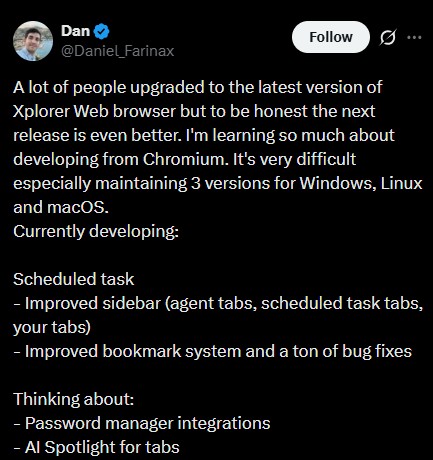
According to the latest development update shared today, Xplorer is actively working on scheduled tasks, allowing users to automate actions directly from the browser. The developer is also revamping the sidebar with dedicated sections for agent chats, scheduled tasks and regular browser tabs, alongside an improved bookmark system and numerous bug fixes.
Beyond features already in active development, Xplorer is also considering password manager integrations and an AI Spotlight feature for tabs, hinting at even deeper AI-assisted browsing in future releases.
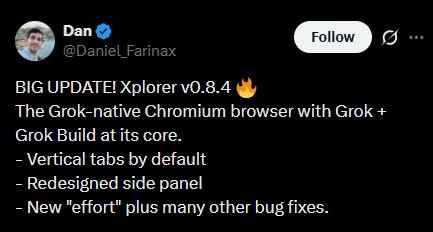
The announcement comes just days after Xplorer v0.8.4 rolled out with one of its biggest interface overhauls yet.
The latest update made vertical tabs the default experience, complete with expand-on-hover behavior and a touch-friendly toolbar layout. Users can still revert to the traditional horizontal tab strip through Chromium flags if they prefer.
Another notable addition is a new response settings menu inside the Grok sidebar composer, letting users adjust AI reasoning effort from Low to Max, as well as configure maximum conversation turns.
Version 0.8.4 also focuses heavily on polish. Grok now streams its reasoning live inside a collapsible panel instead of pausing before dumping a completed response. Clipboard shortcuts in the sidebar finally work correctly, selected AI models now persist between sessions, new tabs open to a truly blank home page, response spacing has been tightened, and an issue causing an empty active-chat indicator has also been fixed.
The browser’s momentum actually began a day earlier with Xplorer v0.8.2, released on June 23.
That update introduced the ability to build apps directly inside the Grok side panel using a live canvas, enabling users to create applications without leaving the browser. It also added background AI agent chats that can run in parallel, complete with a kill switch for stopping tasks when needed.
Another standout addition is AI-driven tab organization, allowing Grok to intelligently sort and manage open tabs, one of the browser’s strongest examples yet of AI extending beyond chatbot interactions into everyday browsing.
Taken together, these rapid-fire releases suggest Xplorer is moving quickly from an experimental Grok-powered browser into a more capable AI workspace, with automation, smarter tab management and deeper productivity features firmly on the roadmap.


Hillary Keverenge
2723 Posts
Tech has been my playground for over a decade. While the Android journey began early, it truly took flight with the revolutionary Lollipop update. Since then, it's been a parade of Android devices (with a sprinkle of iOS), culminating in a mostly happy marriage with Google's smart home ecosystem. Expect insightful articles and explorations of the ever-evolving world of Android and Google products coupled with occasional rants on the Nest smart home ecosystem.
Next article View Article