Google is officially changing how it numbers ChromeOS updates starting with version 154. The operating system will stop counting by ones and start skipping odd numbers entirely. It will increment by two versions every single time a new stable update drops.
Chrome and ChromeOS have moved in perfect lockstep for years. Chrome 148 arrived and ChromeOS 148 followed right behind it. People always knew exactly where the platforms stood just by looking at the build number. But that straightforward system is now breaking down because the desktop Chrome browser is speeding up its release cycle.
Google recently confirmed the browser is moving to a two-week update schedule starting this September with the launch of Chrome 153. The company wants to deliver web platform capabilities and security patches twice as fast as it does right now. This quick pace means that the standalone browser will chew through version numbers at double its normal speed.
As you might expect, ChromeOS simply can’t keep up with that speed. A full operating system requires extensive hardware regression checking and manufacturer validation before it ships to the public. You can’t just push a massive OS update to millions of laptops every 14 days without breaking a few things. Google is strictly keeping ChromeOS on its existing four-week release schedule to maintain system stability.
But that decision creates an obvious problem because the browser version numbers will quickly outpace the operating system numbers. Desktop Chrome would hit version 160 while ChromeOS was stuck back in the low 150s. Developers and IT admins rely on those numbers matching to track active APIs and security patches across different machines.
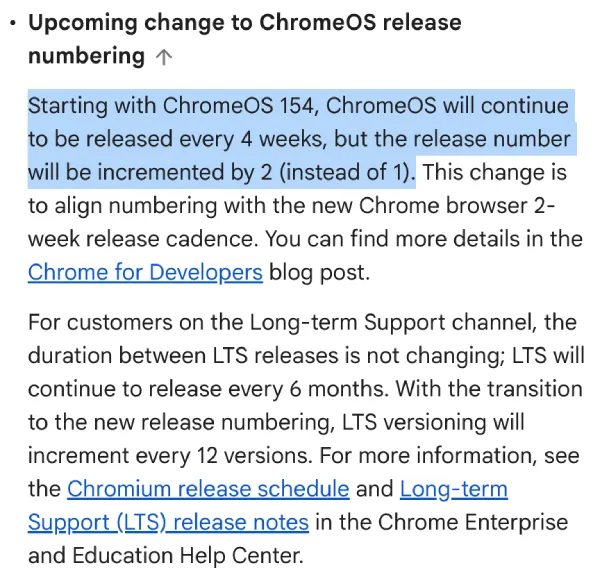
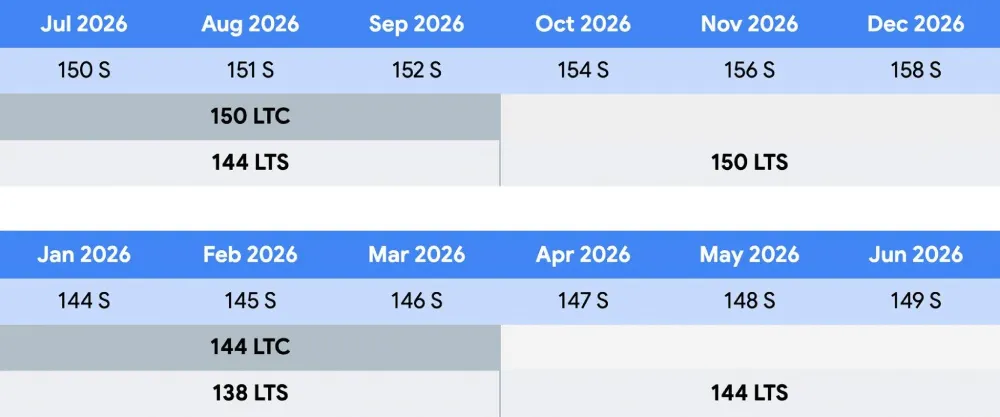
So Google has decided to manipulate the math to solve the problem. ChromeOS stable builds will just jump forward two full milestones at once every four weeks. The OS essentially skips a number to land perfectly in sync with the current Chrome browser version shipping at that exact moment.
Here’s the current release schedule for reference:
Fast browser updates are becoming the default standard across the whole industry right now. We covered how Microsoft Edge is making a nearly identical move by adopting its own two-week release cycle starting in late August. Standalone browsers are splitting their feature drops into smaller and more frequent batches. Full operating systems are just too heavy to follow that trend.
Enterprise users and school IT administrators managing giant fleets of Chromebooks don’t need to panic or alter their internal update policies. The actual physical release frequency for standard ChromeOS updates remains completely anchored to the current four-week tempo. Your deployment schedules will function exactly the same way they do today.
Administrators using the Long-term Support channel will see a similar numbering adjustment. LTS builds will continue to deploy every six months to prioritize long-term stability. LTS channel version numbers will increment by 12 milestones at a time instead of the traditional six to stay synchronized with the new rapid numbering system.


Dwayne Cubbins
3128 Posts
I cover fast-moving stories across apps, online platforms, and everyday tech — phones, wearables, consoles, and whatever else people are fighting with this week. Bugs, rollouts, scams, policy enforcement, and the occasional internet-culture rabbit hole are all fair game. My goal is simple — make confusing tech news readable. When I'm not working, I'm working out or chilling with my dog. Got a tip? You can find me on X @dcubbins.
Next article View Article