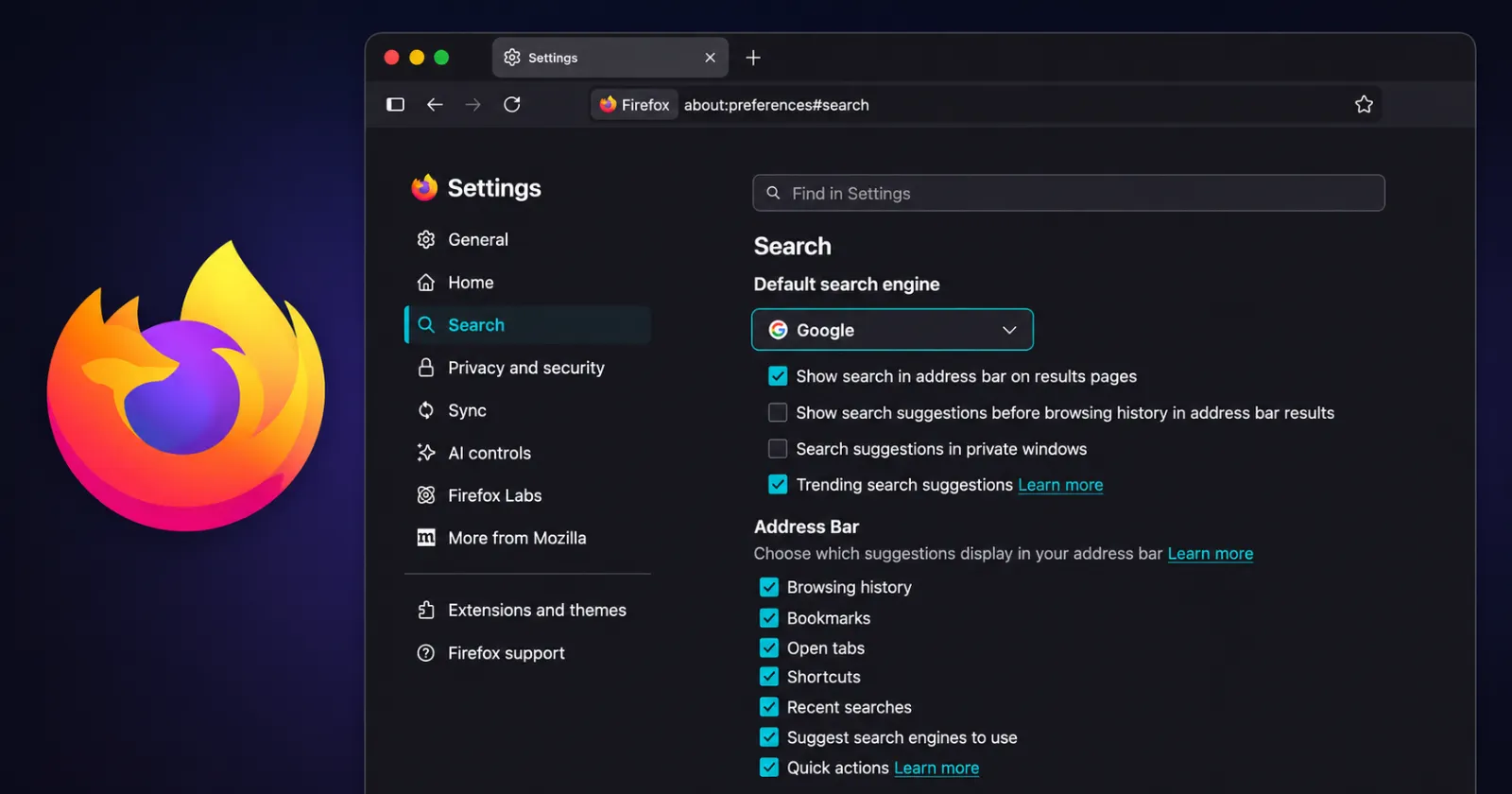
With the growing conversations around AI-powered web search results, the web browser landscape has once again become a hot topic. It’s a space filled with fierce loyalties. You have your die-hard Chrome users, the Microsoft Edge faithful, and the privacy-conscious Firefox crowd. Everyone has their reasons for swearing by their daily driver.
For a long time, one of the biggest workflow advantages for Chromium-based browsers (including Google Chrome and Microsoft Edge, which I use quite often) has been adaptive autofill. This feature automatically completes your URLs based on how regularly you visit specific pages. Meanwhile, the team at Mozilla opted against this behavior, sticking to a simpler approach. But after persistent user requests to bridge this gap, most notably tracked in Bugzilla #2032547, Mozilla is finally changing its tune.
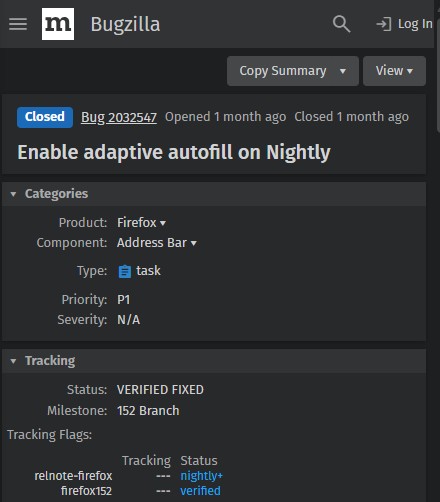
Starting with Firefox Nightly build 152 (and carrying over into the current v153), the address bar now features adaptive autofill. It learns from your browsing habits to complete not just base domains, but the specific pages you visit most frequently.
How the new Firefox adaptive autofill works
Previously, Firefox’s autofill only completed root domains. If you typed “red,” it would predictably autofill to reddit.com. Now, the browser pays attention to what you actually click and where you spend your time. If you frequently visit a specific subreddit, typing “red” might now autofill the full URL to [reddit.com/r/firefox](https://reddit.com/r/firefox).
To keep the system from getting bogged down with bad suggestions, Mozilla has smartly included a management tool. If the browser autofills a specific page you no longer want to see, a new menu item allows you to dismiss the suggestion directly, teaching the algorithm what not to show you in the future. And if you still visit a site’s root domain more frequently than any specific sub-page, it will default to the standard domain-level autofill you are already used to.
A double-edged sword for productivity?
As someone who spends hours a day navigating between research tabs, content management systems, and news sources, I can say adaptive autofill is a bit of a double-edged sword.
On paper, it’s great. It learns your habits and speeds you up to the exact destination you wanted anyway. However, the search process isn’t always that linear. My biggest gripe with aggressive autofill is the loss of predictability. There are plenty of times I type a quick search term into the address bar and hit enter before I even register that an autofill suggestion has populated. Instead of getting the Google search results I expected, the browser hijacks my query and dumps me onto a domain I happened to visit a few times last week.
Without autofill, I know exactly what my sequence of keystrokes will do before I even touch the keyboard. Because I keep all my frequent sites neatly bookmarked, I rarely find myself actually needing the browser to guess my destination. When I do, I’d much prefer requiring an explicit input, like hitting the down arrow, to trigger the completion.
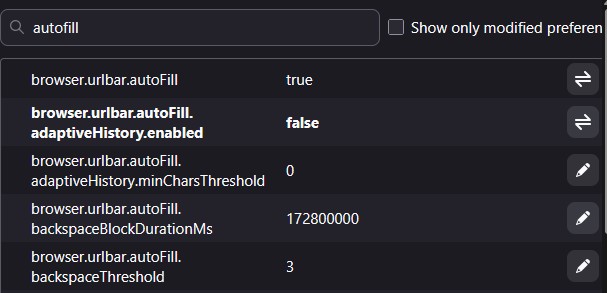
Fortunately, for power users who share this sentiment, there is an about:config flag available to permanently disable the new adaptive behavior. Let’s hope Mozilla keeps that flag around when this feature graduates to the stable channel.
Availability
Right now, adaptive autofill is strictly limited to the desktop version of Firefox Nightly (v152 and newer). Android and iOS users on the Nightly builds are currently left out, with no immediate timeline on when mobile parity will be achieved.
While it hasn’t hit the stable release yet, its presence and active refinement in Nightly strongly suggest it’s only a matter of time before it rolls out to the wider Firefox user base.


Hillary Keverenge
2723 Posts
Tech has been my playground for over a decade. While the Android journey began early, it truly took flight with the revolutionary Lollipop update. Since then, it's been a parade of Android devices (with a sprinkle of iOS), culminating in a mostly happy marriage with Google's smart home ecosystem. Expect insightful articles and explorations of the ever-evolving world of Android and Google products coupled with occasional rants on the Nest smart home ecosystem.
Next article View Article