We were doing okay at PiunikaWeb before mid-2023. Then Google rolled out massive algorithm changes, including the Helpful Content Update, and traffic just fell off a cliff. No, this was not a small drop. It was not one bad week. It was a brutal collapse that changed everything for us in a matter of months.
Here’s a screenshot of how our views collapsed in just a few months.
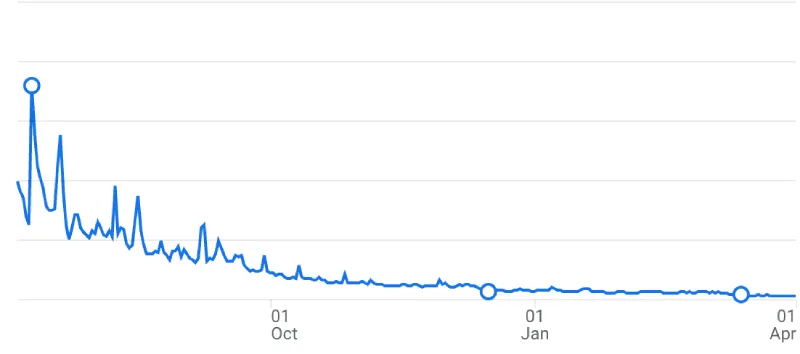
We went from steady traffic to almost nothing, and it took more than two years before we saw any real sign of life again. People love talking about these things like they are just lines on a graph, but when you run a site, those lines are your livelihood.
It means money going out while the traffic that pays the bills dries up. It means looking at people who worked hard for years and wondering how long you can keep this going. It means waking up every day with that ugly feeling in your stomach, knowing the numbers still aren’t coming back.
For a few months, we tried to hold on for as long as we could. We kept the full team together even while the site was bleeding cash day after day. We saw many other publications shut down and give up, but we kept telling ourselves, maybe this would pass, maybe if we just kept doing good work, Google would stop treating us like we did something wrong.
Well, it did not work out that way at all. We had to downsize, and I do not think people outside this business understand what that really means. It is not some cold business decision you shrug off. Telling people you worked with like family that they no longer had a place on the team is one of the worst feelings in the world. There is no easy way to say it. It hurt more than I can put into words.
By that point, PiunikaWeb felt completely pushed out. Our stories were not showing up where they used to in Search. News had dropped us too. Discover was gone. Even when we had something important, it felt like we were publishing into thin air and hoping someone, somewhere, might still find it. It was a clear sign that we had to act instead of waiting for Google, for what seemed like forever, to lift whatever algorithmic suppression (essentially a shadowban) it had on our site.
So we launched TechIssuesToday as a sister site and kept going. We still wanted to cover breaking news. We still wanted to do original reporting. We still wanted to highlight the kinds of user issues and platform screwups that bigger outlets often ignore until the story becomes too big to miss.
For nearly two years, we ran both sites while trying to stay alive. That alone should tell you this was never about us sitting around whining over traffic. We adapted and worked harder. We kept reporting. We kept trying to survive while Google kept moving the goalposts and pretending it was all part of some clean system based on quality.
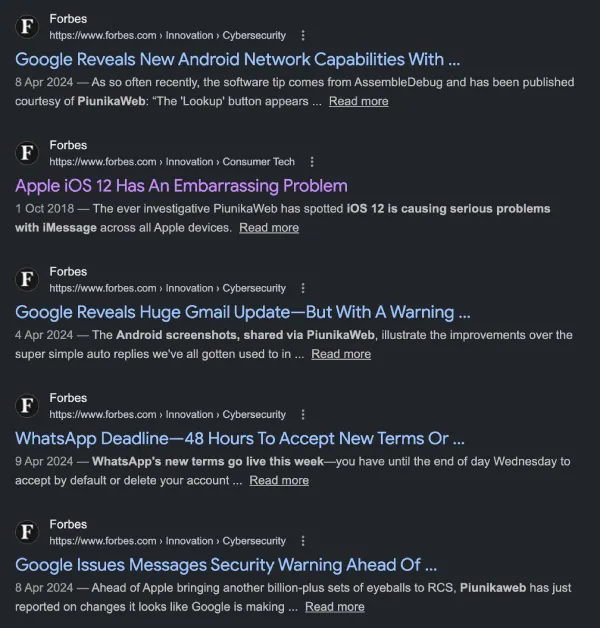
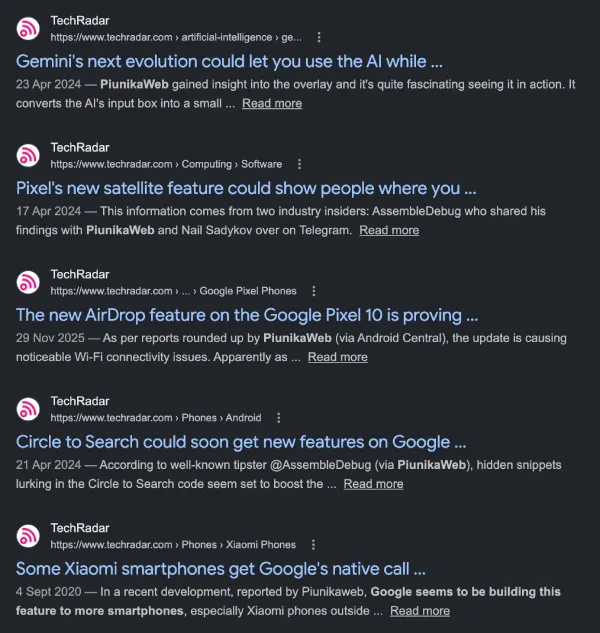
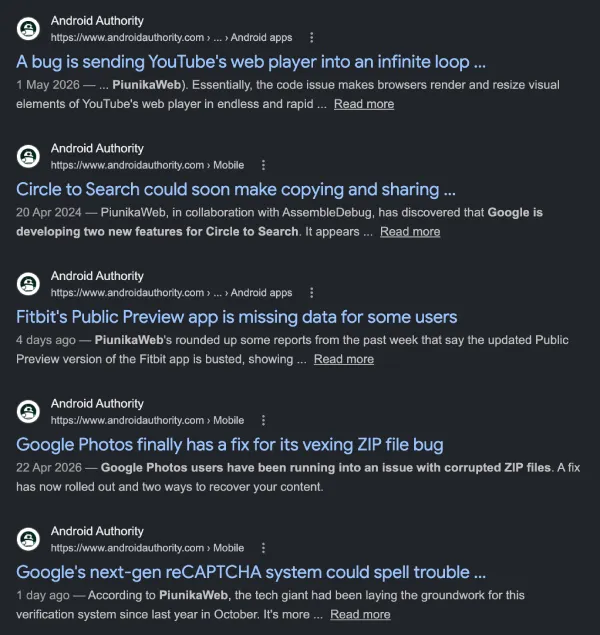
And here is what really gets me. Our work was good enough to get picked up by major outlets. Here are a few screenshots that show a very tiny portion of our work being cited by some of the most popular outlets in the industry.
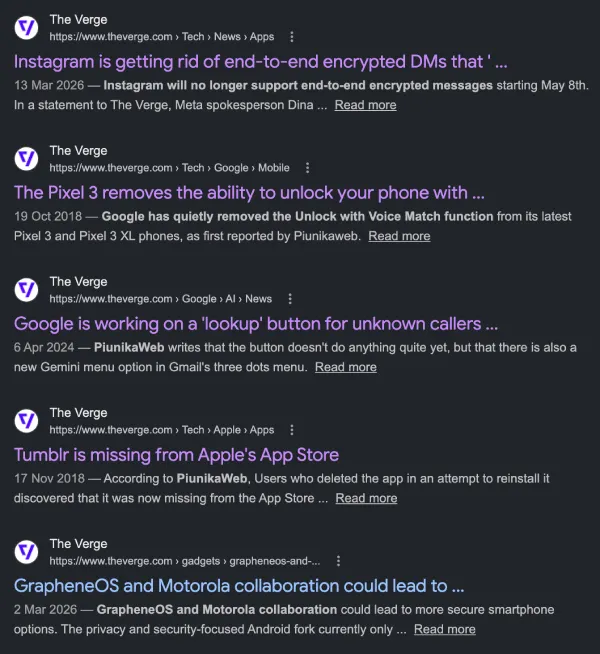
But it’s not just PiunikaWeb. We put in the same effort on TechIssuesToday, and our work there didn’t go unnoticed by many of the same big names.
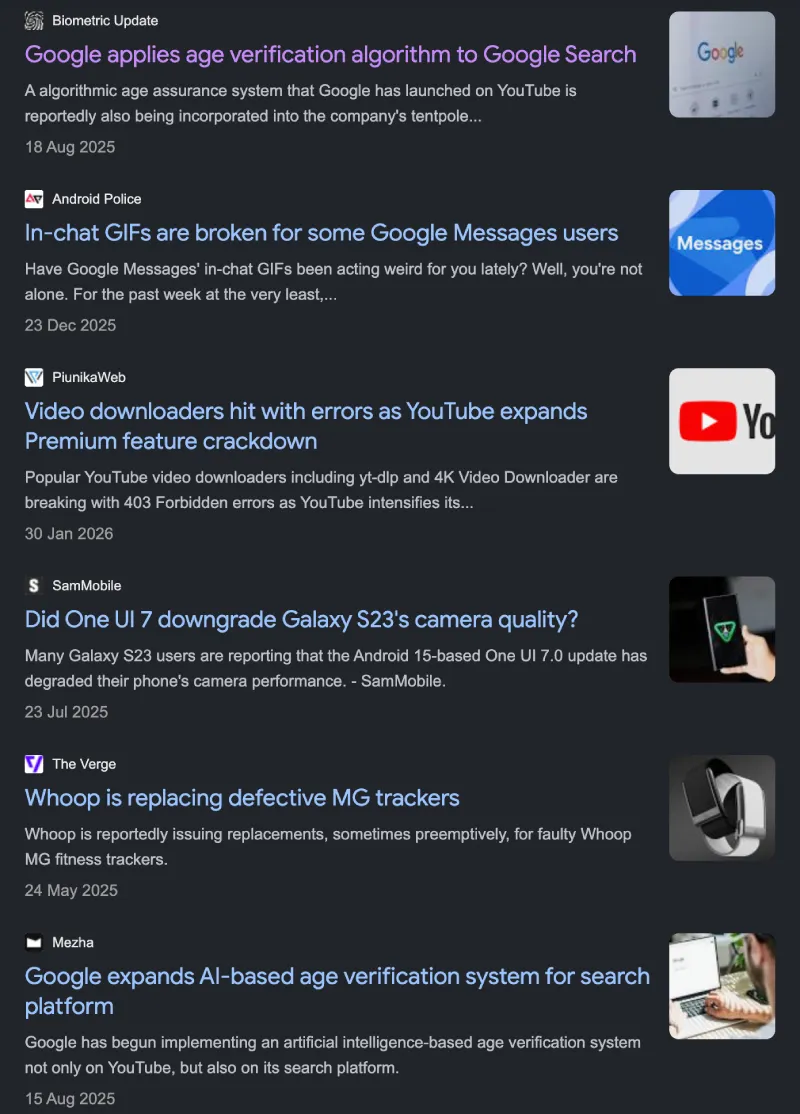
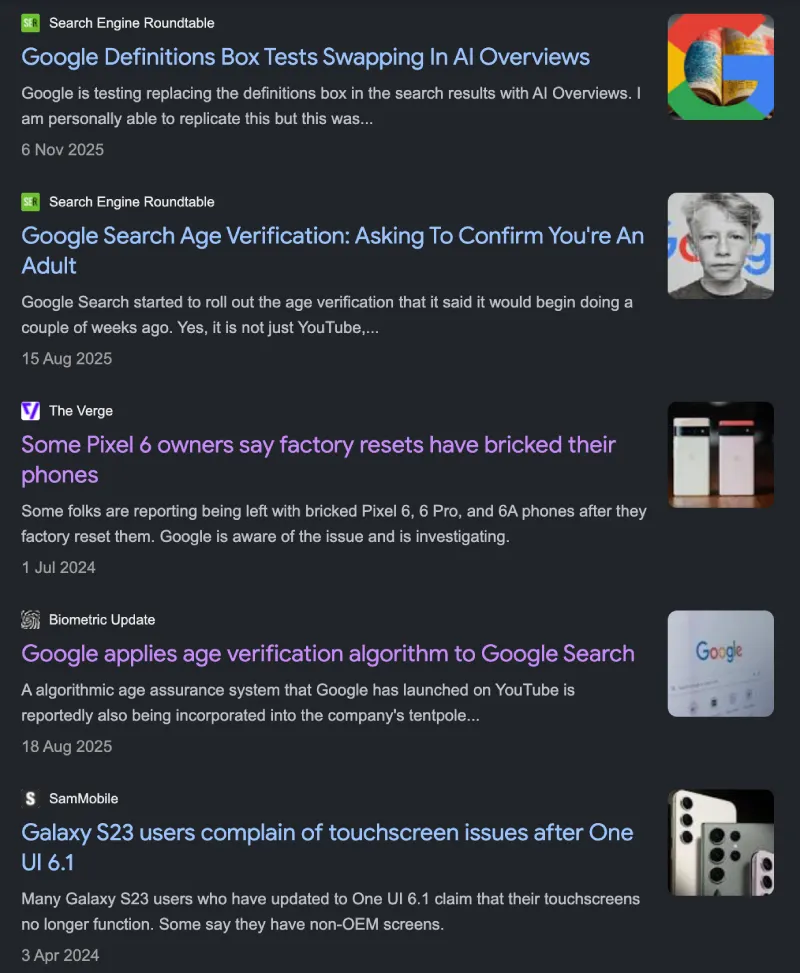
So what exactly are we supposed to believe here? That our reporting was solid enough for major publications to credit, but not solid enough for Google to keep visible.
I was one of the first to cover the Meta ban wave on TechIssuesToday. Readers were DMing us to say thanks because we were covering something that was happening to real people before many mainstream sites got around to it. The story spread, it was shared around Reddit, and it helped put attention on something that deserved attention. Here’s one such DM that I got on at the time:
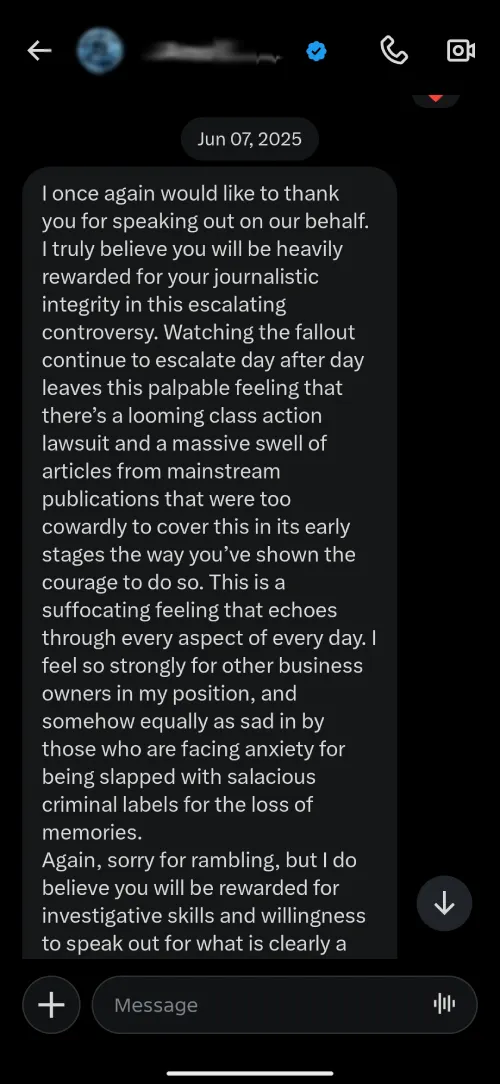
But it seems Google once again had other plans for us in store. They decided now’s a good time to get rid of a bunch of that work and make it vanish from search.
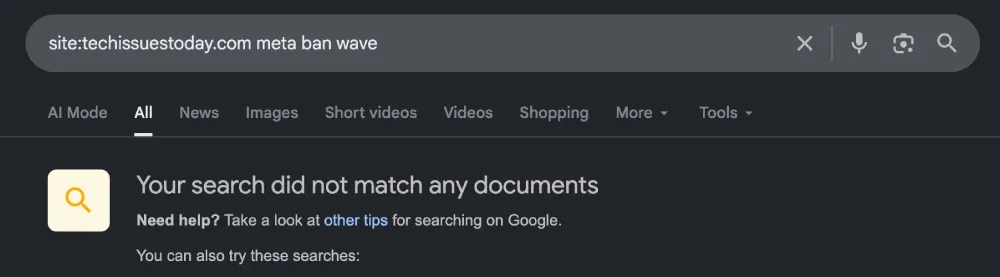
As it turns out, we were early witnesses to a much larger erasure. While we were watching our Meta coverage vanish, Search Engine Roundtable reported on a massive deindexing wave hitting publishers across the board. That lined up exactly with what we were seeing on TechIssuesToday, where articles we had worked hard on just started vanishing from search.
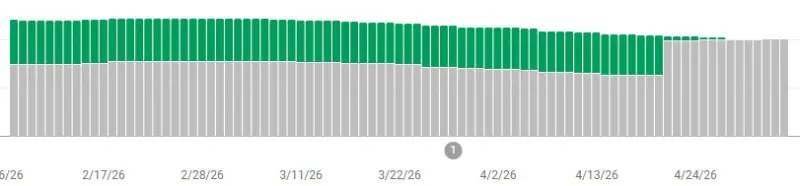
That is the part that breaks trust. You can hate an update and still tell yourself that maybe it is just bad luck. But when original reporting gets deindexed and wiped out with no clear explanation, it stops feeling like ranking and starts feeling like erasure. What is the point of doing real work if the biggest gatekeeper on the web can just make it disappear like it never existed?
This was never just our mess
What makes all this even more infuriating is that it is not just our story. This has happened across the web, to all kinds of publishers. Independent sites got smashed. Niche sites got smashed. News publishers got smashed. Even bigger names have been hit hard by Google’s constant fiddling with Search, Discover, and now AI answers.
Take HouseFresh. As PPC Land reported, HouseFresh lost around 95 percent of its Google traffic after the September 2023 Helpful Content Update. Ready Steady Cut reportedly lost around 80 percent too. These were not tiny little penalties on a few pages. Whole websites were affected, irrespective of the content and how useful it was to folks.
Then there was a six month study on niche sites hit by the March 2024 update, and the findings were brutal. Nearly half of the sites looked at lost more than 90 percent of their monthly organic traffic. Some lost everything. Imagine building something for years only to have Google wipe out your visibility so thoroughly that it is almost like your site never existed. Again, this would have been PiunikaWeb’s fate too if it weren’t for the sheer determination of the co-founders, who didn’t give up despite the ship practically sinking to the bottom.
But that’s not all. Search Engine Roundtable covered data showing that regular Google web search made up more than half of Google driven traffic to news publishers in 2023, but by late 2025 that had dropped to around 27 percent. At the same time, Discover grew into the much bigger source of traffic, which sounds fine until you remember how unstable Discover is and how one quiet tweak can send your numbers into the floor overnight.
So Google essentially pushed publishers into relying on a feed that can change on a whim, while the steadier search traffic many sites used to build around keeps shrinking away.
And…it just gets worse.
If you thought all this was bad enough. Enter AI Overviews, which somehow made all this worse. TechCrunch wrote about how Google’s AI search features are devastating traffic for publishers, and it is not hard to see why. If Google answers the question on the search page itself, fewer people click through to the site that actually did the work.
In fact, back in early 2025, I ranted about the very same thing and highlighted how AI Overviews were essentially making it impossible for us and many other small to medium-sized websites/blogs to survive.
That is the part that feels like a slap in the face. We do the reporting. We spend the time. We deal with the costs. We verify things. Then Google turns around, builds a neat little summary from publisher work, and keeps the user right there on its own page. We lose the click, we lose the pageview, we lose the ad revenue, and Google gets to act like this is some helpful innovation.
It is not just a theory either. The BBC also reported that publishers are seeing huge click-through losses when AI summaries show up, and DMG Media told the UK watchdog those drops could be as high as 89 percent. When you are already hanging on by your fingernails, losing that kind of traffic is not some annoying side effect. It is a death sentence.
And if that still was not enough, even publishers in Europe have started pushing back harder. Heise reported that the European Publishers Council filed a complaint over Google’s AI Overviews and AI Mode, arguing that these features threaten the open web itself. Honestly, I do not think that sounds dramatic anymore. I think it sounds accurate. Google is indeed burying a chunk of the industry. The very same industry that helped Google become…well, Google.
And now they act like this is normal
That is maybe the most maddening part of all this. Google keeps talking about quality, about helping users, about making Search better. But from where we sit, it looks a lot more like they are making room for big brands, giant forums, Reddit style content, and now their own AI boxes, while the smaller publishers who actually do original work get shoved aside.
You see the same huge names dominating results again and again. In plenty of niches, big publishers rank for everything under the sun whether or not they really know the topic or did the legwork. Meanwhile, the smaller sites that spend real time and money on reporting, testing, and digging into actual user problems get buried, deindexed, or pushed out of Discover.
That is backwards. It is the opposite of what search was supposed to be.
We are not asking for special treatment. We are asking for a fair shot. If something is wrong with a page, tell us what it is. If a site has a problem, explain it clearly. Do not just toss publications into a black box, wreck their traffic, wipe out their work, and then act like nobody is owed an explanation because the algorithm has spoken.
Our own editor wrote about this early on in a PiunikaWeb opinion piece on AI Overviews, and if anything, things have gotten worse since then. Back then, it already felt like Google was heading toward a future where it wanted to keep users on Google instead of sending them to the sites creating the information. Now that future is here, and publishers are paying for it.
We live with that fear every day now. Fear that the next update will bury us again. Fear that the next indexing issue will wipe out more original reporting. Fear that the next AI feature will siphon off whatever clicks are left. That is not how the open web is supposed to work.
Google wrecked what we built. It made some of our best reporting disappear from search. It helped push us into downsizing. It forced us to fight twice as hard just to stay visible, and even then, there are no guarantees that the next hit is not right around the corner.
And through all of this, Google acts like nothing is happening.
But it is happening. It is happening to us. It is happening to other independent sites. It is happening to publishers across the web. And pretending this is just the new normal does not make it any less wrong.


Dwayne Cubbins
3123 Posts
I cover fast-moving stories across apps, online platforms, and everyday tech — phones, wearables, consoles, and whatever else people are fighting with this week. Bugs, rollouts, scams, policy enforcement, and the occasional internet-culture rabbit hole are all fair game. My goal is simple — make confusing tech news readable. When I'm not working, I'm working out or chilling with my dog. Got a tip? You can find me on X @dcubbins.
Next article View Article