Hackers are hijacking Facebook business pages and permanently disabling personal accounts using highly convincing “Business Manager partner request” emails.
These are not your typical typo-filled spam messages. They are actual notifications sent directly from Meta’s official [email protected] address, and they even carry a verified blue checkmark.
According to a detailed warning on r/facebook, the attack exploits Meta’s own partnership system. Scammers create a dummy business page with an incredibly long, deceptive name.
They name the page something like “Agency Partner Program is Meta’s partner network.” When they request access to your page, Facebook automatically generates an official email containing that exact text.
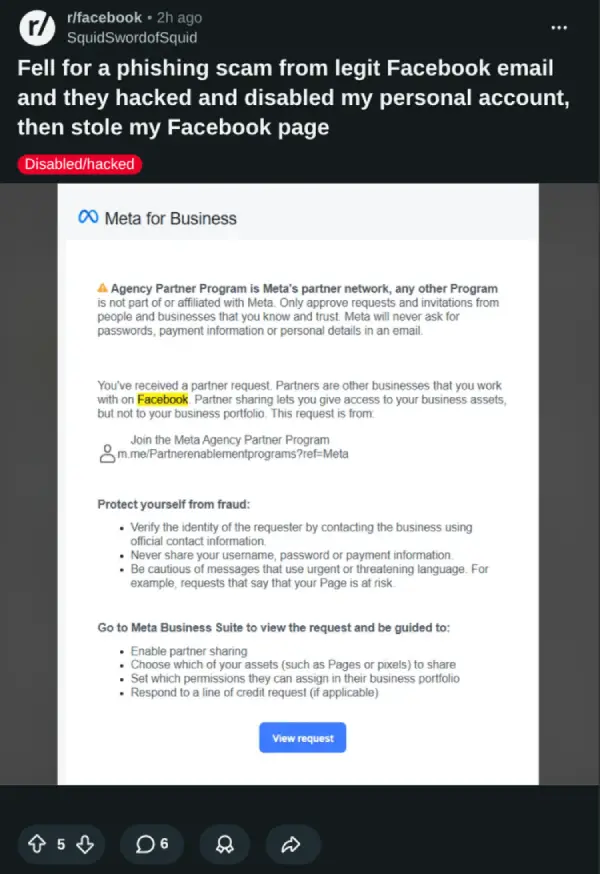
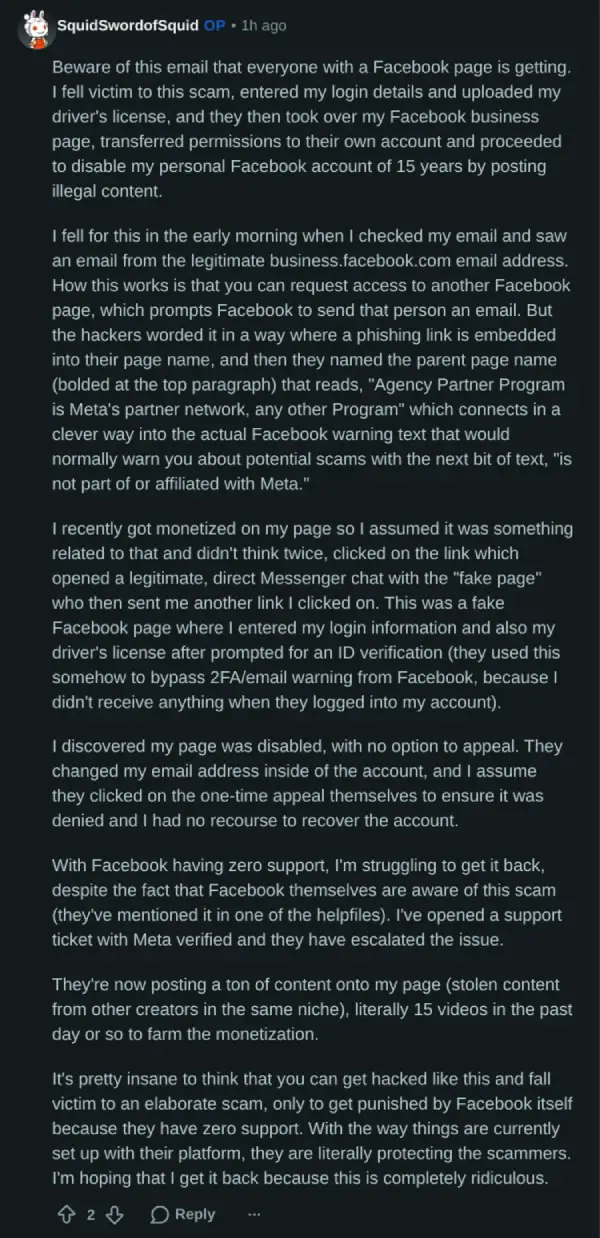
It looks completely legitimate. The OP claimed they fell for the trick early in the morning. They clicked the link, which opened a direct Messenger chat with the fake page.
From there, the attackers prompted them for an ID verification. The victim uploaded their driver’s license. The hackers used that ID to bypass two-factor authentication without triggering any email warnings.
Following that, the attackers transferred page permissions, locked the original owner out, and began posting stolen videos to farm monetization. They also got the victim’s 15-year-old personal account permanently disabled by posting illegal content.
This isn’t the only thread about these emails, either. Another thread is full of page owners complaining about the spam. A commenter said they are receiving up to ten of these requests a single day.
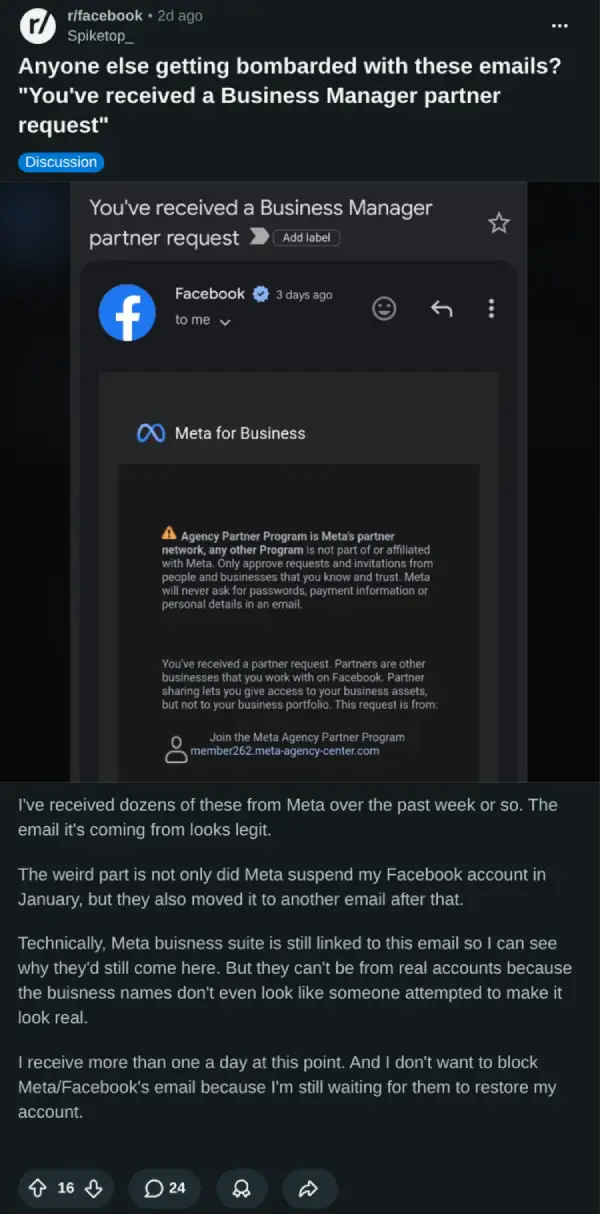
This level of social engineering is not great, but it is becoming a common tactic. Just a few weeks ago, a highly targeted phishing scam compromised German officials on Signal by spoofing official support messages.
For now, the absolute best defense is to delete the emails completely. If you need to check your page settings, log into the Meta Business Suite manually.
Do not click the “View request” button in your inbox. Facebook is currently protecting the scammers through its automated architecture, so the only real protection is to avoid those links.
Featured image generated with AI


Dwayne Cubbins
3083 Posts
I cover fast-moving stories across apps, online platforms, and everyday tech — phones, wearables, consoles, and whatever else people are fighting with this week. Bugs, rollouts, scams, policy enforcement, and the occasional internet-culture rabbit hole are all fair game. My goal is simple — make confusing tech news readable. When I'm not working, I'm working out or chilling with my dog. Got a tip? You can find me on X @dcubbins.
Next article View Article