A popular Pokémon companion app with nearly five million downloads was removed from Google Play last month over an ad Google’s own network served, and it now appears to be back on the store.
dataDex, which has around 600,000 monthly active users and a 4.5-plus rating built over a decade, disappeared from the Play Store on April 20. The developer, Tal Barina, says the cited violation was a casino interstitial ad that appeared in the app under the label “Tower Rush,” complete with “PREMIO 1500 EUR + 250 FREE SPINS GIOCARE” splashed across it. He says he never selected it, never approved it, and didn’t know it was running.
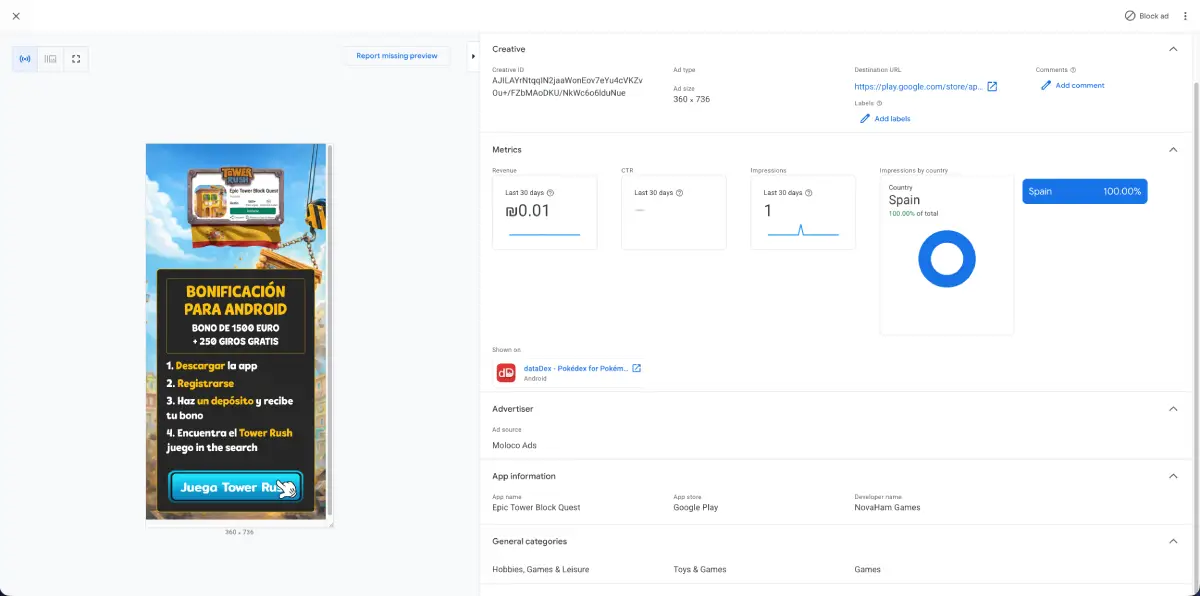
The ad came through AdMob, which is Google’s own ad network.
According to Barina, the problem wasn’t just that a casino ad slipped through. It’s that AdMob’s classifier apparently never recognized it as a casino ad at all. The creative, and at least ten others like it, were categorized under labels like “Games” and “Toys and Games” rather than anything gambling-related. Because of that, the publisher-side blocks Barina already had configured for gambling content never triggered. They had no chance to.
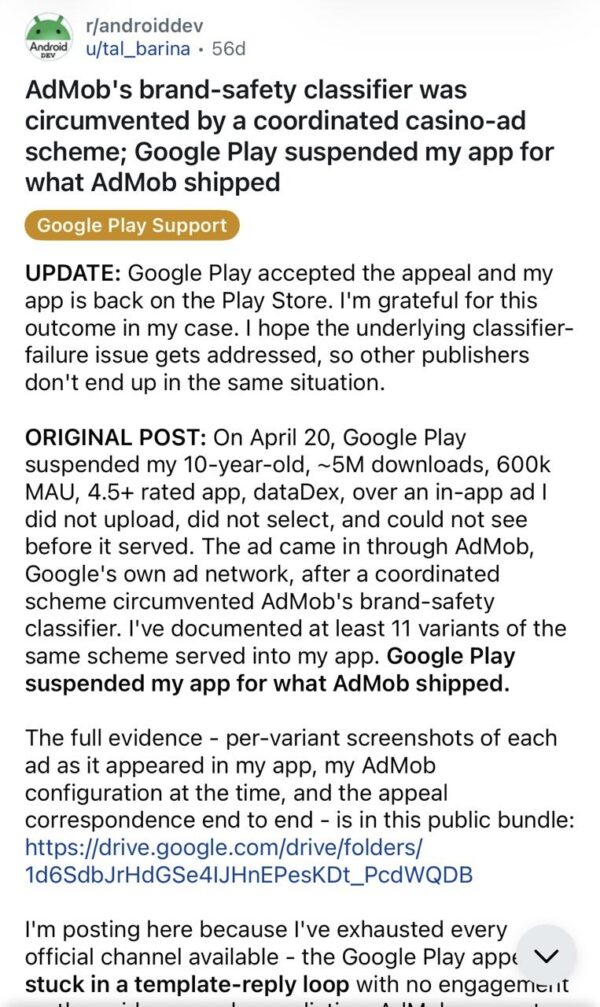
He’s documented at least eleven variants of what looks like a coordinated scheme, all traced to the same demand source, all disguised under fake game-themed names like “Epic Tower Block Quest,” “Duck Devourer,” and “Gold Gatherer.” The visuals across all of them said “Tower Rush.” The metadata said mobile game.
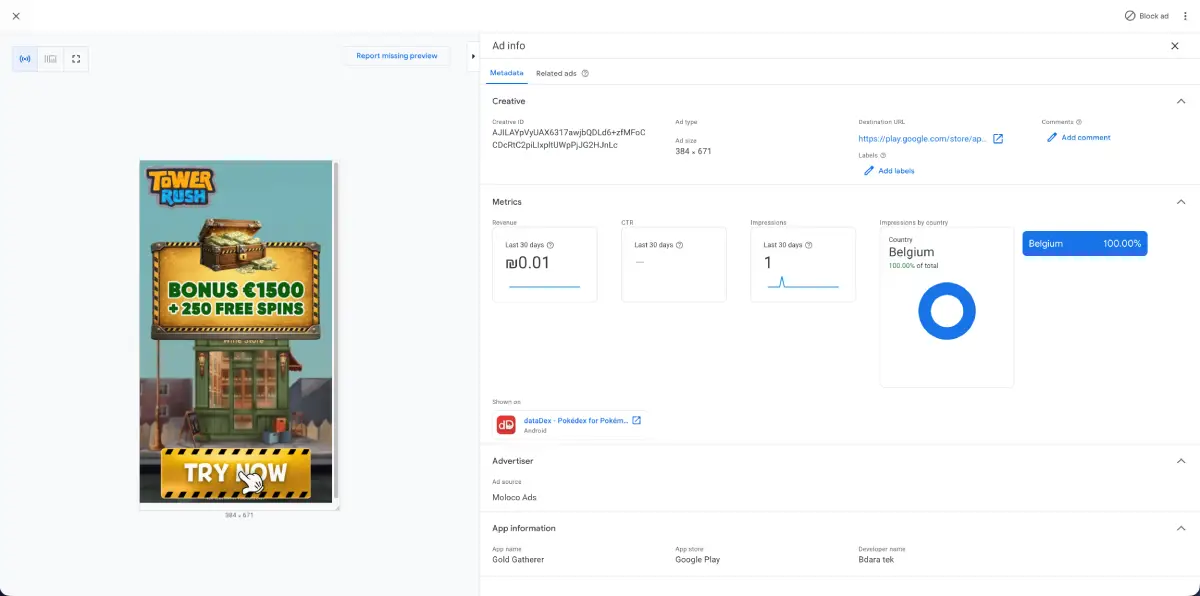
That alone is a pretty specific pattern to be coincidental.
Barina has since disabled all ads in the app entirely and set the AdMob content rating ceiling to Teen, which he says would have blocked casino content regardless of category labeling. He says the appeal process, case 2-1866000040535, has been stuck in a template-reply loop since day one. Four automated responses citing App Promotion policy. None engaging with the actual remediation evidence.
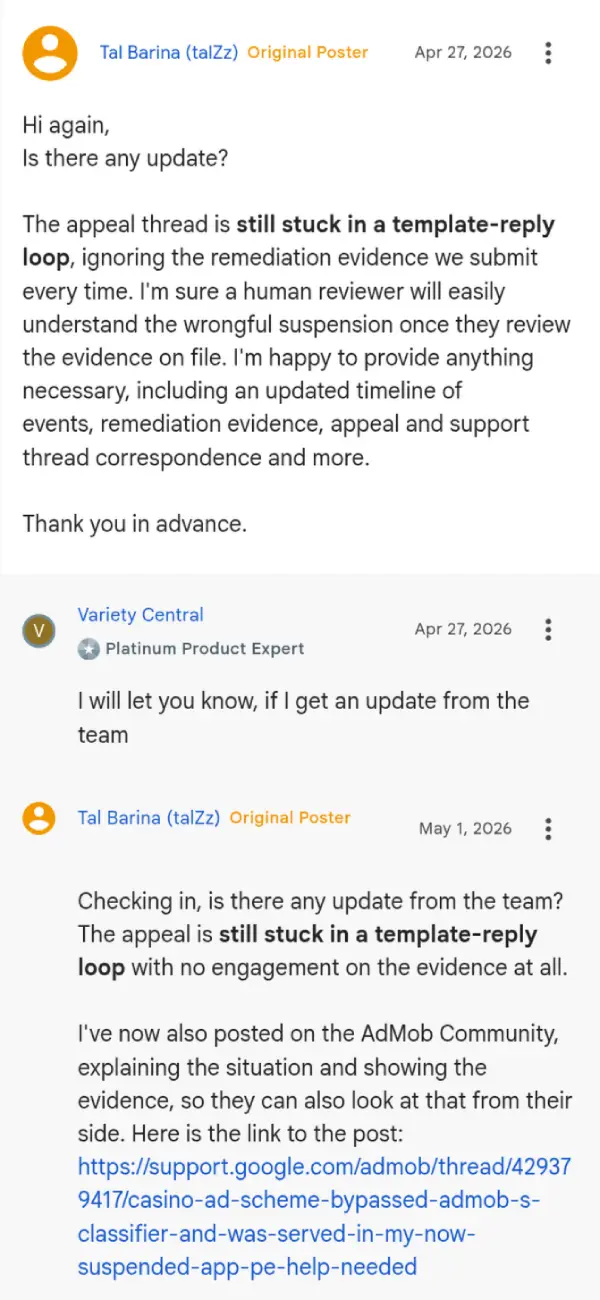
AdMob support reportedly didn’t do much better. One reply opened with an apology that AdMob doesn’t support Hebrew, despite the submission being in English. Another mentioned a “cross-product transfer” he never asked for. A third just redirected him back to Play Console support.
Two separate escalations on Google’s public help communities have gone quiet after initial responses from Product Experts. Both said they would follow up. Neither has.
But earlier today, he reached out to @GooglePlayBiz on X for help, and they notified him that they’ve escalated the report to the relevant team.
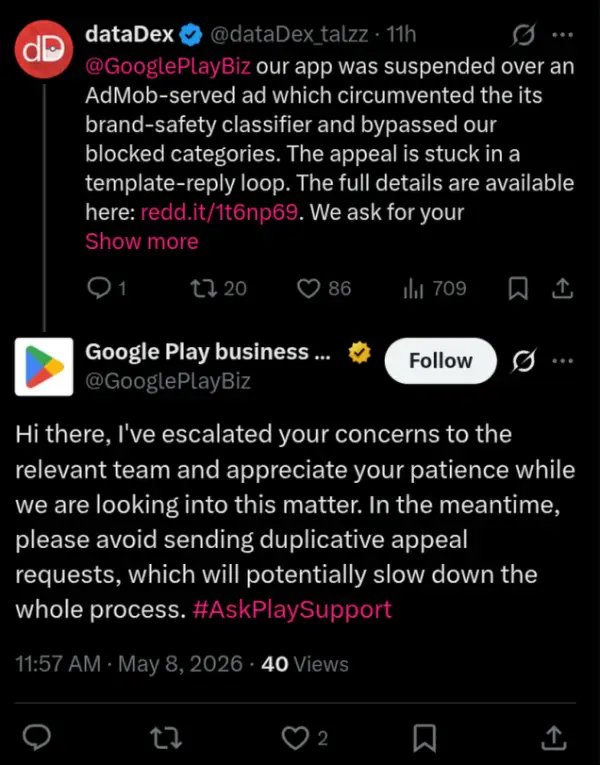
Somewhere between then and now, the app made a reappearance on the Play Store.
During the suspension, users who already had dataDex installed could still use it normally, with data stored locally or in their dataDex account. New users couldn’t download it, existing users couldn’t update, and it was unclear whether PRO purchases were still valid. Barina had also said the team was working on an alternative download method outside the Play Store.
Barina has made the full evidence bundle public, including screenshots of all eleven ad variants, his AdMob configuration at the time, and the full appeal correspondence. He’s also noted that the demand source behind the scheme appears to still be active in the AdMob ecosystem.
The bigger concern he’s raising is that every AdMob publisher relies on Google’s classifier to enforce their category blocks. If the classifier can be consistently fooled by fake shell-app names and non-sensitive category labels, publishers have no real second line of defense. They can’t preview programmatic creatives before they serve. By the time they know something slipped through, it may already be a policy violation on their record.
There’s one more thing worth noting. Barina revealed in his X thread that the team has quietly been building a full overhaul of dataDex for some time, and the new version was apparently close to launch when the suspension hit. He says they’re not abandoning it.
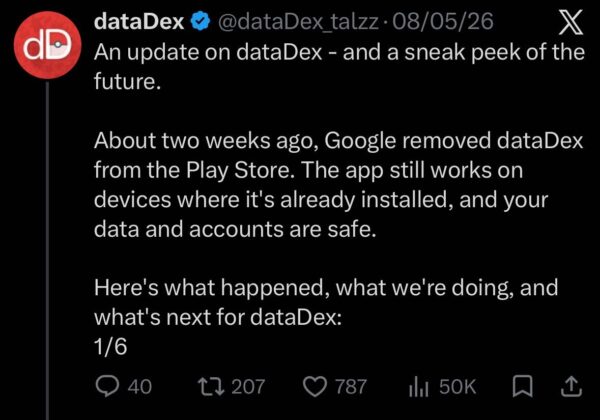
It’s worth noting that as of the time of writing, dataDex appears to be back on the Google Play Store and showing as installable.
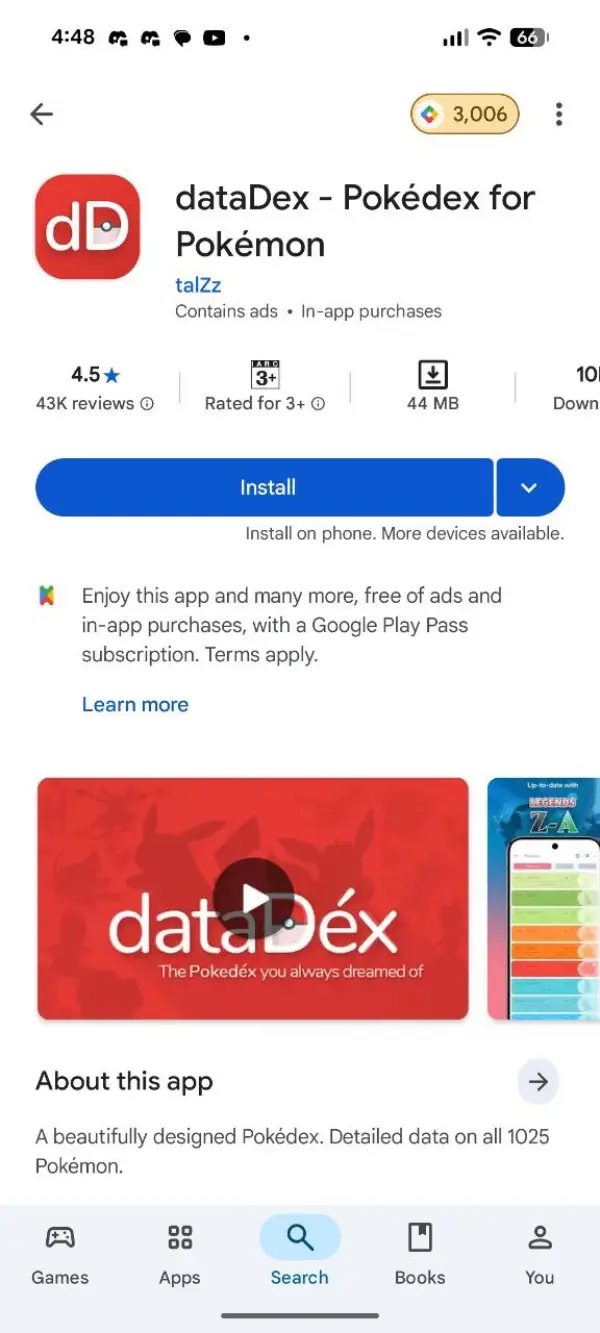
The developer hasn’t posted any update yet confirming a reinstatement, so it’s unclear exactly what changed or when. We’ll update this article if more details emerge.


Dwayne Cubbins
2789 Posts
I cover fast-moving stories across apps, online platforms, and everyday tech — phones, wearables, consoles, and whatever else people are fighting with this week. Bugs, rollouts, scams, policy enforcement, and the occasional internet-culture rabbit hole are all fair game. My goal is simple — make confusing tech news readable. When I'm not working, I'm working out or chilling with my dog. Got a tip? You can find me on X @dcubbins.
Next article View Article