
Starlink is rolling out stricter identity verification worldwide, requiring many users to submit passport details, photos, and live facial scans. The change appears tied to regulatory compliance requirements in some markets.
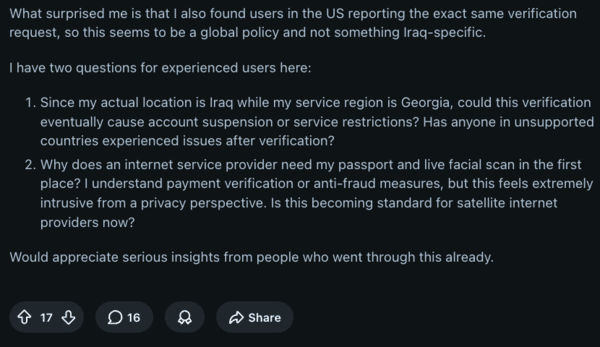
However, consumers are concerned about KYC in unsupported/gray-market regions. The change gained a lot of traction on Reddit, where a user from Iraq shared their experience. Using a roaming plan registered to Georgia, they received a prompt for KYC verification.
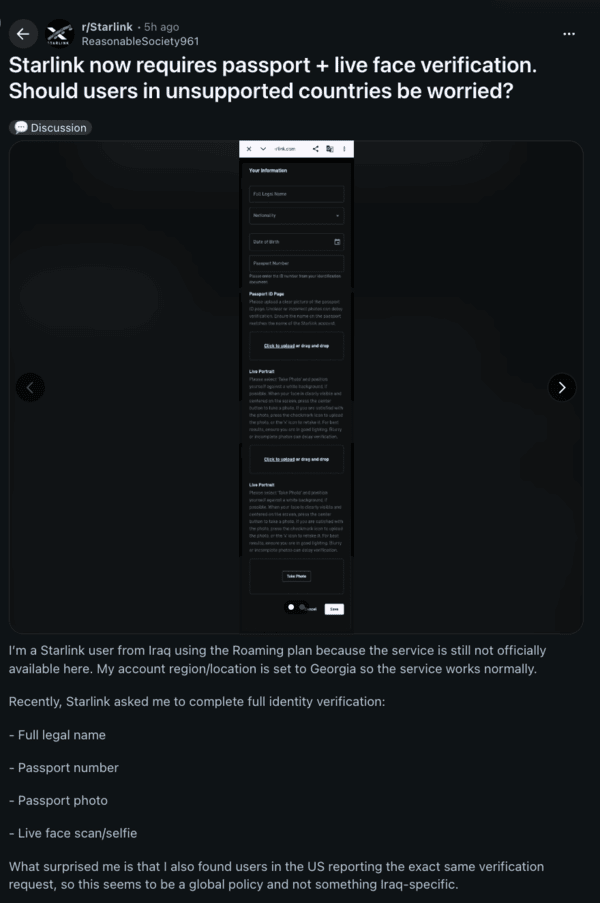
Starlink asked for the person’s legal name, passport number, passport photo, and a live face scan or selfie. Failure to comply with the new norms triggers warnings of deactivation of the service. Similar prompts appeared for users in other regions. I was able to find some reports from Europe, and some queries from accounts in the US as well.
It’s not the first time Starlink has complied with local regulations. In countries such as Nigeria, Starlink enforced biometric KYC to comply with rules before.
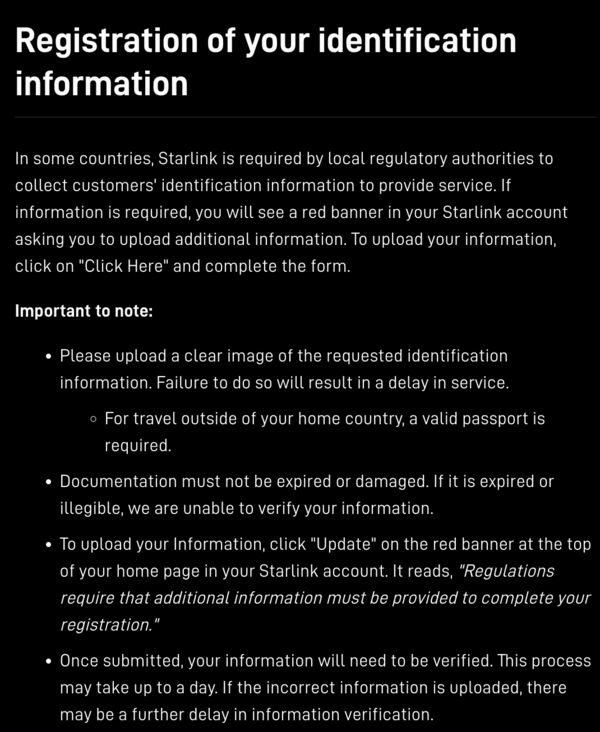
Starlink’s official policy states that in certain countries, local regulators require a collection of customer identification to provide services. In affected countries, a red banner appears that directs users to verify their passports. For international/roaming cases, a passport seems mandatory.
In countries such as Kenya, regulators had ordered in-person verification at authorized retailers by April 30, 2026. Users must submit initial details online, and then confirm identity in person. Non-compliance evidently leads to suspensions.
The push for broader identity verification is to curb cybercrime and prevent unauthorized resale. However, in unsupported countries that rely on roaming, verification is actively tying real identity and location data to the account, raising risks of suspension in case of a mismatch (Note: This support article must be translated to English from Arabic).
Not everyone’s reactions to these changes were positive. Privacy advocates question the need for biometric scanning from a satellite provider, but Starlink maintains that it’s an unavoidable regulatory instruction.
Users in supported markets will probably treat this as just another verification step. But for people relying on Starlink in unsupported regions, handing over passport details and face scans could feel far more serious.


Dwayne Cubbins
3055 Posts
I cover fast-moving stories across apps, online platforms, and everyday tech — phones, wearables, consoles, and whatever else people are fighting with this week. Bugs, rollouts, scams, policy enforcement, and the occasional internet-culture rabbit hole are all fair game. My goal is simple — make confusing tech news readable. When I'm not working, I'm working out or chilling with my dog. Got a tip? You can find me on X @dcubbins.
Next article View Article