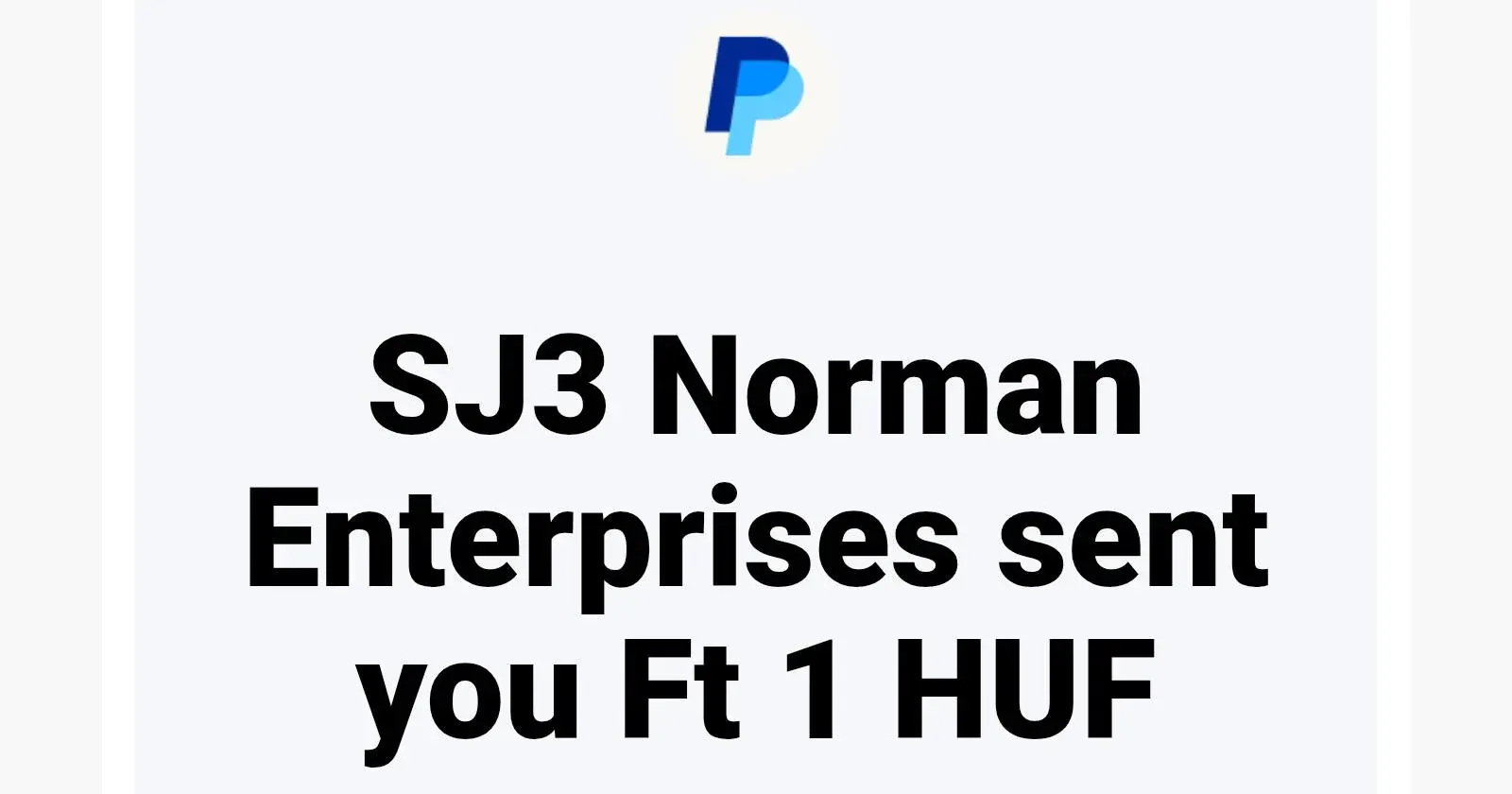
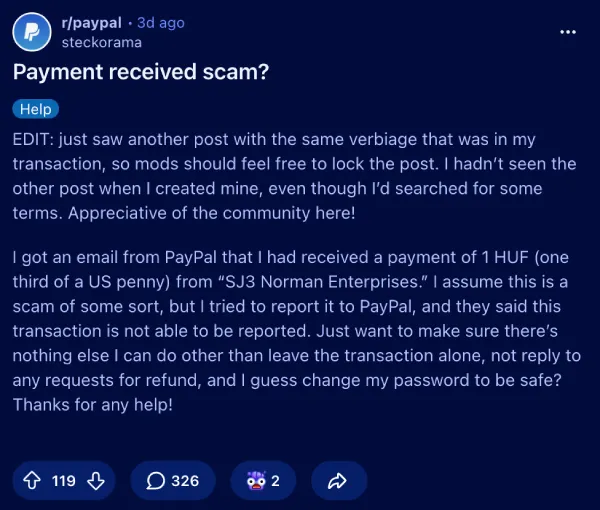
A confusing new phishing scam is currently hitting PayPal users. It starts with an email confirming a tiny deposit of 1 Hungarian Forint (HUF) into their account.
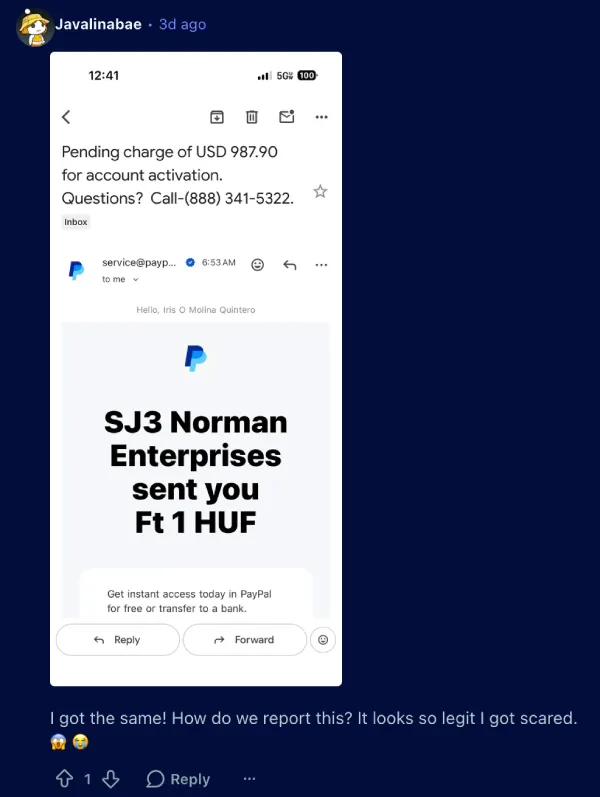
But the real trick is in the transaction notes. Scammers are adding terrifying messages claiming a pending charge of roughly $987.90 for an account activation or a Coinbase purchase. They also include a fake customer service number to call.
From what I was able to deduce looking at reports on Reddit, the goal is simply to make you panic. The 1 HUF deposit is actually real and worth about one-third of a US penny. Because the money transfer actually happens through PayPal’s official system, the email notification easily bypasses most spam filters.
When people see a thousand-dollar charge supposedly pending, they naturally freak out. The scammers seem to be banking on victims dialing the toll-free numbers listed in the notes, which include 888 and 855 area codes.
One user who actually called the number said the person on the other end claimed to be PayPal support. The scammer immediately started asking questions about the victim’s computer device and web browser.
They hung up before giving away any details. With this information, the scam is likely a classic remote access trap designed to steal login credentials or banking info.

People are understandably stressed out. A lot of targeted users immediately tried to report the transaction as fraud to PayPal. But even that process has people frustrated. According to several account holders, PayPal’s automated system refuses to let them file an unauthorized transaction dispute.
The system flags it as a deposit. It basically assumes there is no issue since money is coming in, not going out.
Getting a human on the phone at PayPal seems to be a frustrating experience right now. Some users eventually reached a real agent by reporting general unauthorized activity instead of a specific dispute. Others simply gave up, deleted their linked bank cards, and closed their accounts entirely.
The sender names attached to these tiny deposits seem to be completely random. People have reported names like SJ3 Norman Enterprises, Julie Haas, and Sheila Norman.
So if you see this exact email pop up, you should ignore it. Absolutely do not call the phone number in the transaction note.
Some users are recommending forwarding the email to PayPal’s official phishing address ([email protected]) and then deleting it. Changing your password and setting up two-factor authentication is also a good idea if you are feeling nervous.
The scammers are just hoping you act before you think. Leaving the fraction of a penny sitting in your account will not hurt you.


Dwayne Cubbins
3101 Posts
I cover fast-moving stories across apps, online platforms, and everyday tech — phones, wearables, consoles, and whatever else people are fighting with this week. Bugs, rollouts, scams, policy enforcement, and the occasional internet-culture rabbit hole are all fair game. My goal is simple — make confusing tech news readable. When I'm not working, I'm working out or chilling with my dog. Got a tip? You can find me on X @dcubbins.
Next article View Article