





![Vercel CEO blames highly sophisticated AI for speeding up the massive internal data breach [Updated]](https://piunikaweb.com/wp-content/uploads/2026/04/vercel-breach-featured-image.webp "Vercel CEO blames highly sophisticated AI for speeding up the massive internal data breach [Updated]")
Here's my update to the broader community about the ongoing incident investigation. I want to give you the rundown of the situation directly.
— Guillermo Rauch (@rauchg) April 19, 2026
A Vercel employee got compromised via the breach of an AI platform customer called https://t.co/xksNNigVfE that he was using. The details…
Update 20/04/26 – 05:16 pm (IST): The BreachForums thread tied to the alleged Vercel sale post appears to have been removed, which adds another twist to an already messy story. A screenshot posted online now shows the listing returning a “thread does not exist” error, but there’s still no evidence Vercel paid any ransom, and the reason behind the removal remains unclear.
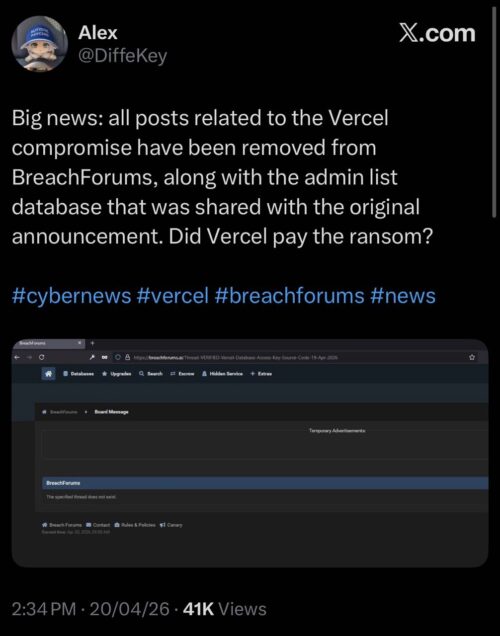
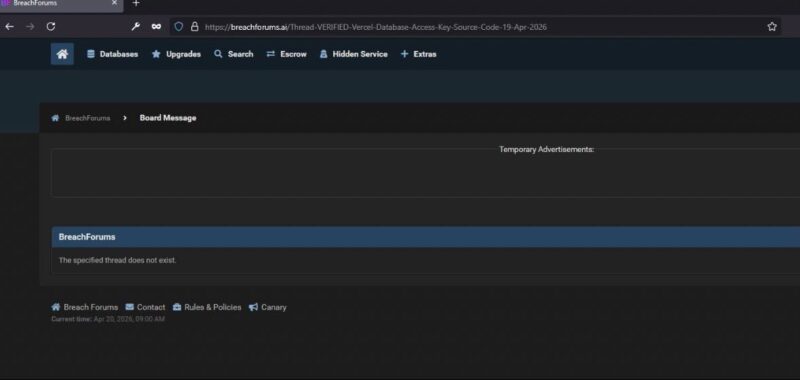
Original article published on April 20, 2026, follows:
Vercel CEO Guillermo Rauch says the attackers who breached his company’s internal systems were “significantly accelerated by AI.”
Rauch walked through the whole mess himself with a post on X. A Vercel engineer had been using an AI platform called Context.ai. Attackers compromised that platform’s Google Workspace OAuth app — one that hundreds of other organizations had also authorized. Once they had the employee’s account, they pivoted into Vercel’s environments.
The company stores all customer environment variables encrypted at rest. But it also lets users mark some as “non-sensitive.” That’s where the attackers got traction. They enumerated those variables and moved with surprising velocity, with an in-depth understanding of how Vercel works.
Interestingly, Rauch’s AI claim comes at a time when exploit-finding models like Claude Mythos have also been getting attention, which makes the idea sound less far-fetched on the surface, even if there is still no public evidence tying any specific model to the Vercel breach.
“For now, we believe the number of customers with security impact to be quite limited,” Rauch wrote. The team has already reached out to the ones they’re worried about. Next.js, Turbopack, and the open-source projects stayed untouched.
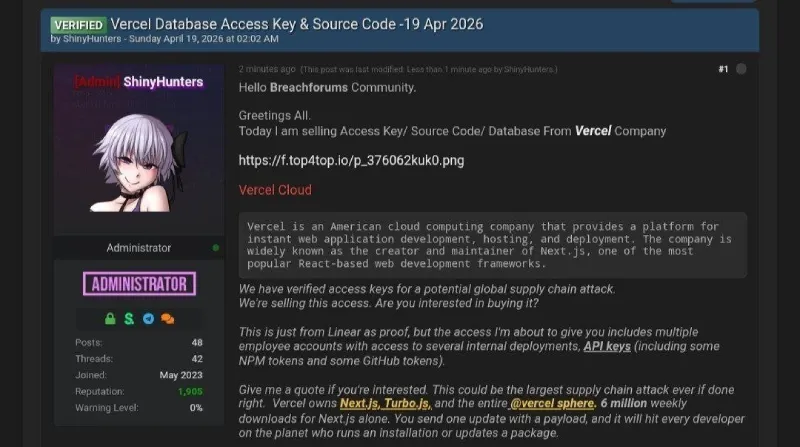
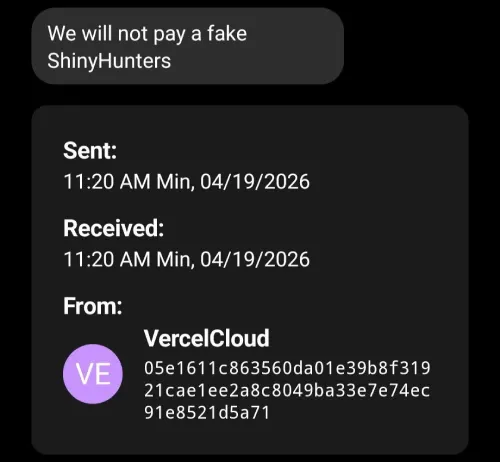
You can read the official Vercel security bulletin for a deeper breakdown of how the technical side of the intrusion actually worked. A threat actor impersonating the ShinyHunters group listed the data for sale on BreachForums for $2 million.
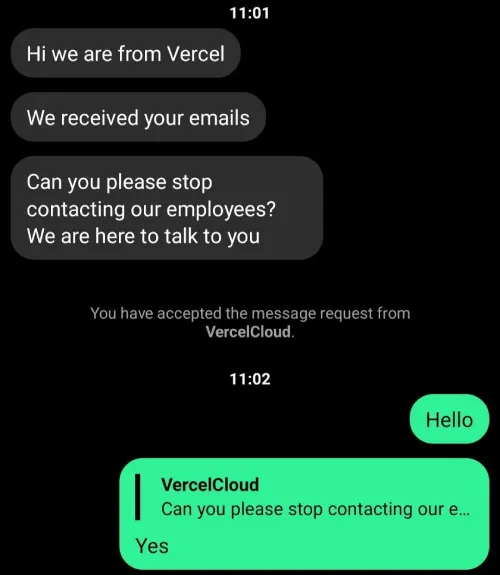
Chat logs obtained by International Cyber Digest show Vercel telling the impostors they won’t pay. The real ShinyHunters have already denied any involvement.

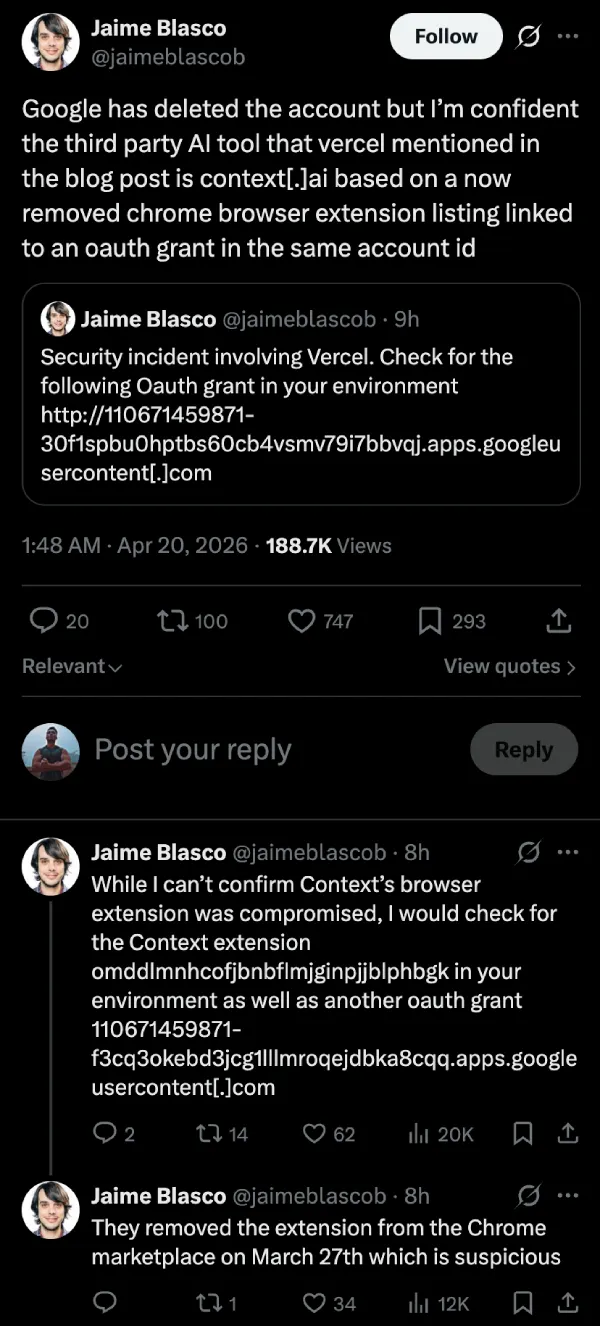
Google deleted the compromised OAuth app. Security researcher Jaime Blasco tied it directly to Context.ai after spotting a now-removed Chrome extension linked to the same client ID.
That said, Vercel, for its part, didn’t wait around. By the time Rauch hit send on his thread, the company had already shipped two new dashboard features: an overview page for all environment variables and a cleaner UI for marking them sensitive. Rauch called it part of turning the attack into “the most formidable security response imaginable.”
Still, some comments suggest that there might be more to this timeline. One user reported receiving an alert from OpenAI about a compromised key way back on April 10. Since that key was only used inside Vercel, it strongly suggests the breach happened over a week ago.
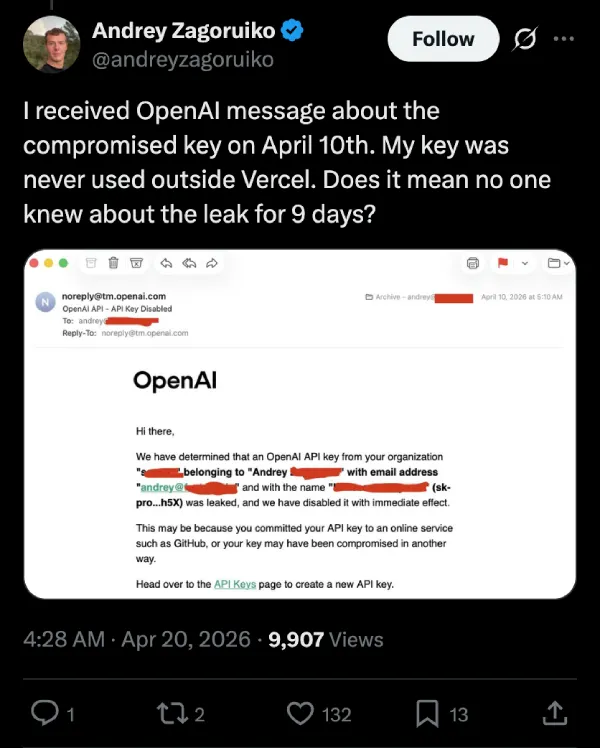
There’s still no official comment on this, so it’s still up in the air about when the breach took place exactly.
For now, Google Workspace admins can manually check and see if they might have been compromised. The check is simple: head to the Admin Console, go to Security > API Controls > Manage app access, and filter for the client ID 110671459871-30f1spbu0hptbs60cb4vsmv79i7bbvqj.apps.googleusercontent.com. If it shows up, revoke it.
Vercel is still investigating with outside firms and law enforcement. Rauch said they’ve looped in Context.ai and Google’s Mandiant team to help other companies. For everyone else using Vercel, the advice is straightforward: rotate secrets, treat every env var as potentially exposed, and start using the new sensitive-variables tools.
Featured image generated with AI

We stand out from the tech-media crowd because we break news stories; we mainly bring you stuff that you won’t find anywhere in the mainstream tech media. Our stories have been picked up by some of the world’s most popular websites and media outlets—more info is available here.

Dwayne Cubbins
3064 Posts
I cover fast-moving stories across apps, online platforms, and everyday tech — phones, wearables, consoles, and whatever else people are fighting with this week. Bugs, rollouts, scams, policy enforcement, and the occasional internet-culture rabbit hole are all fair game. My goal is simple — make confusing tech news readable. When I'm not working, I'm working out or chilling with my dog. Got a tip? You can find me on X @dcubbins.
Next article View Article

Grok’s Threads debut gets ugly as users tell Elon Musk’s AI to “stay in your lane”
xAI's Grok just showed up on Meta's Threads, and users are not happy about it. The @grok account posted a fashion video featuring a creator who uses Grok...
Apr 20, 2026 1 Min Read