





![Cal AI removed from App Store reportedly after viral payment sheet post [U: It's back]](https://piunikaweb.com/wp-content/uploads/2026/04/cal-ai-removed-from-app-store.webp "Cal AI removed from App Store reportedly after viral payment sheet post [U: It's back]")
And just like that Cal AI is back like it never left pic.twitter.com/2hn4rtgzUl
— Zach Yadegari (@zach_yadegari) April 17, 2026
Update 17/04/26 – 02:33 pm (IST): Cal AI is back on the App Store just one day after its removal. The app has returned with a new template paywall and native payment system, with Zach Yadegari noting it is “back like it never left.”
The updated paywall is powered by Superwall’s Stripe checkout. While not generally available due to uncertainty around Apple’s rules, it was provided to major customers like Cal AI upon request, according to Superwall’s CEO.
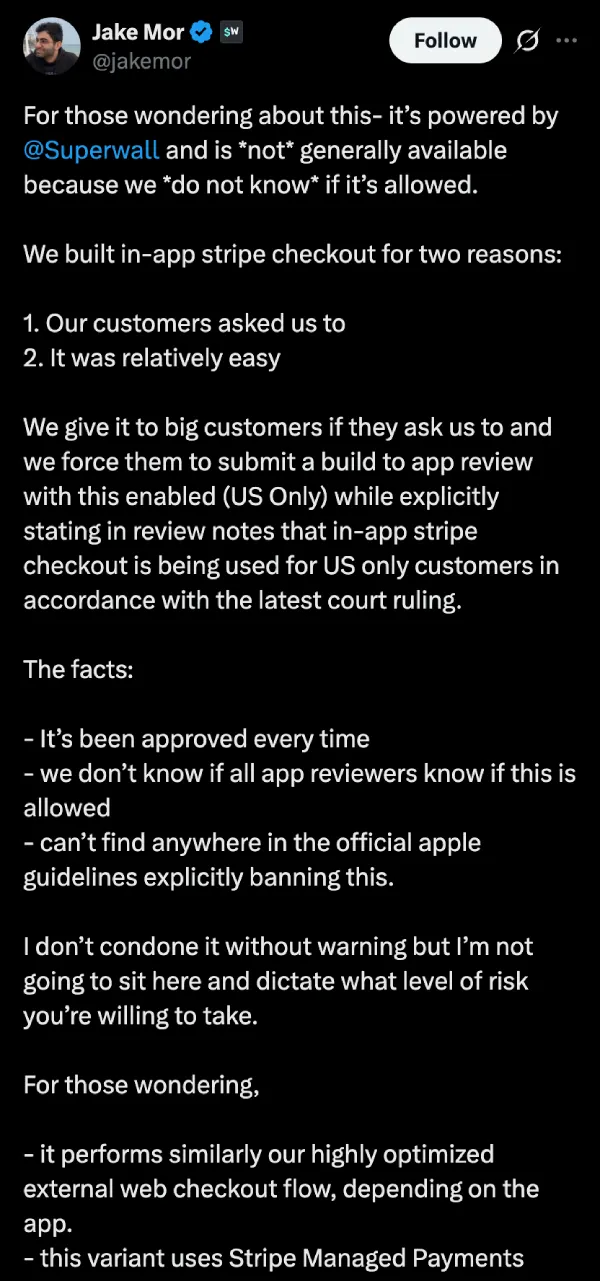
Many now want details from the developers on what happened and the MyFitnessPal acquisition’s role.
Original article published on April 16, 2026, follows:
Who would have thought that the app, which got popular over the months through viral social media posts, would end up taking a hit because of one viral post on X?
Apple has removed Cal AI from the App Store. The AI-powered calorie tracker that lets you snap a photo of your meal and get instant nutrition info is no longer available for download on iOS.
The trigger was a tweet from indie developer Arib. He posted a screenshot of a payment sheet inside Cal AI that looked completely native to iOS. In reality, it was running on Stripe through a private integration from Superwall. Arib noted that this setup brought in noticeably higher revenue because of lower fees and more friction when users tried to cancel.
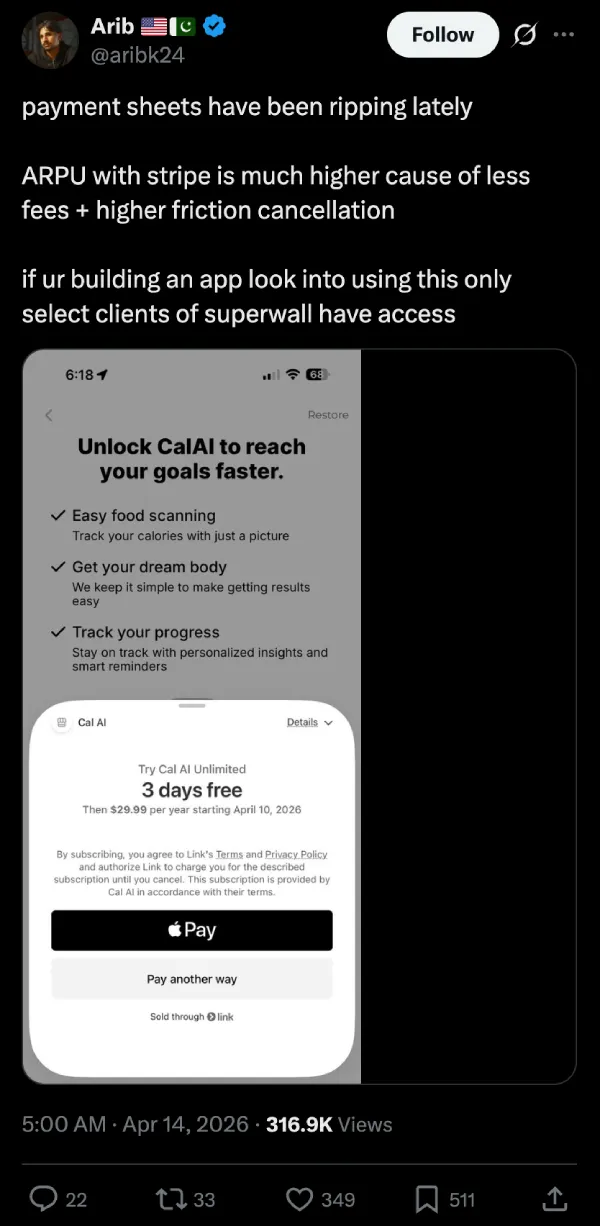
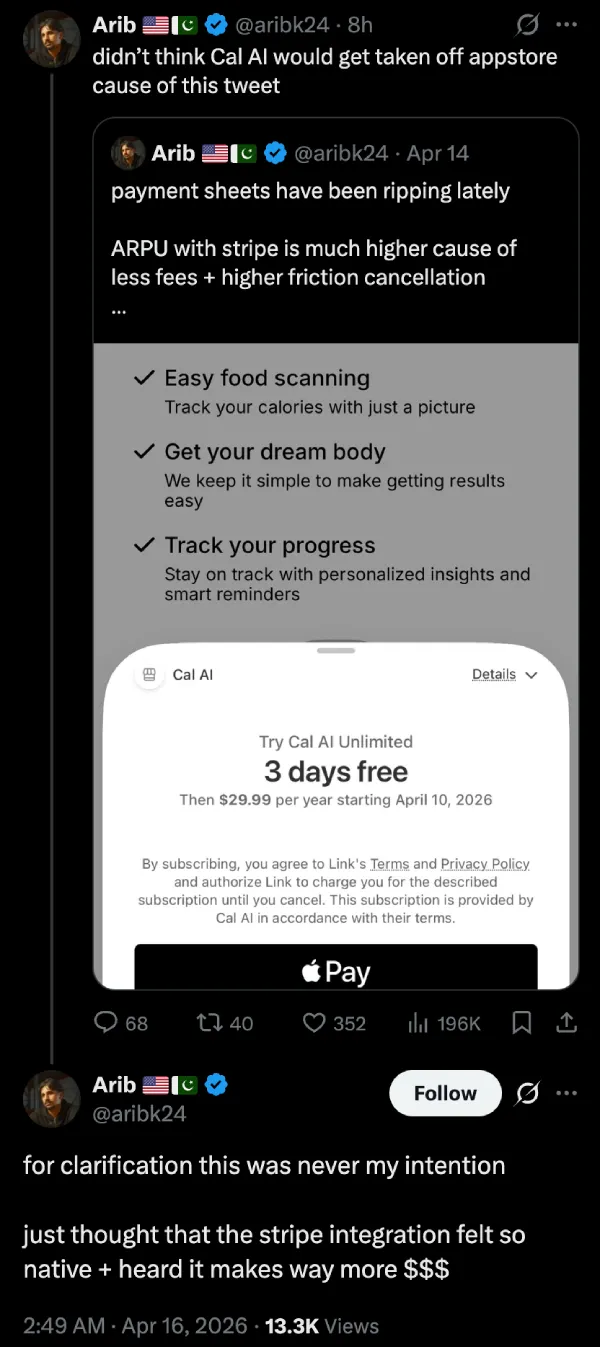
The post exploded, picking up hundreds of thousands of views in days. Arib later clarified that he never intended to cause trouble for the app. He was just sharing what he had heard about the money it could make.
Cal AI had become a genuine success story. It crossed 15 million downloads and generated over 30 million dollars in revenue last year. MyFitnessPal acquired the company in March in a reported nine-figure deal.
Superwall has been promoting this kind of Stripe-based checkout flow for iOS apps. After last year’s court battle with Epic, Stripe even published guidance showing developers how to use external checkouts to sidestep Apple’s 15 to 30 percent cut and pay just Stripe’s standard 2.9 percent plus 30 cents per transaction instead.
Still, Apple enforces its rules strictly here. The company expects its cut on digital purchases made inside apps, and seamless in-app sheets that feel too native cross the line.
Users had already been complaining about surprise charges and difficult cancellations. That is exactly the behavior the Stripe setup encouraged.
A user, Viktor Seraleev, posted a screen recording showing that the app is no longer available on the App Store, even when trying to use the direct link:
Cal AI has been removed from the App Store https://t.co/JmjE3l6bNy pic.twitter.com/JoDsXa4Odk
— Viktor Seraleev (@seraleev) April 15, 2026
With Cal AI gone from the App Store, users now see copycat apps appear in the search results. So potential users who aren’t aware of Cal AI’s removal might get tricked into downloading and installing a copycat app instead.

The removal also comes as Apple faces broader criticism around AI apps. A recent report found that searches for terms like “undress” or “nudify” surface dozens of problematic apps on both Apple and Google stores. Those apps have racked up 483 million downloads and 122 million dollars in revenue despite official bans.
Apart from that, vibe-coded apps have also been a thorn in Apple’s side since they’ve been slowing down the app review process across the board.
Right now iPhone users cannot download Cal AI. The Android version is still available on Google Play. Whether it returns depends on negotiations with Apple and how the rules get applied.

We stand out from the tech-media crowd because we break news stories; we mainly bring you stuff that you won’t find anywhere in the mainstream tech media. Our stories have been picked up by some of the world’s most popular websites and media outlets—more info is available here.

Dwayne Cubbins
3070 Posts
I cover fast-moving stories across apps, online platforms, and everyday tech — phones, wearables, consoles, and whatever else people are fighting with this week. Bugs, rollouts, scams, policy enforcement, and the occasional internet-culture rabbit hole are all fair game. My goal is simple — make confusing tech news readable. When I'm not working, I'm working out or chilling with my dog. Got a tip? You can find me on X @dcubbins.
Next article View Article

TikTok creators just found a new AI setting on their videos — and they’re not happy
TikTok has turned on an “Allow AI to remix content” setting by default across every video that creators have ever posted.
The toggle sits right in the privacy options for...
Apr 16, 2026 1 Min Read