
Apple has removed Bitchat from the China App Store following an order from the Cyberspace Administration of China. Jack Dorsey confirmed it on X earlier today.
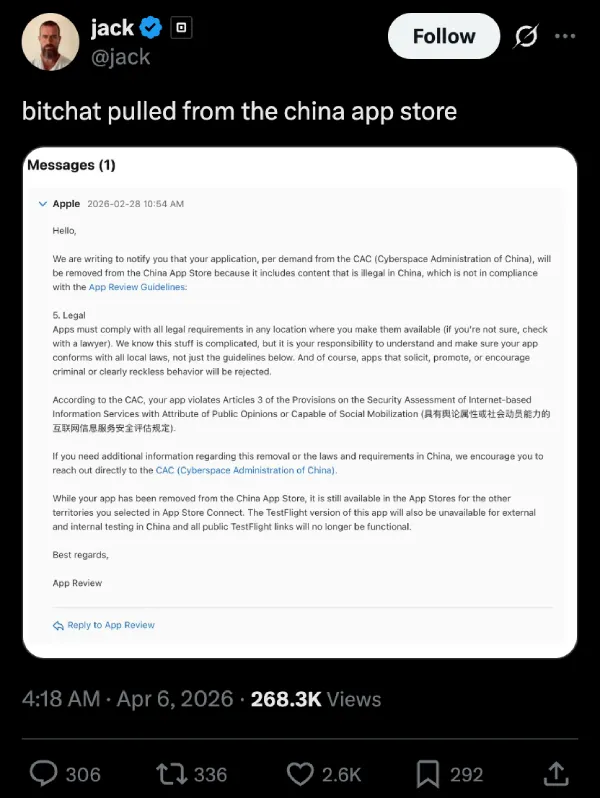
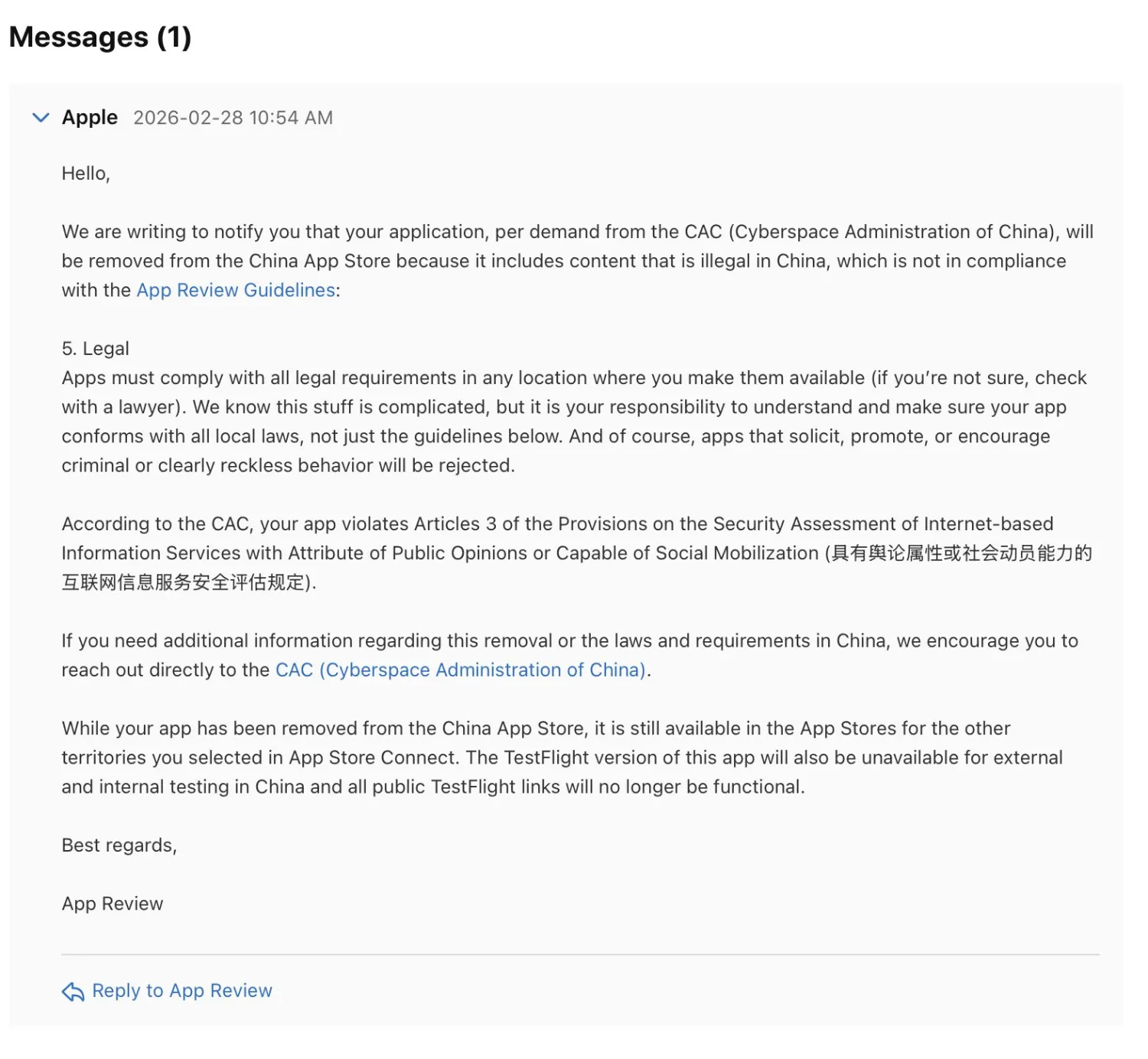
The notice, sent to Dorsey on February 28, cited a violation of Article 3 of China’s rules on internet services that carry “public opinions or capable of social mobilization.” In plain terms, regulators decided the app could help people talk when the government prefers silence.
Bitchat is built to do exactly that. It runs on Bluetooth mesh networks. No internet connection. No servers. No phone numbers or accounts. Phones in range discover each other, relay messages hop by hop, and keep the chat alive even if the grid goes dark.
Dorsey launched it last July as an open-source side project through his team at Block. The code lives on GitHub, and the app is still free on the US App Store and Android.
The tool found real users during protests last year in Madagascar, Uganda, Nepal, Indonesia and Iran. When governments throttled or cut the internet, Bitchat kept small groups connected. So you can see why that track record made the China ban almost inevitable.
The post on X picked up a few hundred thousand views within a matter of hours. One user called it “the most predictable sentence of the year” for a censorship-proof app. Another joked it was the best free marketing free speech could buy. A few noted they’d installed it while traveling in China and passed it to friends anyway.
Apple’s message was straightforward. The app breaks local legal requirements, it said, and the company has no choice but to comply. The China version is now gone. TestFlight betas for Chinese users are also dead. That said, the app is still live everywhere else.
For Dorsey, who has spent years pushing decentralized tech, the removal lands as more proof of concept than surprise. The app was designed to survive exactly this kind of pressure. Whether enough people outside China actually use it remains an open question.
Featured image edited with AI


Dwayne Cubbins
3036 Posts
I cover fast-moving stories across apps, online platforms, and everyday tech — phones, wearables, consoles, and whatever else people are fighting with this week. Bugs, rollouts, scams, policy enforcement, and the occasional internet-culture rabbit hole are all fair game. My goal is simple — make confusing tech news readable. When I'm not working, I'm working out or chilling with my dog. Got a tip? You can find me on X @dcubbins.
Next article View Article