
Duolingo is planning to add catch-up lessons to its updated courses after a wave of user complaints about being dropped into unfamiliar content with no preparation. A post on r/duolingo from a Duolingo staff member confirmed the change, and also announced the company is pausing the rollout to new users until those lessons are ready.
The update affects Spanish, French, Italian, German, and Japanese courses for English speakers, along with English courses for Spanish and Portuguese speakers. Users in those courses were automatically moved into the upgraded versions and suddenly faced large amounts of vocabulary they had never been taught. Some reported guessing through entire sessions. One user with a 1,400-day Spanish streak said going back five full units still left them overwhelmed.
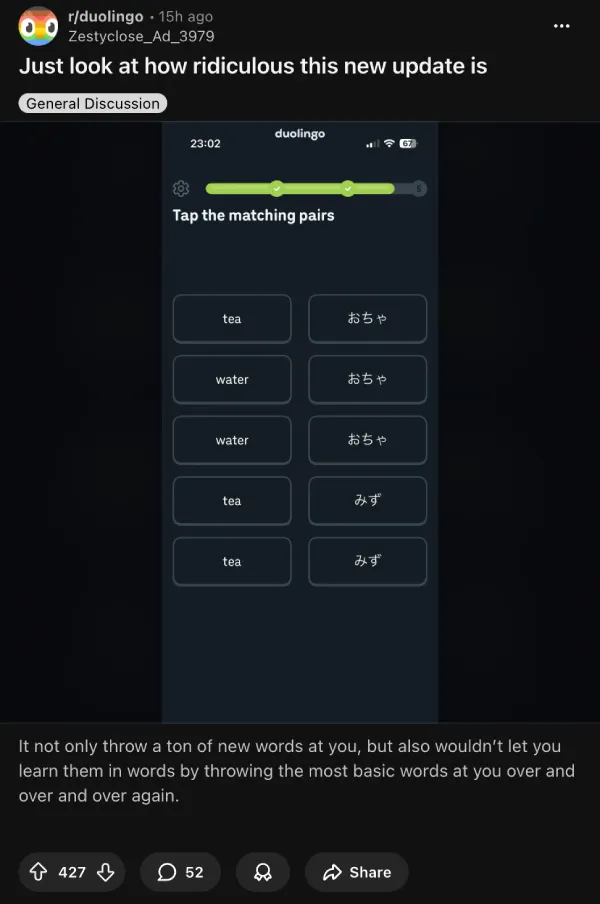
One complaint thread even showed a matching pairs exercise in the Japanese course with tea and water repeated across all five rows. Users trying to use the practice mode to catch up on unfamiliar words were getting the same two beginner-level basics drilled at them on loop.
The staff post admitted the rollout was handled badly, saying, “We didn’t do enough to support you even though we knew a lot of words would be unfamiliar.” Duolingo says the catch-up lessons will identify the most important words a user needs to know based on where they are in the course, specifically words the old course never covered.
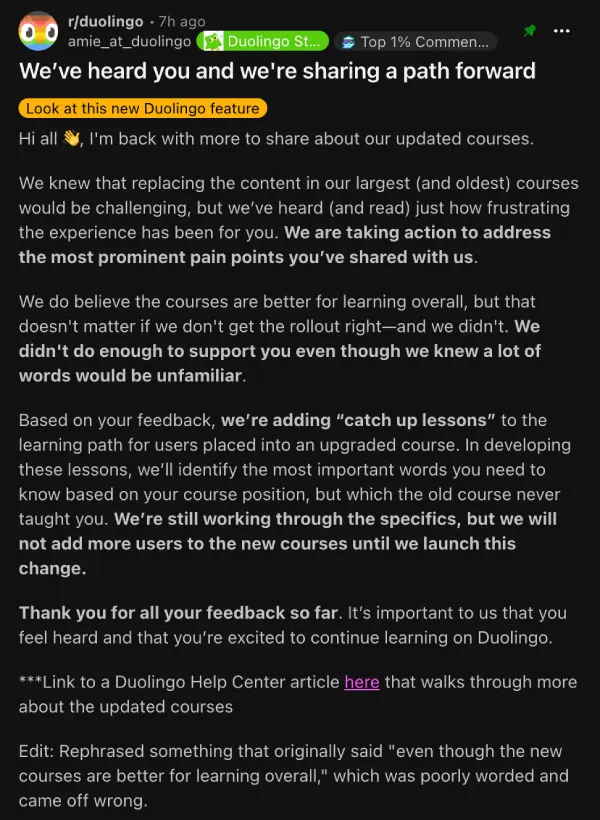
While they said it’s coming, no release date has been given yet.
Since this announcement was made on April 1, at least one commenter asked if it was a prank. The staff was quick to clarify it was not.
User reactions in the comments seem mostly positive towards the change, but were still frustrated nonetheless. Some said they had already reset their courses out of frustration, losing months or years of progress. One person deleted their Japanese course entirely after 750 days. Others said they had resorted to Google Translate just to get through daily lessons.
Complaints about the Japanese course in particular went beyond the vocabulary issue. A few users also reported audio issues where kanji pronunciation does not match the kana, and broken text-to-speech that has worsened since the update. Some said it now feels like a fifty-fifty shot whether the audio is even correct.
For now, users on the affected courses have no ETA on when the fix will arrive. Duolingo says it is a top priority, but the specifics are still being worked out.


Dwayne Cubbins
3055 Posts
I cover fast-moving stories across apps, online platforms, and everyday tech — phones, wearables, consoles, and whatever else people are fighting with this week. Bugs, rollouts, scams, policy enforcement, and the occasional internet-culture rabbit hole are all fair game. My goal is simple — make confusing tech news readable. When I'm not working, I'm working out or chilling with my dog. Got a tip? You can find me on X @dcubbins.
Next article View Article