





![Hackers may have slipped malware into popular axios package: report [Updated]](https://piunikaweb.com/wp-content/uploads/2026/03/maclicious-package-featured-image.webp "Hackers may have slipped malware into popular axios package: report [Updated]")
⚠️ Our team at Google is releasing more details on the recent NPM #axios supply chain attack. Notably, we now attribute this activity to #UNC1069, a financially motivated North Korean 🇰🇵 nexus threat actor active since at least 2018.
— Austin Larsen (@AustinLarsen_) March 31, 2026
Update 01/04/26 – 05:55 pm (IST): Google’s Threat Intelligence Group has now attributed this attack to UNC1069, a North Korean-linked threat actor that’s been active since at least 2018. Principal Analyst Austin Larsen confirmed the attribution on X, citing the group’s use of WAVESHAPER.V2 — an updated backdoor previously tied to the group — along with overlapping command-and-control infrastructure.
UNC1069 typically goes after cryptocurrency and DeFi targets. Earlier this year, the group was linked to a separate scheme involving AI deepfakes to steal session tokens. Google has published a full technical breakdown on their blog.
Original article published on March 31, 2026, follows:
Hackers appear to have compromised axios, one of the most widely used coding tools in the JavaScript world, by sneaking a malicious package into a new release published today.
Axios gets downloaded over 100 million times a week on npm, the main platform developers use to grab coding packages. It’s embedded in apps, websites, and backend services across the industry, so you can guess why a single bad version landing quietly is pretty bad news.
According to security firm Socket, the compromised versions are [email protected] and [email protected]. Both were pushed to npm within 39 minutes of each other. The malicious package those versions pull in, [email protected], did not exist before today. Socket said it caught the package as malware within minutes of it going live. Socket’s automated scanner flagged it as malware within minutes of it going live.
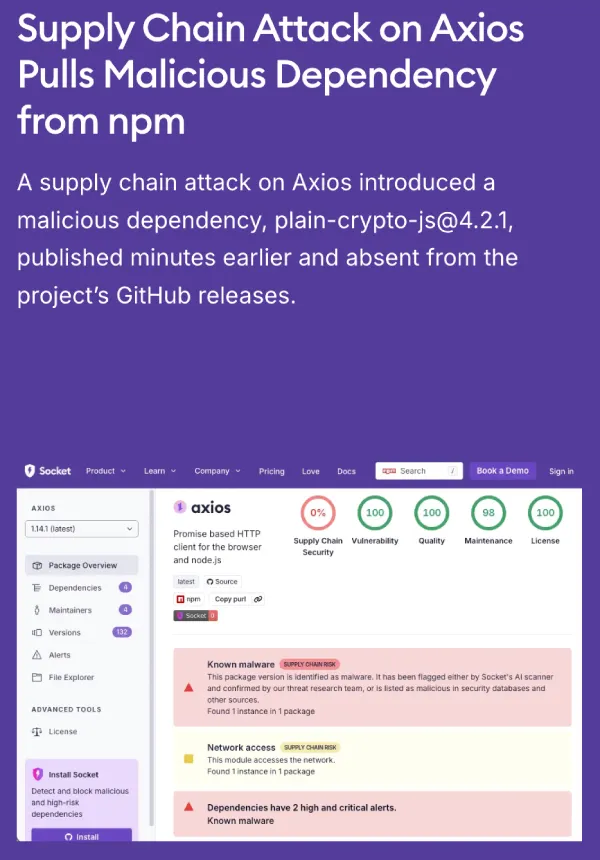
The affected axios version doesn’t appear in the project’s official GitHub release history at all, which is unusual. Axios normally publishes tagged releases alongside its npm updates. From what Socket’s team was able to determine, a maintainer account appears to have been hijacked, and the attacker’s access level is reportedly higher than the legitimate maintainers’, meaning they couldn’t simply revoke it themselves. They’ve since asked npm to step in.
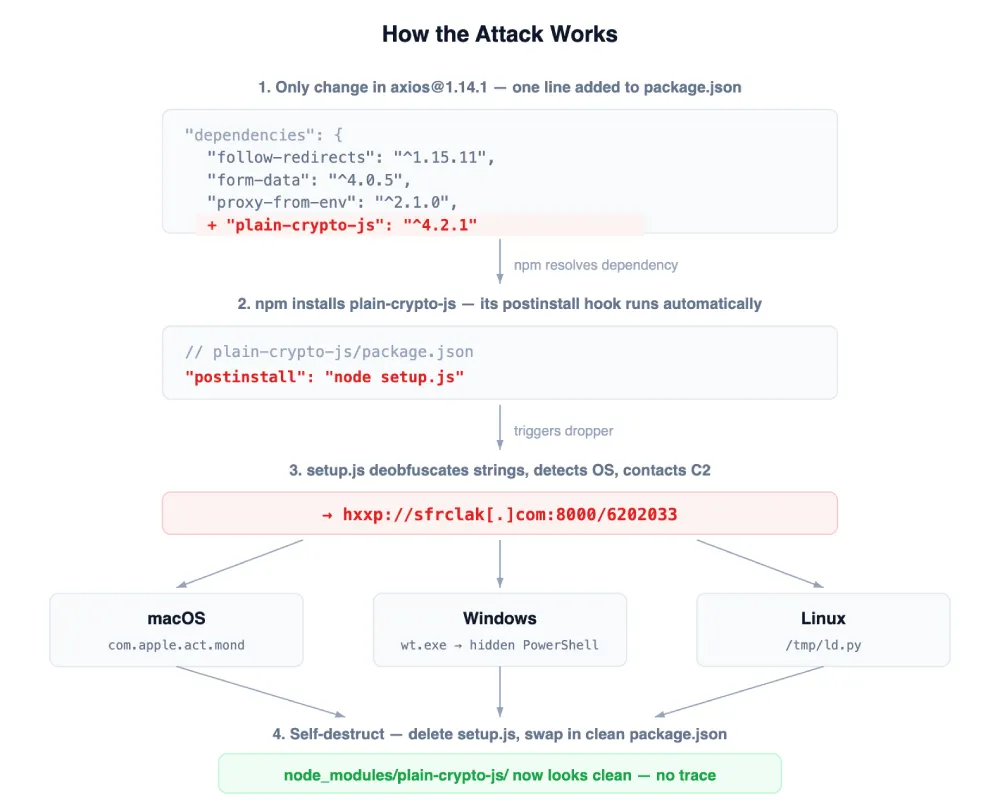
Once installed, the malicious package quietly runs a script in the background that pulls down additional payloads from an external server, depending on whether you’re on Windows, Mac, or Linux.
On Mac, it installs what researchers describe as a remote-access trojan, essentially giving attackers a backdoor into the machine. On Windows, it disguises itself using system-looking file names to avoid security tools. The report also highlights that researchers from Elastic Security were able to capture and analyze the Mac payload before the attacker’s server went offline.
Security researcher Feross, who first highlighted this on X, noted that AI-assisted coding tools are making this kind of attack more dangerous, because more developers are letting automated tools install packages without reviewing them first.

Developer Wes Bos also warned his followers to hold off on any installs or deploys, noting that even projects that don’t directly use axios could be affected if it’s buried somewhere in their dependencies.
The affected versions appear to have since been removed from npm. Socket has a full breakdown of what the malware does on their blog. If you’ve run npm install in the past several hours, it’s worth checking your dependency files for any of the flagged versions.
Featured image generated with AI

We stand out from the tech-media crowd because we break news stories; we mainly bring you stuff that you won’t find anywhere in the mainstream tech media. Our stories have been picked up by some of the world’s most popular websites and media outlets—more info is available here.

Dwayne Cubbins
2979 Posts
I cover fast-moving stories across apps, online platforms, and everyday tech — phones, wearables, consoles, and whatever else people are fighting with this week. Bugs, rollouts, scams, policy enforcement, and the occasional internet-culture rabbit hole are all fair game. My goal is simple — make confusing tech news readable. When I'm not working, I'm working out or chilling with my dog. Got a tip? You can find me on X @dcubbins.
Next article View Article

Some Instagram users unable to see posts when using search function [Updated]
Update 28/04/26 - 10:46 am (IST): It appears the Instagram search glitch has resurfaced, with a fresh wave of users taking to Reddit to report that the search...
Apr 28, 2026 2 Min Read