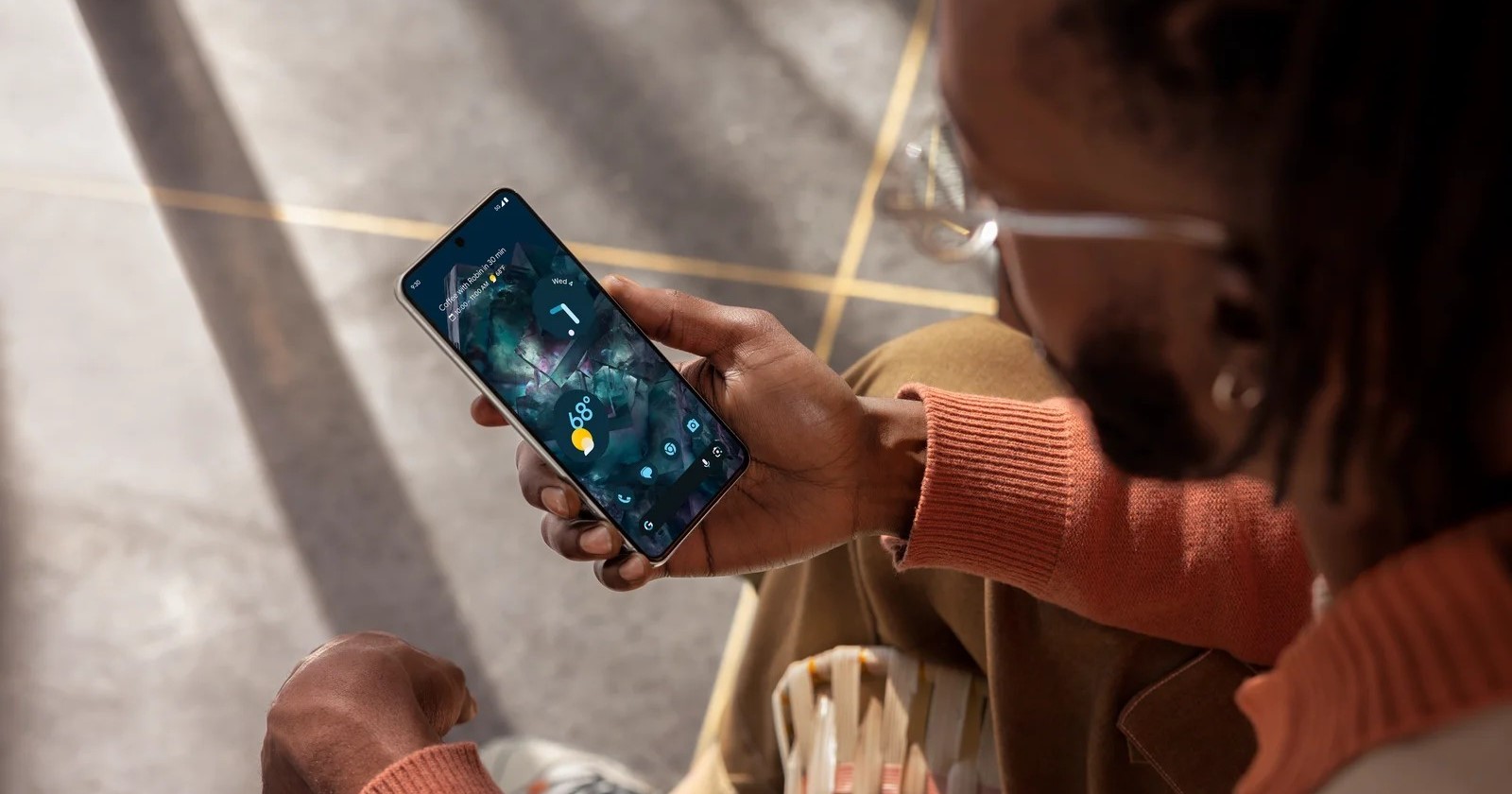
Back in late 2021, shortly after the Google Pixel 6 launched, I raised a concern that felt subtle at the time but increasingly looks deliberate today: Google had effectively killed Miracast support on Pixel devices.
Fast forward to 2026, and that decision is still catching people off guard.
If you are currently shopping for a portable wireless monitor or a dedicated screen-mirroring display to pair with your smartphone, there is a high chance you have stumbled upon a frustratingly specific disclaimer in the fine print: Incompatible with Google Pixel.
It is a bizarre reality for a flagship Android device. While a budget Samsung or a three-year-old Xiaomi can beam its screen to almost any wireless monitor or Smart TV using the industry-standard Miracast protocol, the Pixel 10 Pro, Google’s most advanced mobile hardware yet, simply refuses to cooperate.
I’ve been tracking this walled garden approach since 2021, when the Pixel 6 series first made it clear that Google was moving away from universal standards. Today, as more users try to integrate their Pixels into professional and home setups with wireless monitors, the frustration has reached a boiling point.
The protocol problem: Miracast vs. Google Cast
The reason for this incompatibility isn’t a hardware defect or a lack of power; it is a deliberate software blockade. Most wireless monitors and non-Android Smart TVs (like those from Samsung or LG) use Miracast, a peer-to-peer wireless display standard based on Wi-Fi Direct. It is the universal language of wireless video.
Google, however, has intentionally disabled Miracast support at the system level. Instead, Pixels exclusively speak Google Cast (formerly Chromecast). This has been the case for years. It’s nothing new.
Google Nexus devices used to support Miracast, but Google removed it to force users onto Google Cast. Sure, for a few years, you could just change a flag in the build.prop file of your device to re-enable it. But this was removed later on in a decision that felt like a push into Google’s ecosystem.
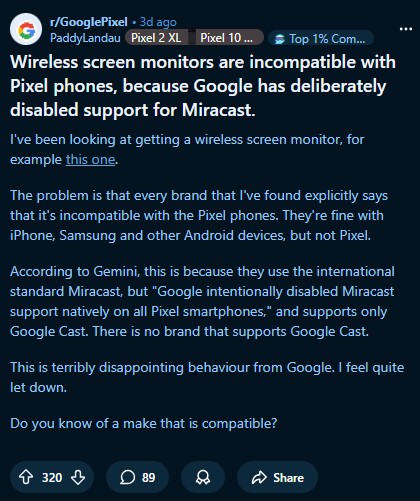
The problem? Almost no independent wireless monitor brand supports Google Cast. These manufacturers build for the global standard, and Google has decided the Pixel simply won’t speak that language. As one Reddit user recently lamented while researching a new display, “Every brand that I’ve found explicitly says that it’s incompatible with Pixel phones. They’re fine with iPhone and Samsung, but not Pixel.”
A 100-million unit strategy
Why would Google intentionally omit a feature that every other Android vendor supports out of the box? The answer likely lies in the hardware sales.
When Google announced the Google TV Streamer, it tucked a telling statistic into the press release: the company has sold over 100 million Chromecast units to date. By hardware-locking the Pixel to the Google Cast protocol, Google has created a self-sustaining ecosystem. If you want to mirror your Pixel to a big screen, Google doesn’t want you using the TV’s built-in Miracast; they want you to buy a Chromecast or a Google TV-enabled device.
It is a classic “create the problem, sell the solution” maneuver. I argued back in 2021 that this was a move to force sales, and the 100-million-unit milestone suggests the strategy was a resounding success for Google’s bottom line, even if it came at the expense of user choice.
The result is a deeply embarrassing experience for Pixel owners. In 2026, we are seeing flagship phones that are less compatible with the living room than their competitors. One user pointed out the absurdity of a household split between brands: “My Pixel 10 Pro cannot cast to my Samsung TV, but my girlfriend’s iPhone can. It’s ridiculous.”
When the traditionally locked iPhone is more compatible with third-party displays than a Google-made Android phone, the open-source marketing of the Android ecosystem starts to feel like a myth.
What to look for before you buy
If you are in the market for a wireless display, the “why” behind your struggle is simple: Google is choosing proprietary profit over industry standards. Until Mountain View decides to play nice with Miracast, Pixel owners will continue to be the only ones left in the dark when it comes to the universal standard of the modern display.
Before you hit “buy” on that sleek wireless monitor, check the specs for Google Cast or Chromecast built-in. If it only mentions Miracast, your Pixel is going to give you the cold shoulder.


Hillary Keverenge
2689 Posts
Tech has been my playground for over a decade. While the Android journey began early, it truly took flight with the revolutionary Lollipop update. Since then, it's been a parade of Android devices (with a sprinkle of iOS), culminating in a mostly happy marriage with Google's smart home ecosystem. Expect insightful articles and explorations of the ever-evolving world of Android and Google products coupled with occasional rants on the Nest smart home ecosystem.
Next article View Article