If you’ve been following the controversy surrounding Persona in the past week or so, you already know the identity verification company has had a lot on its plate. Now there’s a new thread to add to the pile, and this one’s more ironic than alarming.
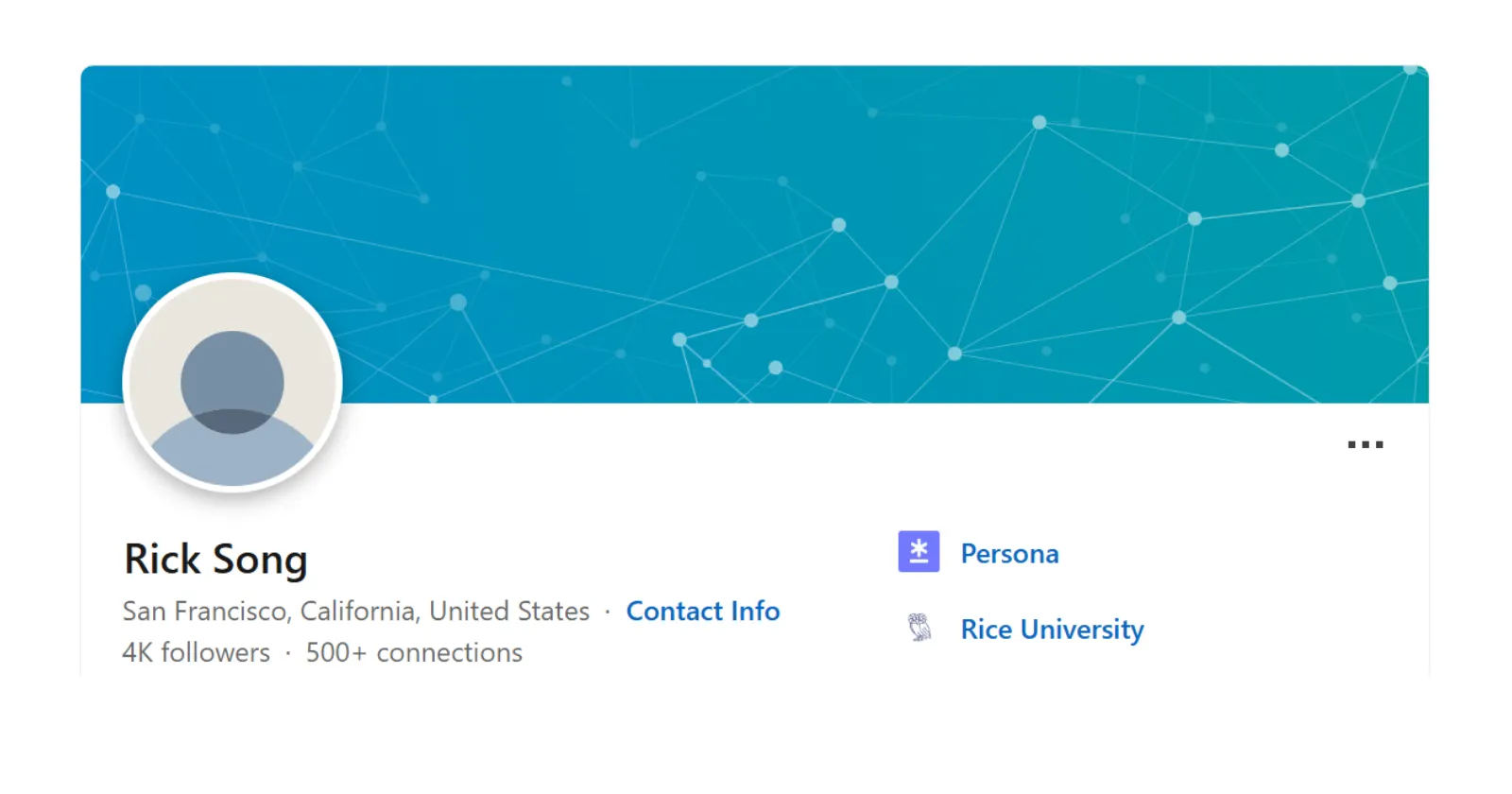
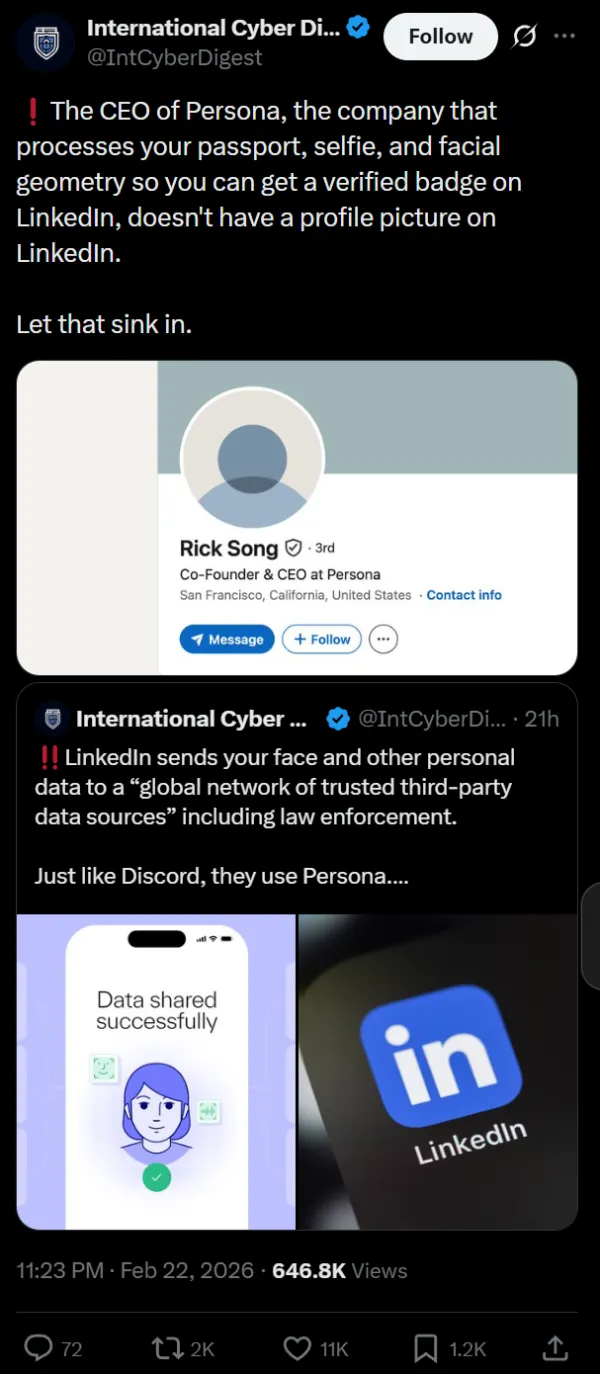
X account @IntCyberDigest flagged something this weekend that caught a lot of people’s attention: Persona CEO Rick Song, whose company processes your passport scan, selfie, and facial geometry to verify you on LinkedIn, does not have a profile photo on his own LinkedIn. Song is verified. He just hasn’t put a face to his name publicly.
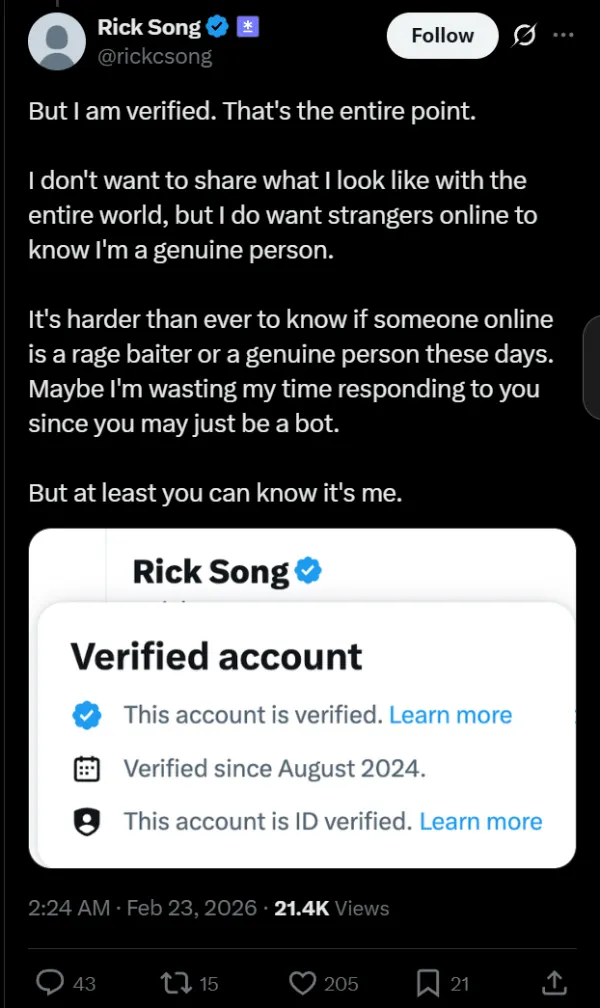
He jumped into the replies fast. “I don’t want to share what I look like with the entire world, but I do want strangers online to know I’m a genuine person,” he wrote.
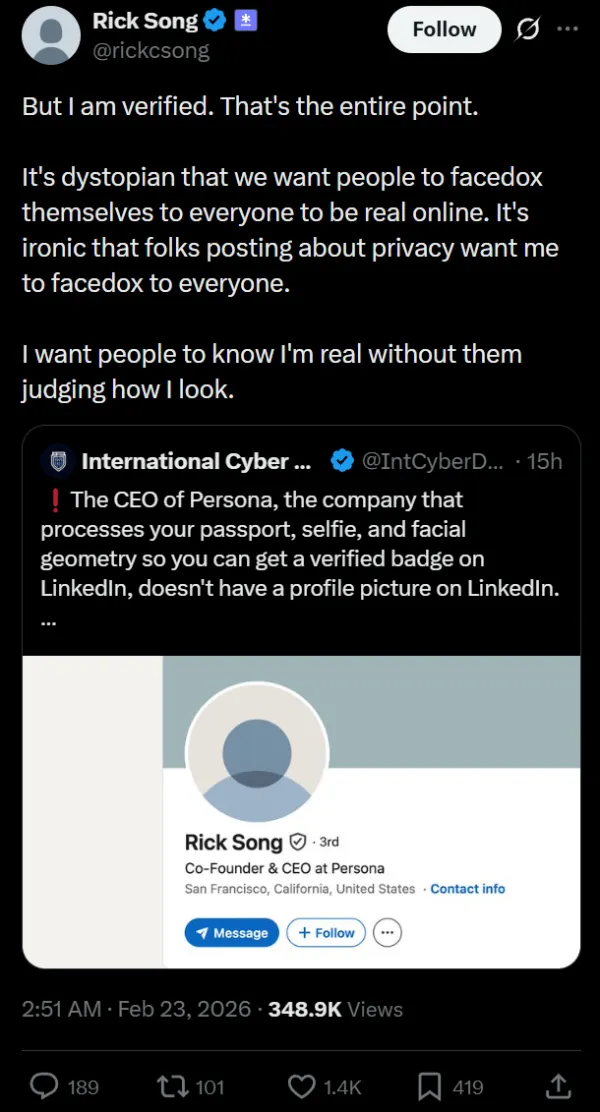
In a separate quoted-post, he used the word “facedox” to describe what he sees as an unfair expectation: that proving you’re real online should also mean making your face visible to everyone. He called that “dystopian.”
He drew a clear line between the two. He did go through Persona’s verification process, same as anyone else would. He just doesn’t want that to mean his photo is now public.
I verified myself by sending my face to the same platform. I’m no different. The only difference is that I don’t want to send my face to everyone else. (Source)
As for the data privacy angle, Song says photos don’t stick around. They’re deleted right after processing. Persona’s own documentation confirms this too. Facial geometry goes out the moment the comparison is done, and the selfie and ID data are wiped within 30 days. LinkedIn never sees your biometric data to begin with.
Now, this is all happening while Persona is already dealing with a pretty rough week. A few days ago, we covered how security researchers accused the company of running a large-scale identity surveillance operation, allegedly 269 verification checks per user, including screening against terrorism and espionage watchlists. Persona followed that up by emailing customers to say they have no ties to ICE or DHS. Meanwhile, Song has even shared the full email thread between himself and the vmfunc researchers who made the original claims.
The LinkedIn thread is now trending on X. Song’s point about being verified without being publicly recognizable is actually fair. Timing-wise though, it’s a weird hill to plant a flag on when your company is already fielding questions about surveillance.


Dwayne Cubbins
3101 Posts
I cover fast-moving stories across apps, online platforms, and everyday tech — phones, wearables, consoles, and whatever else people are fighting with this week. Bugs, rollouts, scams, policy enforcement, and the occasional internet-culture rabbit hole are all fair game. My goal is simple — make confusing tech news readable. When I'm not working, I'm working out or chilling with my dog. Got a tip? You can find me on X @dcubbins.
Next article View Article