
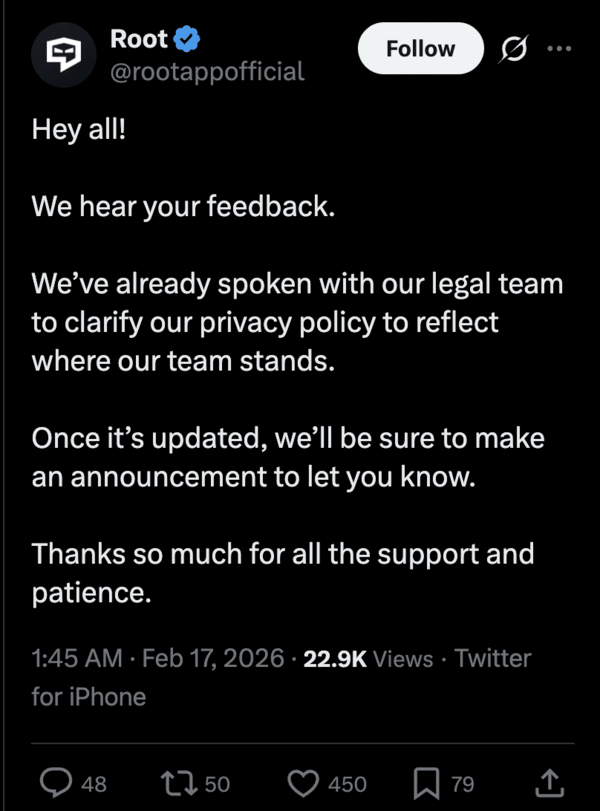
Root, a popular Discord alternative, is in damage control mode after some statements from their privacy policy triggered backlash, forcing the company to post an official clarification. Root now says it’s working with its legal team to rewrite some sections of the terms for better transparency, with clearer wording.
Root provided two separate statements. In one of them, they acknowledged community concerns and framed the issue as a communication problem. The legal text apparently does not reflect how the platform actually handles user data, and they promised to put out a more readable version. It’s worth noting that there was no announcement of a new policy or a rollback to the existing privacy rules.
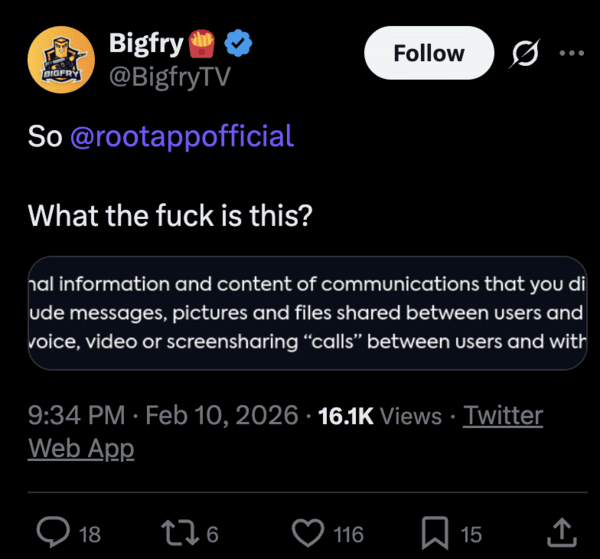
Posts went viral on social media, highlighting specific lines from the terms, questioning how the service could use voice and shared content. The framing from Root implied that the service could monitor communications, despite the company confirming there’s no such behavior.
Root continues to stress that their core privacy-centric approach has not changed. Some people have posted that they’re not going to continue using the platform until there’s further clarification from the company.
This situation has pushed some older platforms back into the limelight. TeamSpeak has attempted to market themselves by claiming it’s a privacy-centric company. It allows for self-hosted servers, allowing direct control over infrastructure. This is theoretically a major advantage. However, the setup is slightly cumbersome and may sometimes require hosting costs. Additionally, people have pointed out that TeamSpeak also collects user data and passes it on to third parties as well, according to their own privacy policy.
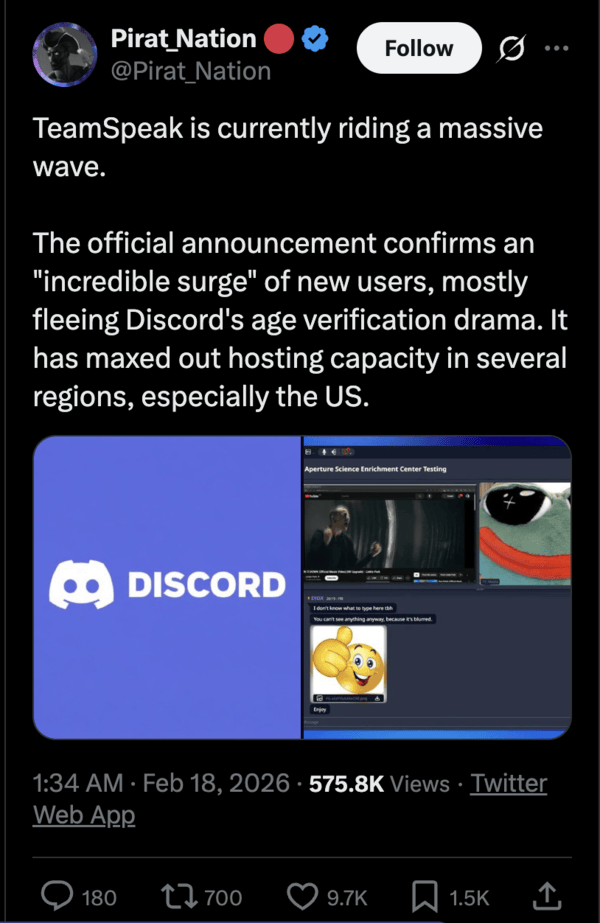
The whole reason for people looking at Discord alternatives right now is the age-verification plans in 2026, which we have extensively covered. A lot of people are actively moving away from Discord right now due to privacy concerns.
Root is relatively a much newer platform, and communities are just testing the best alternative options before settling on one. However, it’s difficult for them to become the new default choice if they don’t clear up this PR disaster. The company hasn’t announced a timeline for the new statement, and this leaves the situation as a wording dispute that has not yet been solved.


Dwayne Cubbins
2969 Posts
I cover fast-moving stories across apps, online platforms, and everyday tech — phones, wearables, consoles, and whatever else people are fighting with this week. Bugs, rollouts, scams, policy enforcement, and the occasional internet-culture rabbit hole are all fair game. My goal is simple — make confusing tech news readable. When I'm not working, I'm working out or chilling with my dog. Got a tip? You can find me on X @dcubbins.
Next article View Article