






Downdetector, the popular outage-tracking platform, has landed in the crosshairs of Cloudflare’s CEO, Matthew Prince. Things escalated so fast that the CEO even floated the idea of suing the platform. That reply came after someone suggested that his company buy Downdetector, but Prince had different ideas. He instead responded with, “Or just sue them. Tired of their crap.”
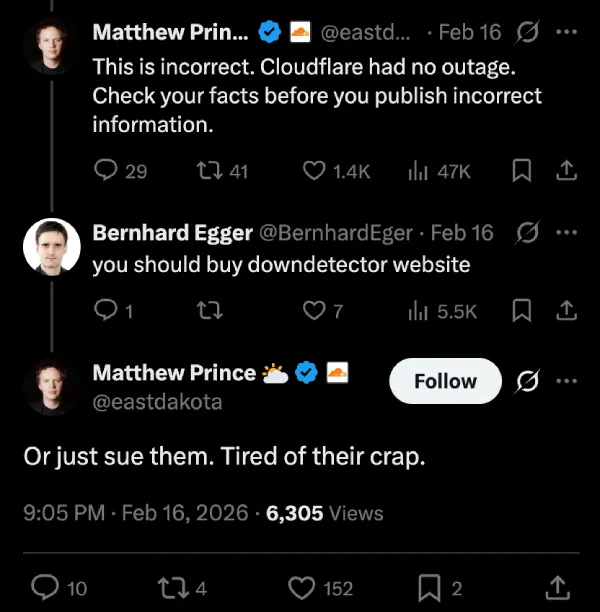
This didn’t come out of the blue. It followed a round of reports that claimed Cloudflare had problems when it did not. The New York Times had published that Cloudflare was experiencing issues early Monday, citing Downdetector. Prince slammed the paper’s handling of the story.
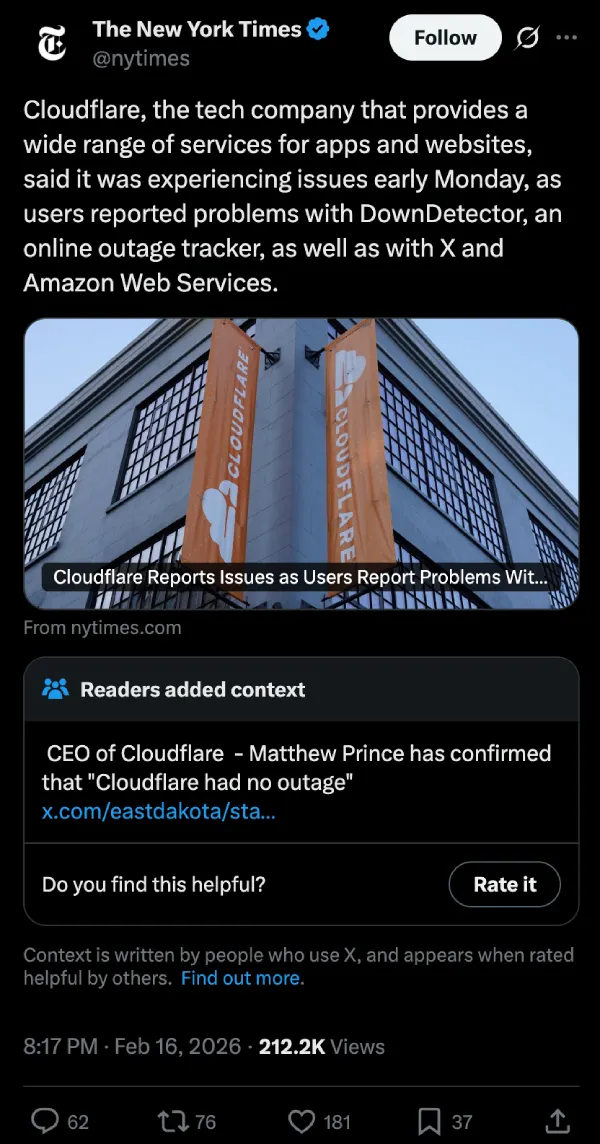
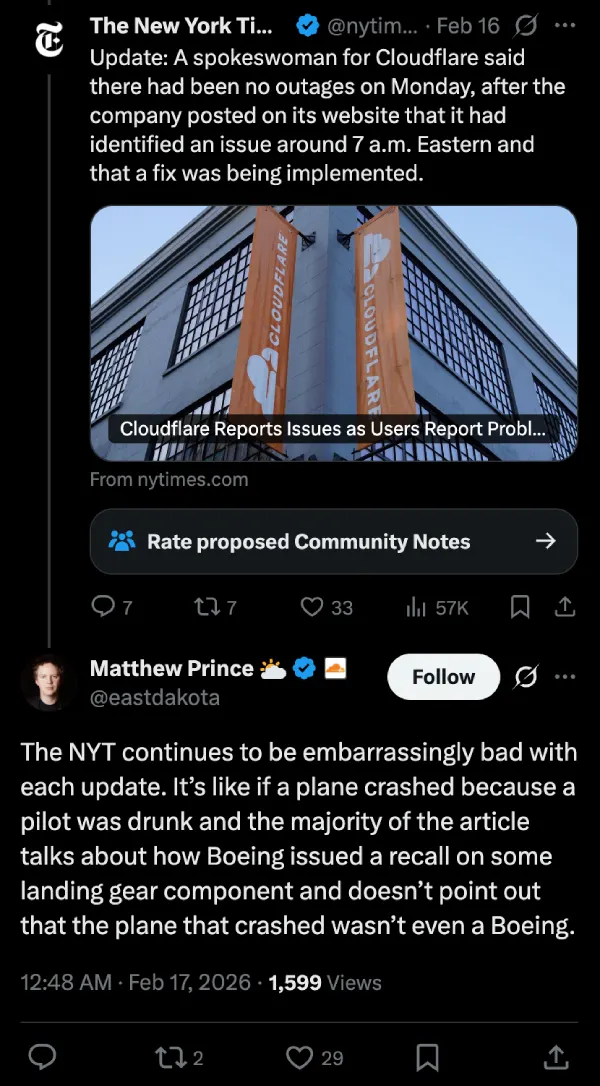
Then, after the publication updated its ill-informed article, Price came back to the same X thread the next day to say that their [NYT] updates were “embarrassingly bad” and likened the reporting to blaming Boeing landing gear for a crash actually caused by a drunk pilot.
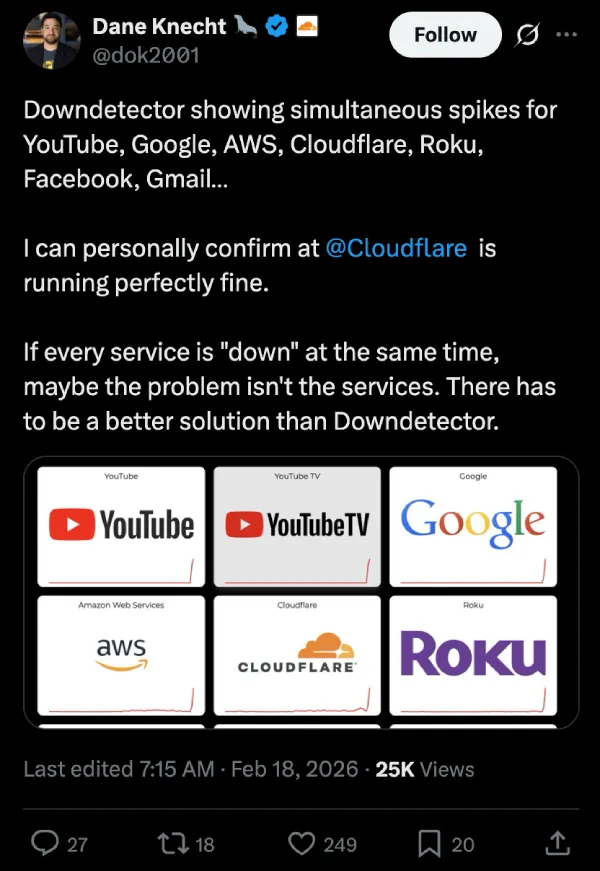
Now, a fresh wave hit earlier today. Downdetector lit up with spikes for YouTube, Google, AWS, Cloudflare, Roku, Facebook, and Gmail all at once.
Cloudflare CTO Dane Knecht jumped in right away. He posted a screenshot of DD’s homepage on X and stated that he could personally confirm Cloudflare was running perfectly fine. And that there were no issues on their end at all.
Turns out, it was just YouTube undergoing a widespread outage and had nothing to do with Cloudflare. Users saw loading errors and blank screens. Google acknowledged the issue and later followed up, noting that it has fixed the issue for the most part. Yet the tracker pulled in unrelated services too.
Downdetector works by collecting user reports. People visit the site or submit complaints when something feels off. A big jump above normal levels flags a potential outage. The tool also scans social mentions.
This crowdsourced approach spots real trouble quickly. But it often catches noise too. One service goes flaky and users start checking everything else. Reports pile up across the board and create false spikes. So essentially, if a large group of internet trolls wanted to, they could fake an outage on Downdetector with how the platform works.
Cloudflare knows the difference because it has faced real outages. In November last year, its network had a major issue that hit nearly half the web. Knecht explained exactly what went wrong and apologized. But then the service went through another massive outage a month later.
So yes, Cloudflare outages do happen, much like other services like AWS; however, when false such false reports begin making headlines, engineers waste time verifying, customers panic, and support gets flooded. It’s not a good usage of resources for any company.
Downdetector, owned by Ziff Davis, still serves as the first stop for millions when the internet acts up. We at PiunikaWeb also use Downdetector as a partial indication to determine if an outage is real, but we dig deeper to find actual reports and evidence of the same, instead of solely reporting based on the crowdsourced outage tracker.
That said, no one knows if a lawsuit will actually happen. The comment might have come in the heat of the moment. But the point landed. False outage reports hurt everyone involved. For now the message from Cloudflare is simple. Check official status pages first. Do not trust every spike you see.


Dwayne Cubbins
3028 Posts
I cover fast-moving stories across apps, online platforms, and everyday tech — phones, wearables, consoles, and whatever else people are fighting with this week. Bugs, rollouts, scams, policy enforcement, and the occasional internet-culture rabbit hole are all fair game. My goal is simple — make confusing tech news readable. When I'm not working, I'm working out or chilling with my dog. Got a tip? You can find me on X @dcubbins.
Next article View Article
