Ring has canceled its partnership with Flock Safety. After facing heavy criticism from users over surveillance, the planned integration has now been terminated. The new AI-powered search feature was intended to search for dogs, but people were worried that it could be misused to track humans. There were a lot of concerns from advocacy groups and lawmakers as well.
The integration was first announced in October 2025, as part of Ring’s Community Requests program. You could link the Ring app and its devices with Flock Safety’s public safety technology.

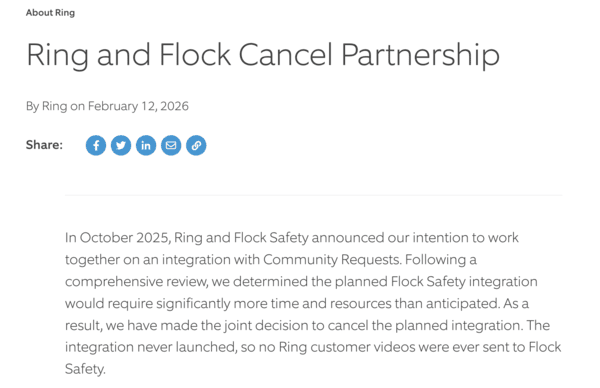
The official statement from Ring claims that the integration needed ‘more time and resources than anticipated.’ However, Ring maintains that no customer videos were ever shared with Flock Safety.
The company emphasizes that the Community Requests feature will actually continue to operate, but it will not be associated with Flock Safety anymore. Camera owners still have a choice on sharing footage with the police during investigations.
The controversy regarding surveillance began after Ring aired a Super Bowl ad, which promoted the AI-powered Search Party feature. The purpose of the tool is innocent on the surface, since it helps users locate lost pets by scanning from neighbourhood cameras. However, the implications of this being used for wider surveillance were major concerns.
As a result, several users and digital rights advocates did not respond positively, since Flock Safety is a provider of license-plate recognition tech to law enforcement agencies. While this is unconfirmed, there are some reports that claim Flock Safety’s data can be accessed by federal agencies such as ICE. This added fuel to the existing outrage, intensifying calls to drop this partnership.
Although the partnership is now over, Ring’s leadership stresses that the cancellation does not impact other partners like Axon. The Community Requests feature remains voluntary, and it actually does help in Police investigations.
Reactions to this partnership ending are split, with some rejoicing, while others would’ve preferred the partnership to continue with legally enforced privacy commitments; there’s inherently no problem unless it’s a forced opt-in.


Dwayne Cubbins
3024 Posts
I cover fast-moving stories across apps, online platforms, and everyday tech — phones, wearables, consoles, and whatever else people are fighting with this week. Bugs, rollouts, scams, policy enforcement, and the occasional internet-culture rabbit hole are all fair game. My goal is simple — make confusing tech news readable. When I'm not working, I'm working out or chilling with my dog. Got a tip? You can find me on X @dcubbins.
Next article View Article