For years, the magic of the Pixel series has felt largely software-driven, the result of AI drops and algorithm wizardry cooked up in Mountain View. But a massive new report has shifted the spotlight to the other side of the world, revealing the sheer mechanical brutality Google inflicts on its devices before they ever reach our hands.
In a rare move, Google recently opened the doors to its “Pixel Hardware Labs” in Taipei, Taiwan. As detailed by Android Authority, this facility is the company’s second-largest hardware hub outside the US, housing over 50 specialized labs where engineers torture-test everything from the Pixel 10 Pro Fold’s hinge to the sensors that detect when you flip your phone face down.
The Pixel 10 Pro Fold “sit test” and survival
The tour of the Taiwan facility revealed a side of Google we rarely see: the “Reliability Lab.” This is where the clean industrial design of a Pixel meets the chaotic reality of daily life.
The report highlights a machine officially dubbed the “sit test.” It utilizes a prop designed to simulate a human butt (yes, really), which applies pressure to a phone to ensure it doesn’t bend or shatter when users inevitably sit on it in a back pocket.
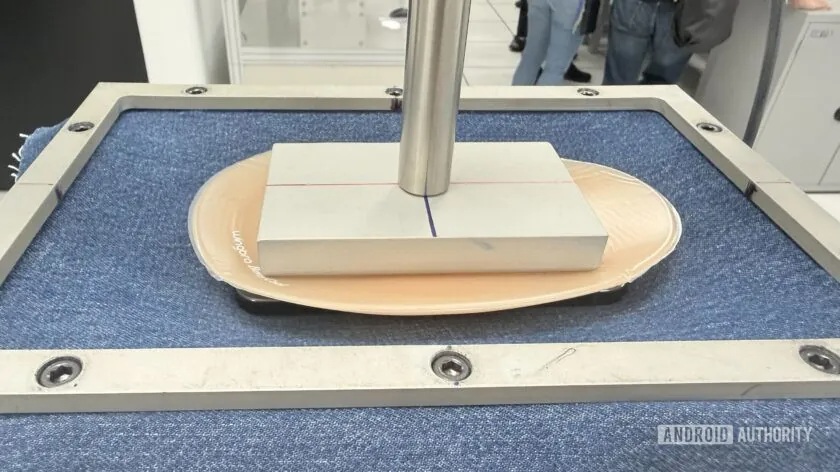
Beyond the posterior pressure, the lab features an IPX4 water resistance setup. While flagship Pixels are IP68-rated, this specific test mounts the phone on a turntable and sprays it with water from all angles for 10 minutes to simulate heavy rain or sweat, while the display remains on to monitor for glitches.
For the new Pixel 10 Pro Fold, the stakes were even higher. The report describes machines folding the device endlessly, allowing Google to rate the new “gearless hinge” for 200,000 folds. This new hinge design reportedly uses “cams” instead of gears, allowing for a thinner profile and a larger battery.
Robots and silence
In the “Robotic Connectivity Lab,” automation takes over. Custom 3D-printed rigs hold Pixel phones while robotic arms whisk them around to test sensors. This is where features like Watch Unlock, Adaptive Brightness, and Flip to Shhh are validated. By automating the motion, Google ensures these subtle features trigger correctly every single time.
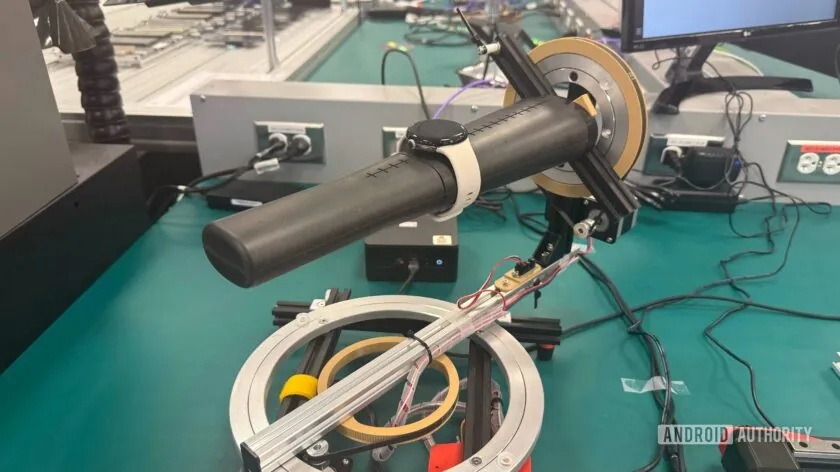
On the audio front, the facility uses anechoic chambers, which are rooms so silent that they block all external vibration and sound reflection. These are crucial for refining Audio Zoom and Voice Translate, ensuring that when you zoom in on a subject, the audio follows suit, cutting through the ambient noise of the real world.
A tale of two labs: torture vs. “vibes”
This fascinating look inside the Taiwan facility complements a similar transparency initiative we saw back in 2024. While the Taiwan labs focus on durability and survival, Google’s Mountain View labs focus on perception.
As we reported in April 2024 (via CNET), Google previously invited journalists into its “Real World Testing Lab” in California. Unlike the robotic arms and water sprays of Taiwan, the Camera Lab looked more like an IKEA showroom. It featured elaborate sets, including a faux café and a living room, with rig-controlled lighting to simulate everything from a flickering candle dinner to a harsh sunrise.
It is a striking contrast: The Taiwan team stretches materials until they look like “liquid cheese” to ensure they don’t break, while the US team obsesses over whether a video feels like the moment you remember. Both are essential to the “Pixel” identity.
Seeing the Pixel 10 Pro Fold and its siblings survive the “tumble test” (a simulation of a chaotic handbag filled with keys and coins) adds a layer of reassurance to the premium price tags these devices command.
It’s easy to take for granted that our phones survive rain, drops, and back-pocket pressure. But as these behind-the-scenes tours reveal, that survival is the result of relentless, intentional engineering.


Hillary Keverenge
2723 Posts
Tech has been my playground for over a decade. While the Android journey began early, it truly took flight with the revolutionary Lollipop update. Since then, it's been a parade of Android devices (with a sprinkle of iOS), culminating in a mostly happy marriage with Google's smart home ecosystem. Expect insightful articles and explorations of the ever-evolving world of Android and Google products coupled with occasional rants on the Nest smart home ecosystem.
Next article View Article