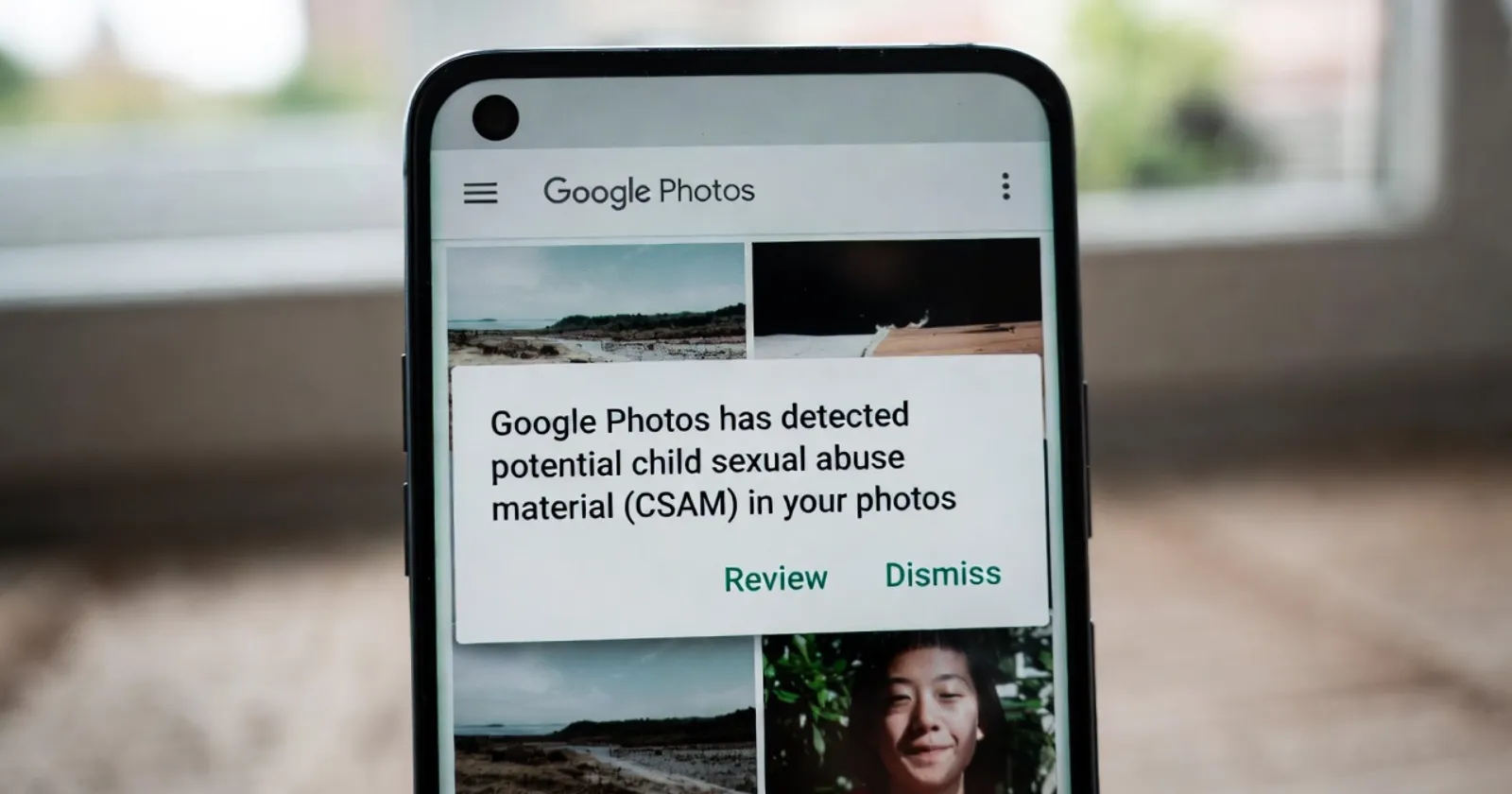
A concerning number of Google Photos users are finding themselves suddenly cut off from years of family memories after automated systems mistakenly flag innocent photos as child sexual abuse material. The reports have surged in recent weeks, with dozens of accounts disabled over what turned out to be harmless family pictures.
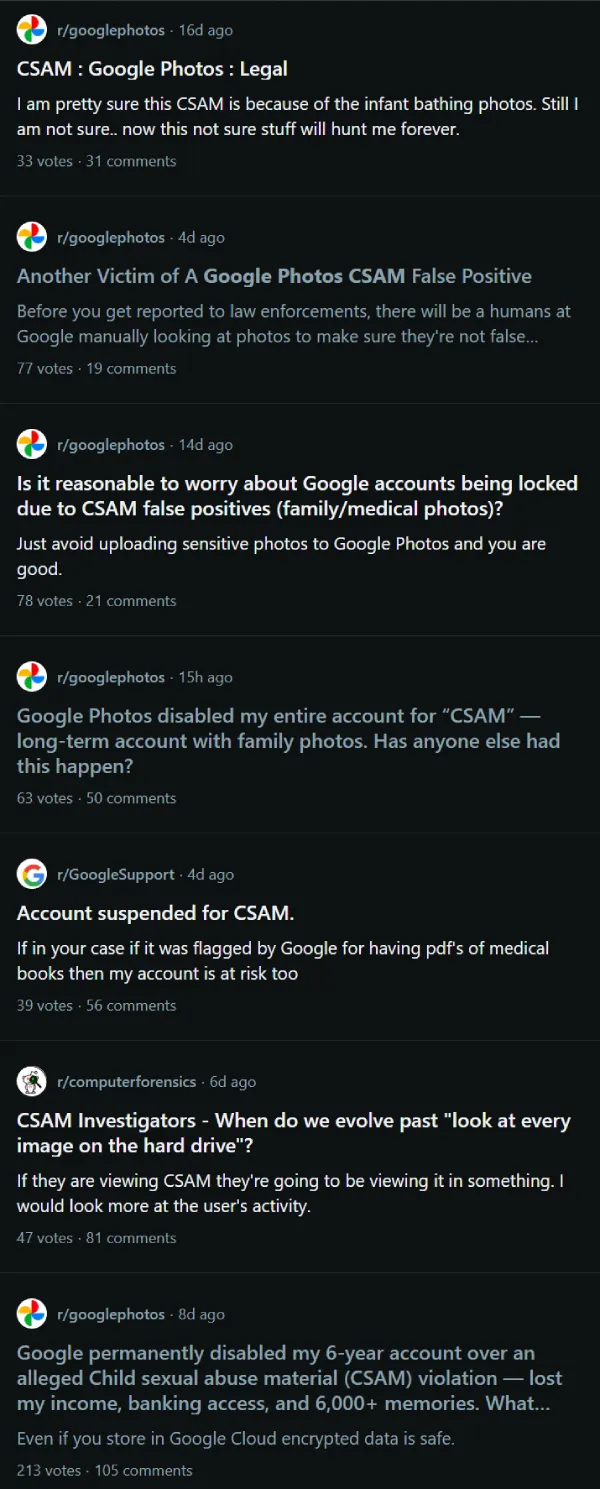
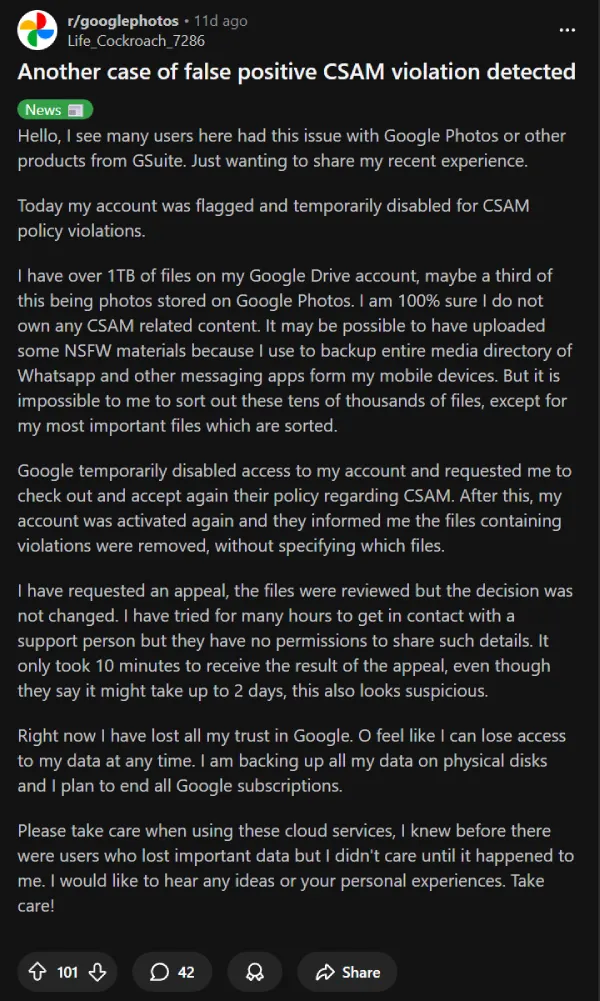
Here’s one grab that captures just a fraction of the posts that have been piling up on Reddit:
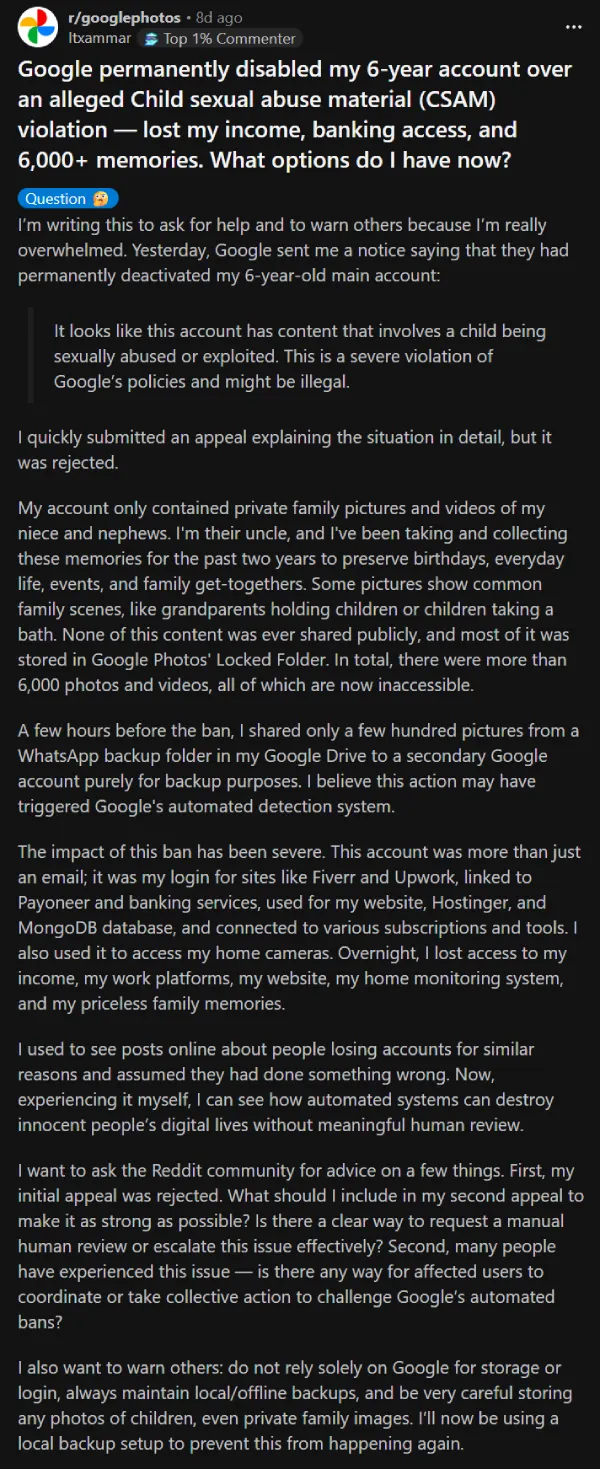
A freelancer recently shared their nightmare situation, talking about how their six-year-old Google account was permanently disabled overnight.
Their crime? Backing up 6,000 photos of his niece and nephews to a secondary account, which apparently triggered Google’s detection algorithms. The ban didn’t just lock him out of photos. He lost access to Fiverr, Upwork, his banking services through Payoneer, website hosting, and home security cameras.
The automated detection works through two main technologies. Google uses hash matching to compare images against known CSAM databases, then layers on artificial intelligence to flag new content with similar patterns. But the AI component appears prone to errors, especially with innocent family photos.
Another user reported being flagged after syncing WhatsApp media backups that included old baptism photos and swimming pool pictures from 15 years ago. Google temporarily disabled the account and removed files without specifying which ones violated policies. Their appeal was rejected in just 10 minutes, despite Google claiming reviews take up to two days.
The problem isn’t new. In 2022, The New York Times reported on fathers who lost their Google accounts after taking medical photos of their children at a nurse’s request. Both were cleared by investigators but never regained their account access.
When Google flags content, it reports cases to the CyberTipline at the National Center for Missing and Exploited Children, which then decides whether to involve law enforcement. However, even when authorities determine a report was a false positive, Google typically keeps the account banned.
The freelancer who lost their account did eventually get it restored within 24 hours after a second appeal. They credit requesting explicit manual review by a human specialist and pointing to verifiable artifacts like videos from the day their niece was born. But many others haven’t been as fortunate.
The wave of false flags has users scrambling for alternatives. One detailed guide on Reddit recommends keeping local backups, avoiding cloud photo services from providers you rely on for other services, and using custom email domains that forward to Gmail so you’re not locked out entirely if banned.
For now, parents and family members storing innocent photos face an impossible choice between convenience and the risk of losing everything overnight.
Featured image generated with AI


Dwayne Cubbins
3067 Posts
I cover fast-moving stories across apps, online platforms, and everyday tech — phones, wearables, consoles, and whatever else people are fighting with this week. Bugs, rollouts, scams, policy enforcement, and the occasional internet-culture rabbit hole are all fair game. My goal is simple — make confusing tech news readable. When I'm not working, I'm working out or chilling with my dog. Got a tip? You can find me on X @dcubbins.
Next article View Article