
A Reddit post claiming insider knowledge of shady practices at a major food delivery app pulled in over 87,000 upvotes and millions of views. Turns out the whole thing was fake. And the person behind it even tried to fool a journalist with AI-generated evidence.
The post showed up on r/confession last week from a brand new account called “Trowaway_whistleblow.” It described how delivery apps allegedly screw over customers and drivers. The most ridiculous claim was that the company supposedly calculated a “desperation score” for drivers and deliberately showed worse-paying orders to people who seemed most in need of work.
The OP even alleged that standard deliveries were intentionally slowed to make paid priority options look faster. There was also mention of a hidden fee that funded anti-union lobbying.
People ate it up. A screenshot of the post on X got over 37 million views with over 200K likes, along with many comments and shares.
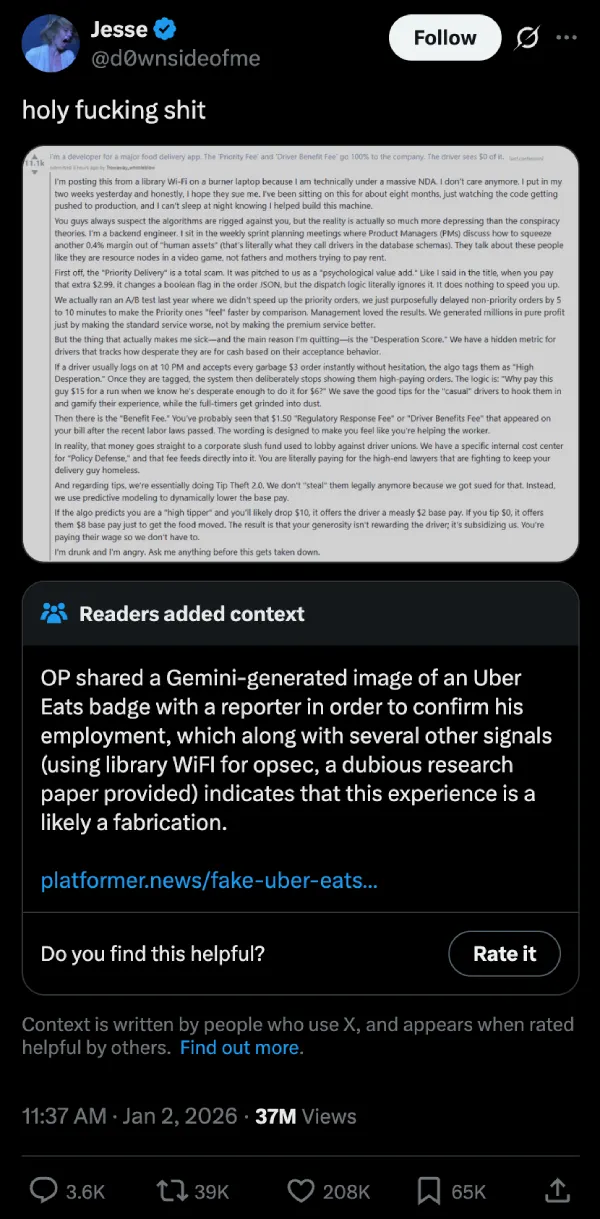
Reddit users showered the post with awards. And everyone was ready to delete their delivery apps.
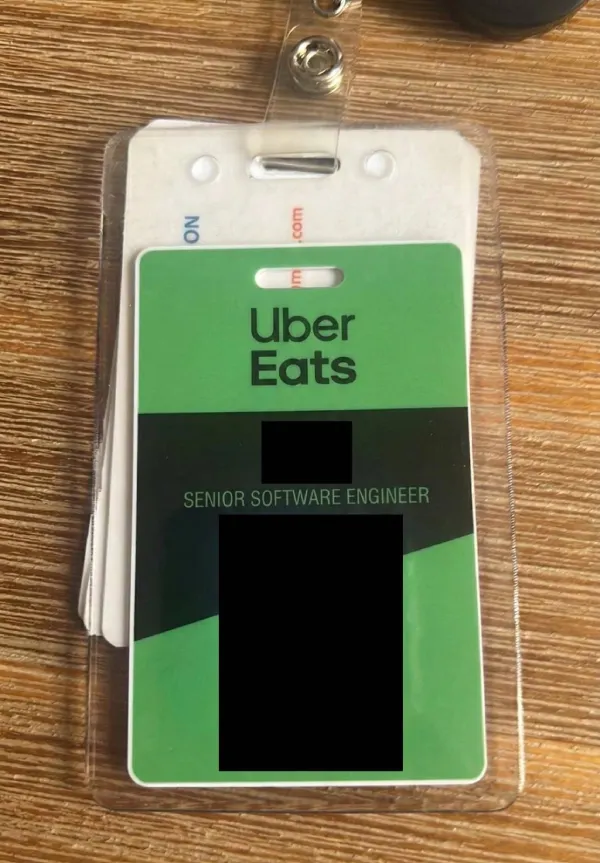
But not everyone was buying this. Casey Newton, a tech journalist at Platformer, wanted to verify the story. In an article debunking the post, he explains how the whistleblower contacted him on Signal and offered proof. First came a blurry employee badge that appeared to be from Uber Eats. Looked real enough.
Then a bigger file arrived: an 18-page document called “AllocNet-T: High-Dimensional Temporal Supply State Modeling.” Full of charts and formulas. It was even stamped “Confidential.” It seemed like solid evidence.
But problems started piling up. Newton noticed the whistleblower’s messages were riddled with typos, while the original Reddit post read smoothly. The document was weirdly comprehensive, covering every single claim from the post in one package. Newton showed it to a former ridesharing engineer who said companies just don’t write documents like that. Internal papers focus on narrow topics. They’re not evil master plans laid out on paper.
What really put the final nail in the coffin was when Newton uploaded the badge to Google Gemini and asked if the AI had created it. Gemini confirmed the image came from Google’s own AI tools, detected through its SynthID watermarking. When Newton pushed back, the whistleblower replied, “Thats ok. Bye,” and deleted their Signal account within hours.
This type of AI fakery is popping up in other places too. The Hill recently reportedly that a DoorDash driver got fired for allegedly using AI to fake completed deliveries without actually dropping off food. The tools people use to cheat are getting smarter.
Newton wrote that the experience rattled him. Faking a badge now takes seconds. Generating a convincing research document? Maybe a few minutes.
Reddit mods eventually pulled the post. But millions of people saw those accusations. Most of them might never see this correction.
Newton says basic journalism rules still help: if something seems too perfect, question it. Always find a second source. Be extra skeptical when a story makes you angry. AI just makes fabrication faster and cheaper. And fake stories still spread quicker than real ones.


Dwayne Cubbins
3069 Posts
I cover fast-moving stories across apps, online platforms, and everyday tech — phones, wearables, consoles, and whatever else people are fighting with this week. Bugs, rollouts, scams, policy enforcement, and the occasional internet-culture rabbit hole are all fair game. My goal is simple — make confusing tech news readable. When I'm not working, I'm working out or chilling with my dog. Got a tip? You can find me on X @dcubbins.
Next article View Article