





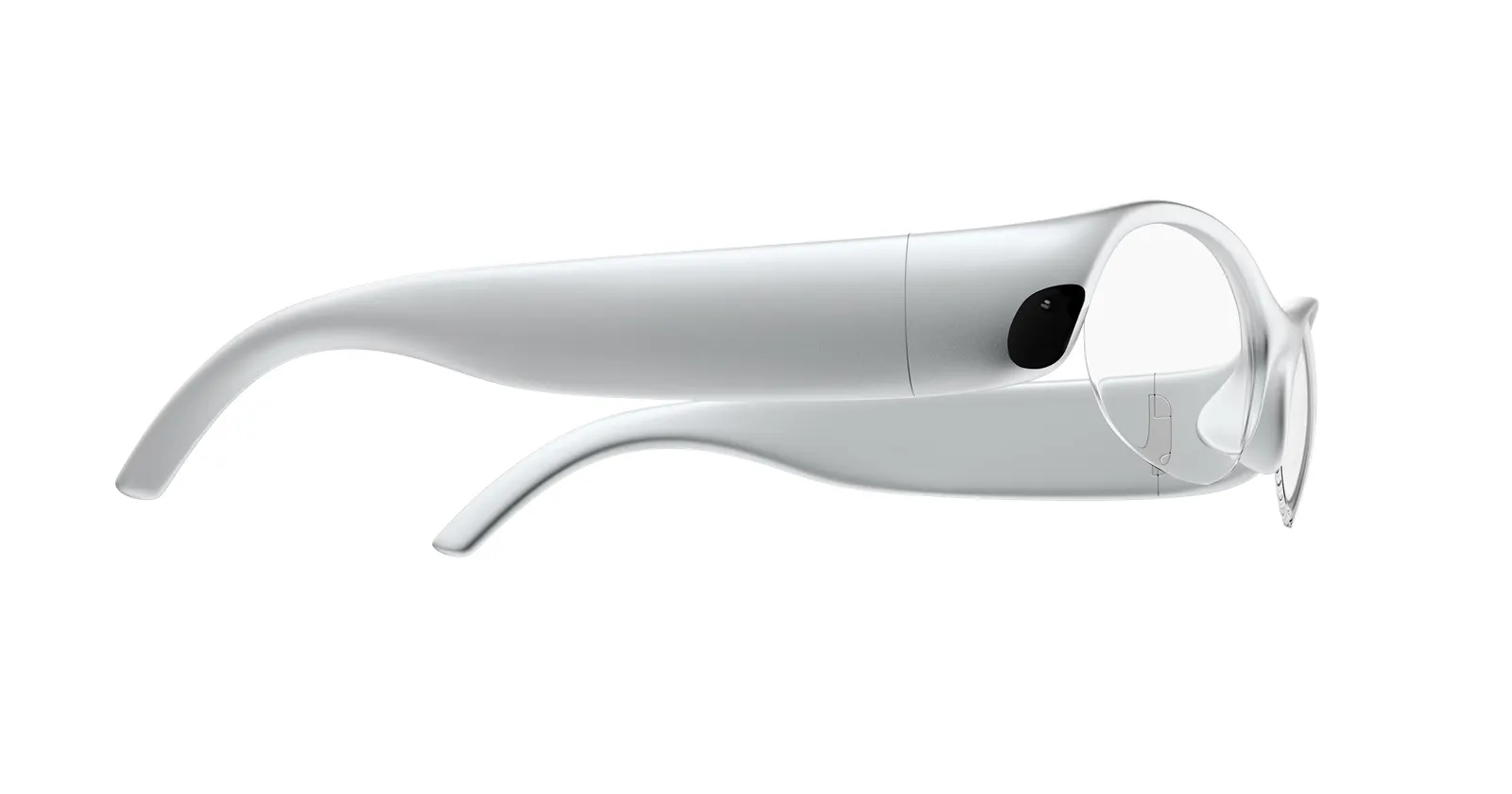
Introducing Pickle 1, the first soul computer.
— Pickle (@pickle) January 1, 2026
Order batch 1 today at https://t.co/IOzZg44Qcv pic.twitter.com/aZOerqtefV
When Pickle unveiled their AR glasses on January 2, the slick promotional video immediately caught attention. Virtual objects appeared to float seamlessly in space, the displays looked impossibly crisp in direct sunlight, and an AI companion responded without any lag.
It looked too good to be true, and according to Matthew Dowd, founder of VR company Wild, that’s because it probably is.
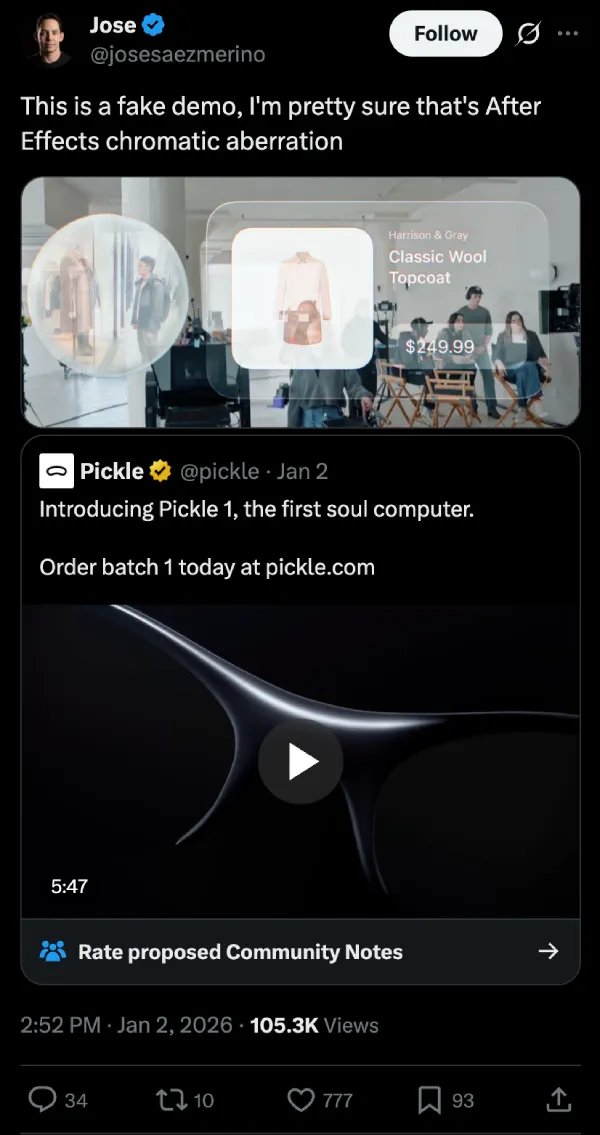
Dowd released a detailed breakdown on X that calls out what he believes are fraudulent claims about the Pickle 1 glasses, pointing to telltale signs that much of the demo footage relies on CGI rather than actual hardware capabilities. The most damning evidence? At timestamp 0:51 in their launch video, renders of virtual elements look suspiciously similar to After Effects filters, as one user on X highlighted.
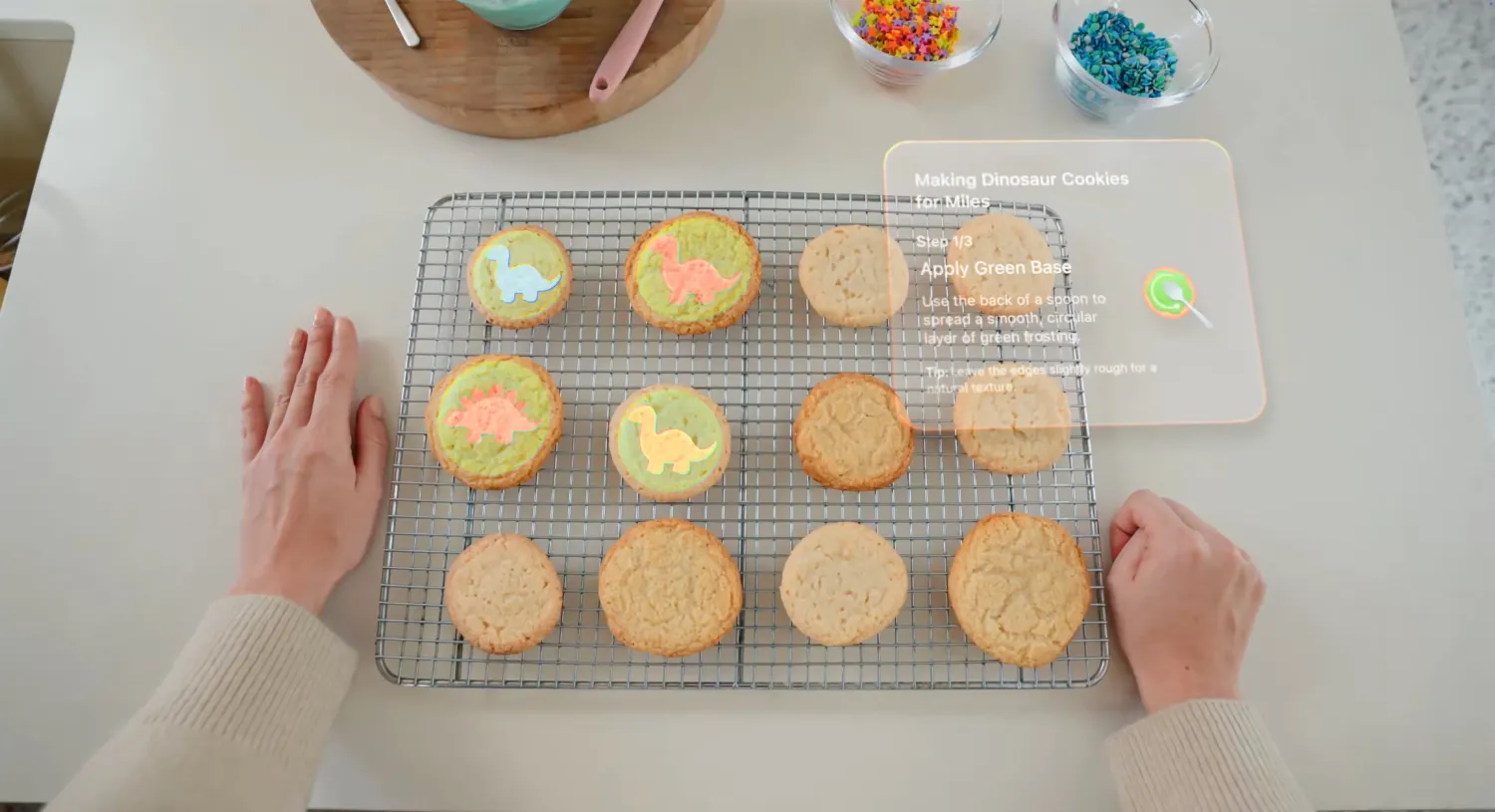
The video shows features that would require serious computing power and advanced sensors, yet there’s no sign that the prototype shown at demos even has working displays.
Someone who attended an in-person demo said the units didn’t have displays in them and weren’t functional, according to posts Dowd cited.
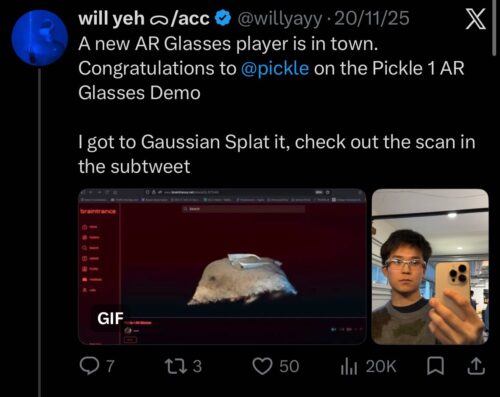
That’s a problem when you’re taking $200 deposits from people and promising to ship by Q2 2026. Dowd didn’t hold back, saying “this is fraud” and claiming the company is “stealing peoples’ money”.
The technical issues run deep. Dowd breaks down how Pickle claims to pack binocular full-color waveguide displays with a 30-degree field of view, 12-hour battery life, and standalone computing into a 68-gram frame.
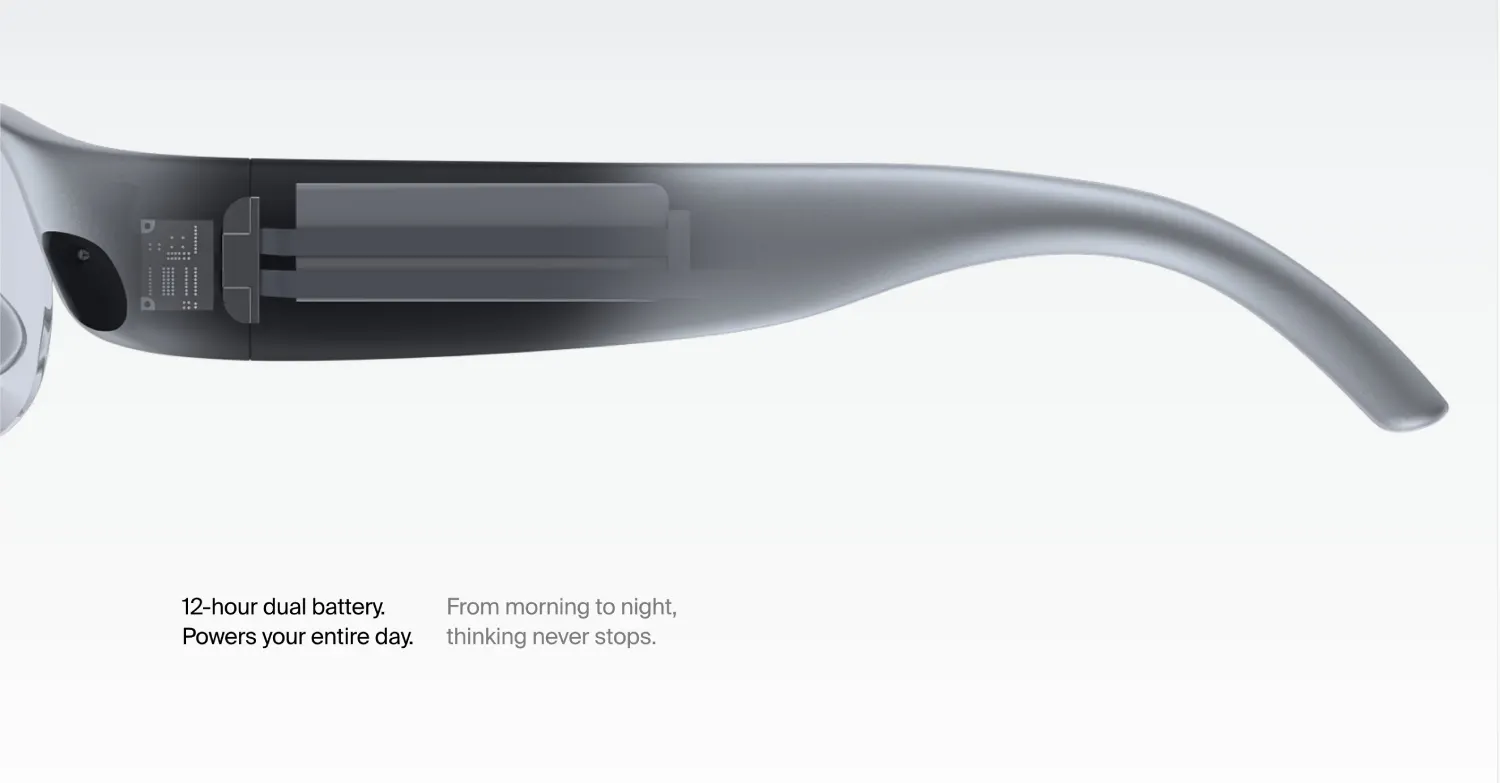
For context, Meta’s recently released Display Glasses weigh 69 grams but only have one display instead of two, and their battery lasts roughly half as long. Even Meta’s $10,000-per-unit Orion prototype, which offloads computing to an external device, weighs more and has worse battery life than what Pickle claims to offer.
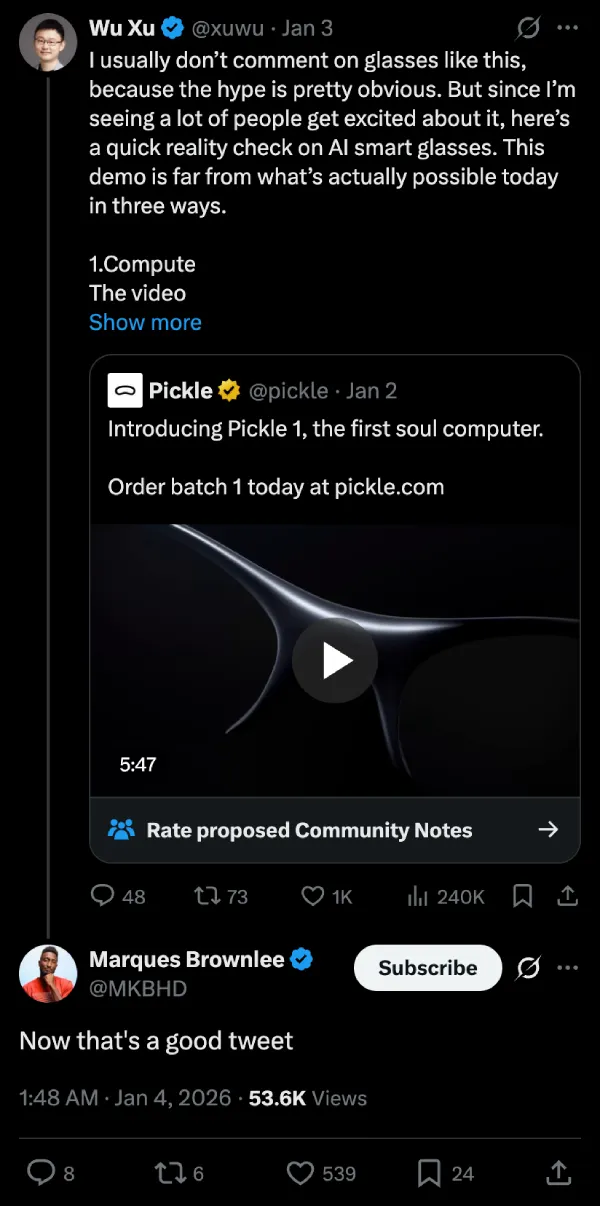
Wu Xu, founder of Maoyan and venture partner at ZhenFund who focuses on spatial computing and AR, posted his own reality check about the demo, noting that “smart glasses don’t have that kind of on-device compute today” and warning people not to expect anything close to what the promotional video shows. Even popular tech YouTuber MKBHD commented, “Now that’s a good tweet.”
What makes this especially concerning is Pickle’s history. According to Dowd’s research, the company was building completely different products just months ago, including an AI Zoom avatar tool and allegedly a stolen version of an open-source project called Cluely. The team has no discernible hardware or AR experience, yet they’re claiming breakthrough achievements that would require coordination from thousands of specialized engineers and manufacturers.
Pickle CEO Daniel Park posted a lengthy response just a couple of hours ago addressing the technical criticisms, revealing for the first time that Pickle 1 is actually phone-tethered rather than standalone, which he claims explains the battery life and weight numbers.
He acknowledged using CGI in the launch video and released what he called an unedited demo of the waveguide display. However, Dowd quickly dismissed the response as “goalpost shifting” and said he suspects the technical details Park provided are “preposterous”. Dowd announced he’s bringing in hardware engineers for a deeper technical analysis in an upcoming follow-up.
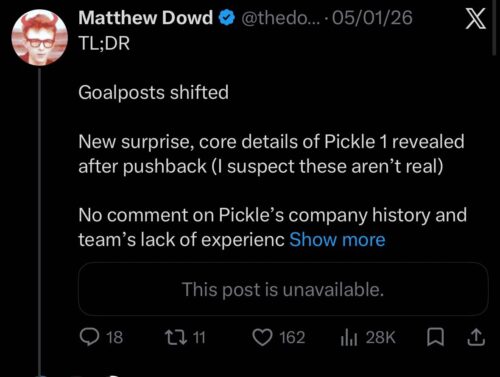
I’d recommend checking out Dowd’s full breakdown on X here. He goes through every technical claim in forensic detail and even offered to bet the company’s entire preorder revenue that they won’t ship by their stated deadline.

We stand out from the tech-media crowd because we break news stories; we mainly bring you stuff that you won’t find anywhere in the mainstream tech media. Our stories have been picked up by some of the world’s most popular websites and media outlets—more info is available here.

Dwayne Cubbins
3068 Posts
I cover fast-moving stories across apps, online platforms, and everyday tech — phones, wearables, consoles, and whatever else people are fighting with this week. Bugs, rollouts, scams, policy enforcement, and the occasional internet-culture rabbit hole are all fair game. My goal is simple — make confusing tech news readable. When I'm not working, I'm working out or chilling with my dog. Got a tip? You can find me on X @dcubbins.
Next article View Article

AO3 (Archive of Our Own) down? Here's why it's not working currently [U: Fanlore down too]
Update 17/03/26 - 10:56 am (IST): Many users are once again complaining about being unable to access Ao3. The official status page says that the team is aware...
Mar 17, 2026 2 Min Read