





As of yesterday, Australians are now required to verify their ID just to use a search engine.
— Wide Awake Media (@wideawake_media) December 28, 2025
"It'll link to your digital ID, or you'll use something like facial recognition."
Make no mistake: Australia is just the beta test. This is coming to the entire West if people don't… pic.twitter.com/6rXFCOXtaP
Australia’s new search age checks are apparently starting to show up for some users, and despite what a few viral posts claim, it does not mean you’ll be forced to upload your ID for every query.
The confusion kicked off on X, where certain accounts claimed Australians are “required to upload their ID to use a search engine.”
Other posts suggest people are seeing prompts already, including one from “Rex club” saying Google is “doing age verification” in Australia.
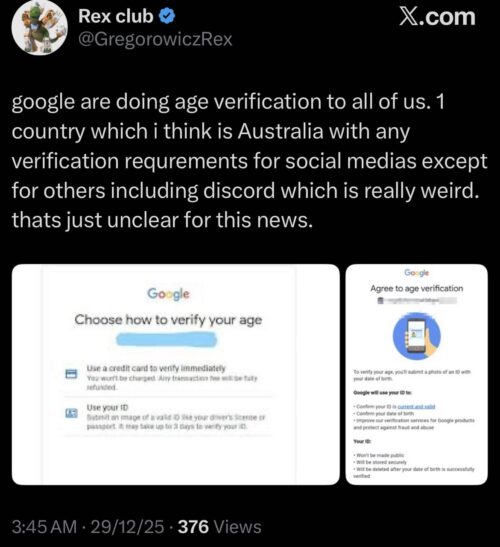
But the new age verification check is being blown out of proportion. Here’s what’s happening in reality.
Under new codes registered by the Australian eSafety Commissioner, search services and platforms with search-like features are expected to add age assurance measures, particularly when users are signed in and when results could expose minors to adult content.
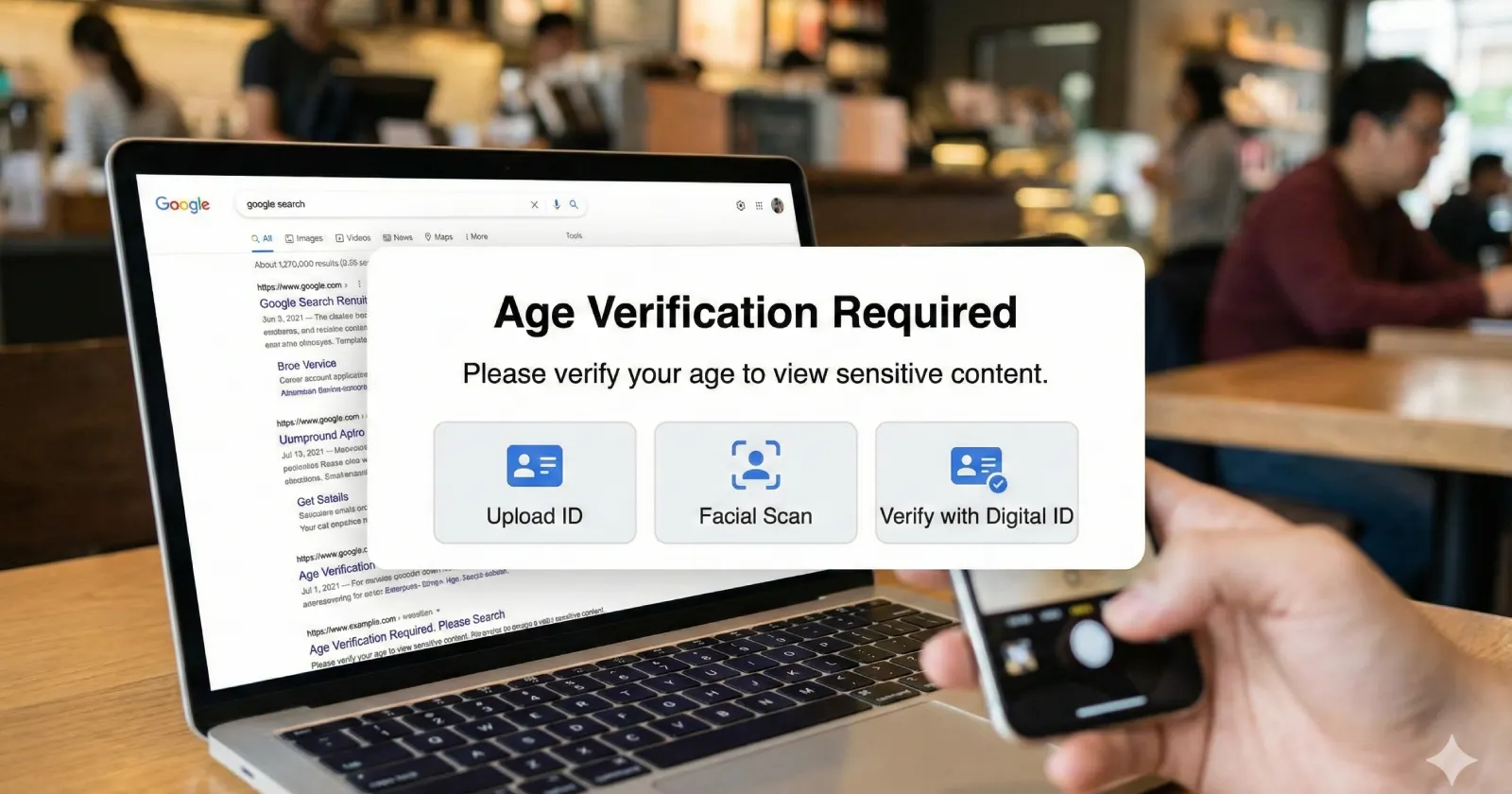
In practice, that can look like an interstitial prompt over the search page that asks you to confirm your age before proceeding. Users who are logged in might get the option to verify their age by sharing their credit card details or by providing an official government-issued ID. Although the guidelines reported by ABC News in July actually provide 7 ways to verify the user’s age:
- Photo ID checks.
- Face scanning age estimation tools.
- Credit card checks.
- Digital ID.
- Vouching by the parent of a young person.
- Using AI to guess a user’s age based on the data the company already has.
- Relying on a third party that has already checked the user’s age.
If you are not logged in, it doesn’t mean you’ll be locked out of searching for anything. Anonymous searches will still be allowed, but explicit thumbnails would be blurred with a click-through to view more.
If a logged-in user is under 18, search results will be filtered for pornography, high-impact violence, material that promotes eating disorders, and other categories flagged as harmful to kids.
Australia has spent years tightening online safety rules, expanding the eSafety Commissioner’s remit, and pushing platforms to reduce exposure to harmful content. It also ties in with the country’s recent push to ban teens from using social media platforms.
It is worth noting that while the code is technically “live” as of late December 2025, the tech giants have a six-month implementation window. That means the experience you have today might change by the time the full compliance deadline hits on June 27, 2026.
For now, you don’t need to reach for your wallet to win an argument about who starred in The Matrix. But if you’re trying to disable SafeSearch, get ready to prove you’re old enough to do it.
Featured image generated with AI

We stand out from the tech-media crowd because we break news stories; we mainly bring you stuff that you won’t find anywhere in the mainstream tech media. Our stories have been picked up by some of the world’s most popular websites and media outlets—more info is available here.

Dwayne Cubbins
3086 Posts
I cover fast-moving stories across apps, online platforms, and everyday tech — phones, wearables, consoles, and whatever else people are fighting with this week. Bugs, rollouts, scams, policy enforcement, and the occasional internet-culture rabbit hole are all fair game. My goal is simple — make confusing tech news readable. When I'm not working, I'm working out or chilling with my dog. Got a tip? You can find me on X @dcubbins.
Next article View Article
YouTube background play not working on Brave Browser app? Try these potential workarounds
Update 31/01/26 - 09:22 am (IST): Brave's support team has confirmed that the company is aware and investigating the issue. They've also provided the same workaround...
Jan 12, 2026 3 Min Read