





Google had a busy weekend in the Pixel ecosystem, touching everything from software updates and long-standing interface complaints to experimental AI-powered search behavior and camera preferences. Here’s a quick roundup of the latest developments Pixel owners should know about.
Pixel December 2025 factory and OTA images go live
Google has quietly published factory and OTA images for the second December 2025 update for Pixel phones, following an out-of-cycle rollout that began last week. While Google itself has yet to publish an official changelog, details about the update first surfaced through Verizon.
According to the carrier, the update addresses three issues affecting Pixel 8 through Pixel 10 devices. These include faster-than-normal battery drain, intermittent touch responsiveness problems on the Pixel 10 specifically, and a bug that prevents access to cached or locally stored content, such as offline media or maps, when upgrading directly from Android 14 or earlier to Android 16.
As of Friday afternoon, Google posted updated builds for all regions and carrier variants that received the initial December release earlier this month. The builds are labeled BP4A.251205.006.E1 for global devices, BP4A.251205.006.C2 for Japan, and BP4A.251205.006.A4 for EMEA.
The OTA itself is relatively small, coming in at around 25MB, and can now be manually sideloaded by users who haven’t yet received the update on-device. That said, the rollout does not appear to be complete. While more users, including those with unlocked phones, have started receiving it over the past couple of days, some Google Fi and T-Mobile devices are still waiting.
Google may finally reverse the controversial Internet tile change
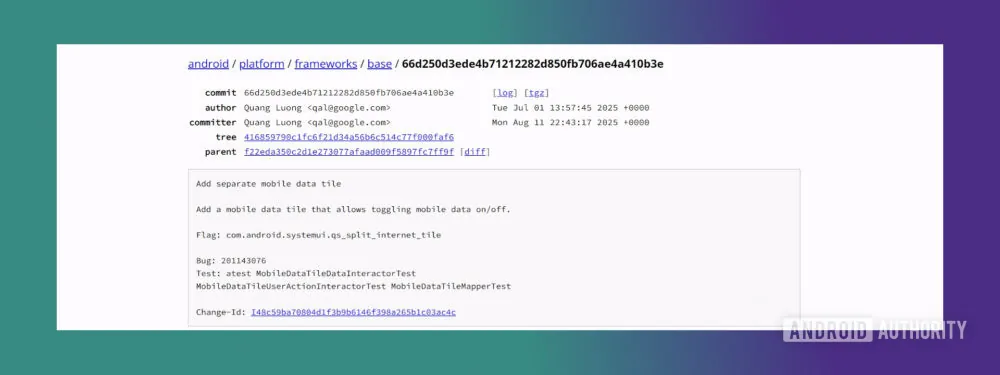
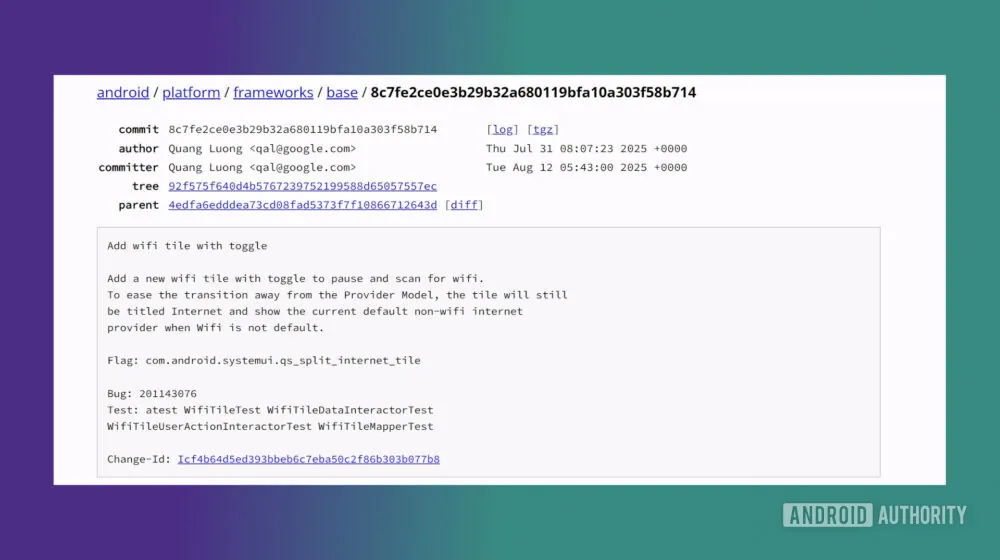
In what could be a long-awaited win for power users, Google appears to be laying the groundwork to undo one of Android’s most criticized interface changes. Evidence in the Android 16 QPR2 source code suggests Google may split the combined “Internet” Quick Settings tile back into separate Wi-Fi and mobile data toggles.
Google introduced the unified Internet tile with Android 12 in 2021, replacing the one-tap Wi-Fi and mobile data tiles with a single expandable panel. While the change was meant to reduce accidental data usage and simplify network switching for the average user, it added an extra step for anyone who frequently toggles connectivity.
The newly discovered code adds two tiles: a dedicated “Mobile Data” tile that allows direct toggling, and a Wi-Fi tile that still carries some Internet Panel behavior for now. These changes are currently hidden behind a feature flag labeled “qs_split_internet_tile” and are not enabled in Android 16 QPR3 Beta 1 or Canary builds.
There’s no confirmation on when or if this change will roll out to Pixel devices, but the fact that it exists in AOSP at all suggests Google is at least reconsidering its earlier stance.
Google Search on Pixel may start talking back
Google is also experimenting with how it delivers search results directly from the Pixel home screen widget. With version 16.50.55.ve.arm64 beta of the Google app, some users are seeing voice-based responses to certain searches, including song identification and voice queries.
Instead of only showing text-based results, Google now appears to respond with spoken output while still displaying on-screen information. This behavior seems tied to AI Mode, though the spoken response is not simply a readout of the AI Overview text.
A new floating overlay has also appeared, offering options to dismiss the response or continue with further voice input. Tapping through can take users into full AI Mode, at which point Google stops speaking responses aloud.
The feature currently feels unfinished, particularly due to the persistent overlay, suggesting it’s still very much a work in progress rather than an imminent rollout.
Pixel camera users still care about hidden controls
Despite Pixel phones being known for point-and-shoot simplicity, a recent Android Authority survey shows that users still value manual control, especially when it comes to composition.
In a survey based on lesser-known Pixel Camera settings, framing hints and grid overlays emerged as the most popular option, earning 33 percent of the vote. Locked focus followed at 21 percent, reinforcing the idea that many Pixel owners want more control over how shots are composed.
Motion Photo settings, selfie mirroring, quick access controls, and volume key actions rounded out the list, with only one percent of respondents choosing “Other.” The results suggest that even with Google’s heavy reliance on computational photography, subtle tools that help users line up a shot remain highly valued.
Google launches Pixel Upgrade Program in India
Finally, Google has introduced a new Pixel Upgrade Program in India aimed at making Pixel ownership more accessible. The program offers 24-month no-cost EMI plans starting at INR 3,333 per month, with the option to upgrade to a newer Pixel after as few as nine payments.
The initiative covers the Pixel 10 lineup and includes assured buyback regardless of physical condition, as long as the device powers on and passes basic checks. The program runs through June 30, 2026, in partnership with Cashify, Bajaj Finance, and HDFC Bank, and also bundles trial subscriptions for services like Google AI Pro, Fitbit Premium, and YouTube Premium.
Taken together, it’s another example of Google continuing to iterate on both the software experience and the business side of Pixel, even if some changes take years to come full circle.

Hillary Keverenge
2485 Posts
Tech has been my playground for over a decade. While the Android journey began early, it truly took flight with the revolutionary Lollipop update. Since then, it's been a parade of Android devices (with a sprinkle of iOS), culminating in a mostly happy marriage with Google's smart home ecosystem. Expect insightful articles and explorations of the ever-evolving world of Android and Google products coupled with occasional rants on the Nest smart home ecosystem.