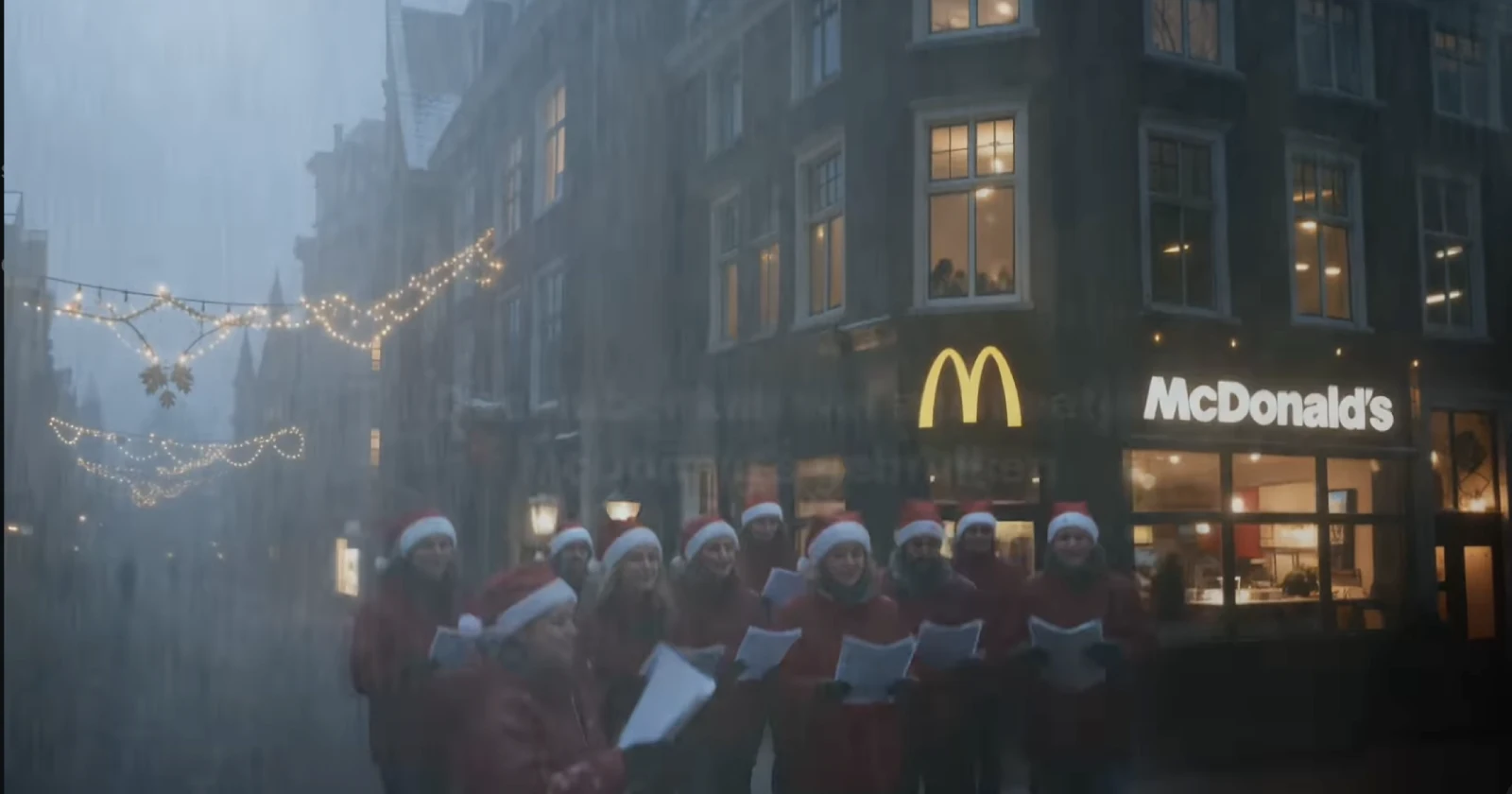
McDonald’s has quietly pulled its new AI-generated Christmas commercial from YouTube after a wave of backlash, and it’s starting to look like big brands haven’t figured out how to make AI ads feel anything but off. The spot, which ran on a regional channel and then spread quickly across X and Instagram, leaned heavily on generative visuals and wound up being roasted for looking eerie, joyless, and weirdly anti-Christmas.
In the ad, viewers saw glitchy, stylized scenes built with AI tools instead of traditional cinematography, mixing distorted faces, awkward motion, and environments that never quite felt real. The overall vibe skewed more uncanny than cozy, which is a problem when you’re trying to sell warm, nostalgic holiday vibes.
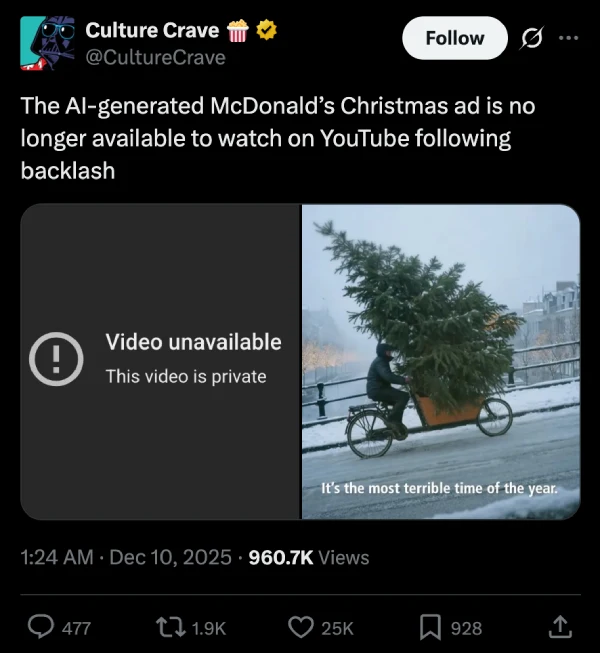
Once clips hit social platforms, criticism piled up fast, with people calling it “total trash ” and the tone out of step with the usual sentimental Christmas fast-food ads. As pointed out by Gizmodo in their piece, everyone hated the ad. And not long after, the original upload on YouTube was made unavailable, though reposts and reaction videos are still racking up views.
The studio behind the commercial has tried to take ownership of the project, stressing that humans spent weeks crafting prompts and iterating on the look, rather than just pushing a button and walking away. Ironically, that defense mostly underlined how messy and expensive AI-driven production can be right now, without delivering the polish of a traditional shoot.
View this post on Instagram
If this all sounds familiar, it’s because Coca‑Cola walked into the same buzzsaw earlier. The company used AI to reimagine one of its most beloved holiday campaigns, promising a modern twist on a classic Christmas ad, and instead sparked anger from fans and creatives who felt the remake cheapened the original and sidelined human artists.
For decades, holiday spots from brands like Coca‑Cola and McDonald’s have leaned on comforting storytelling: real actors, cozy lighting, and simple narratives that play on ritual and nostalgia. Swapping that out for AI-generated imagery seems to break the spell, reminding viewers of the tech rather than the tradition.
From the brands’ perspective, AI promises faster iteration and lower production overhead in the long run. But when the end result triggers widespread mockery, pulled uploads, and think pieces about soulless automation, any savings come at the cost of brand warmth and trust.
Right now, AI seems best when it disappears into the workflow, not when it’s the headline feature of a campaign. Until brands can use these tools without sacrificing emotion and visual coherence, we’re probably going to keep seeing more “AI fail” holidays than heartwarming ones.
I’m hoping the next wave of experiments shifts back toward human-led concepts where AI is just one more tool in the box, not the main character. And with how quickly these backfires are piling up, we’re likely to see at least a few big advertisers quietly pivot back to more traditional, people-first holiday shoots next year.

Dwayne Cubbins
1851 Posts
My fascination with Android phones began the moment I got my hands on one. Since then, I've been on a journey to decode the ever-evolving tech landscape, fueled by a passion for both the "how" and the "why." Since 2018, I've been crafting content that empowers users and demystifies the tech world. From in-depth how-to guides that unlock your phone's potential to breaking news based on original research, I strive to make tech accessible and engaging.
Next article View Article