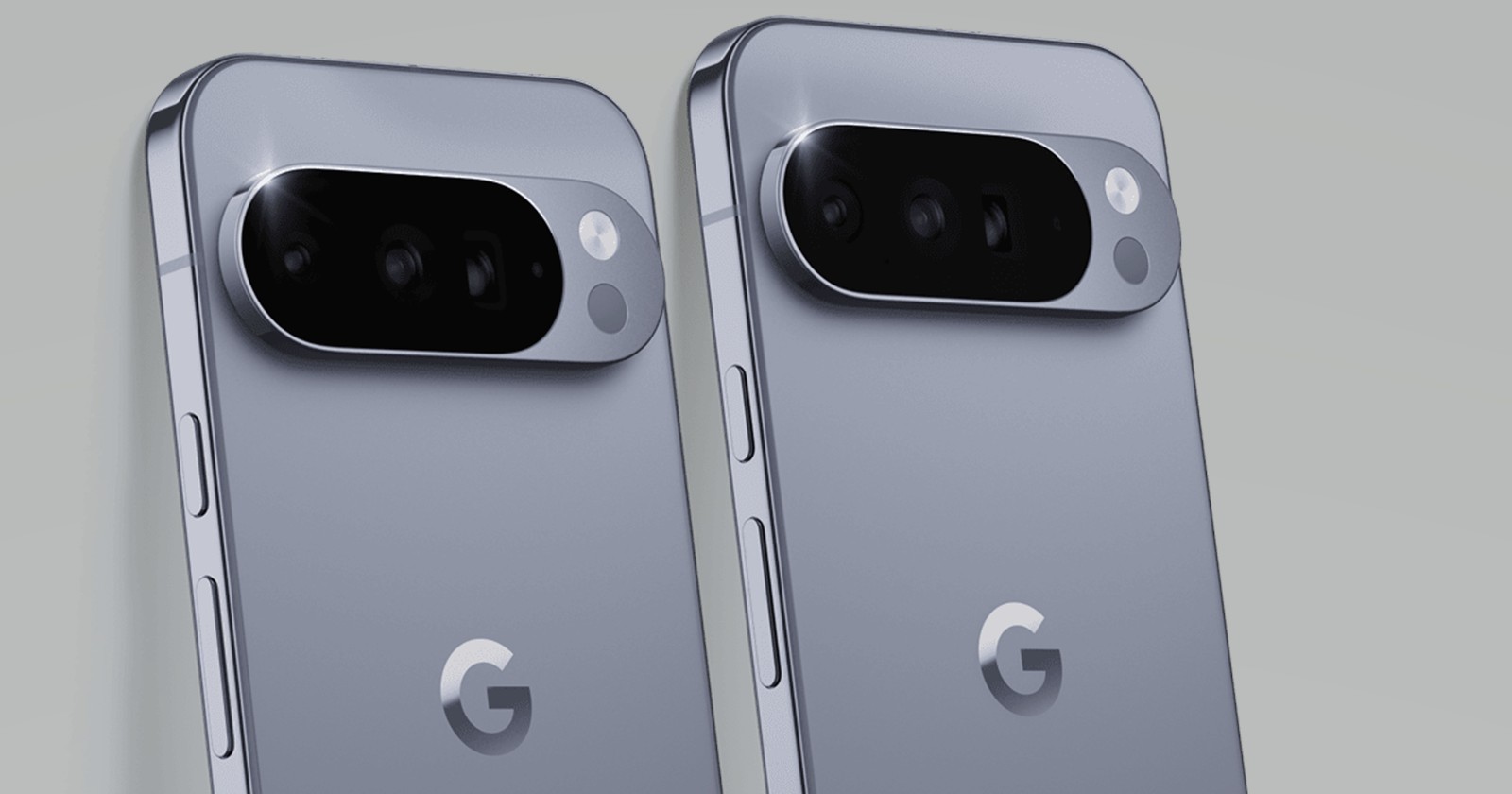
A new report from the UK’s Compare and Recycle is raising serious concerns for those planning to upgrade to the Pixel 10, suggesting Google’s newest flagship won’t be “as lucky in beating depreciation” as previous generations, making it a “hard sell for upgraders.”
While Google has a huge win, doubling its year-over-year global smartphone sales and securing its spot in the premium Android market, the report highlights an alarming instability in handset value retention across the entire Pixel lineup. The findings offer crucial financial warnings for anyone considering buying the Pixel 10 series, especially those planning to trade in their device after just 12 months.
Pixel 8 series suffered the steepest losses ever
The data makes one thing crystal clear: the Pixel 8 series is the undisputed champion of losing value, claiming nearly every spot on the list of “Worst Pixel Phones for Retaining Value.”
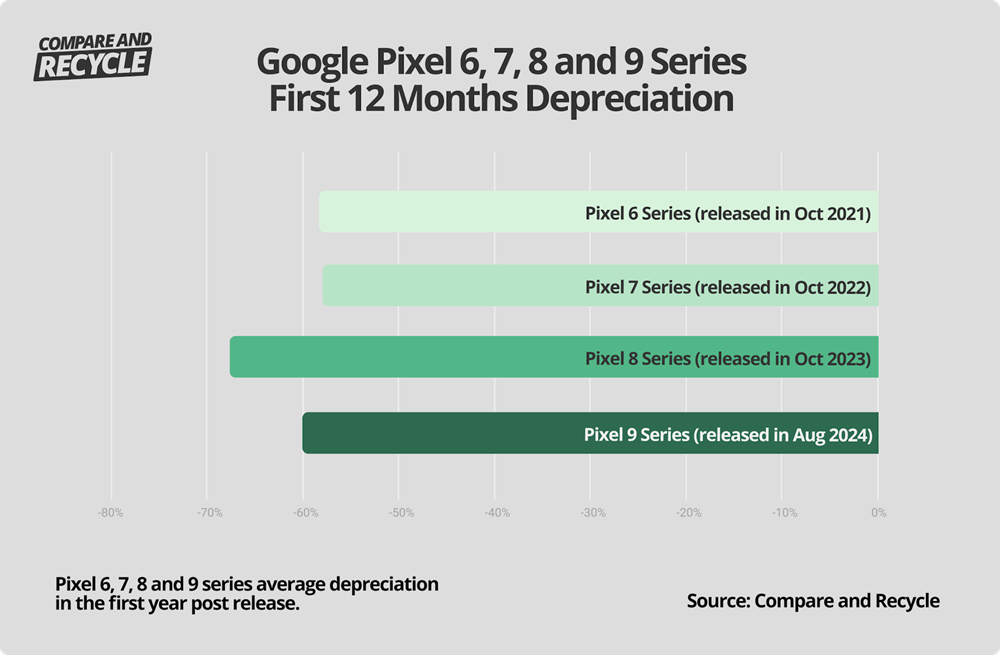
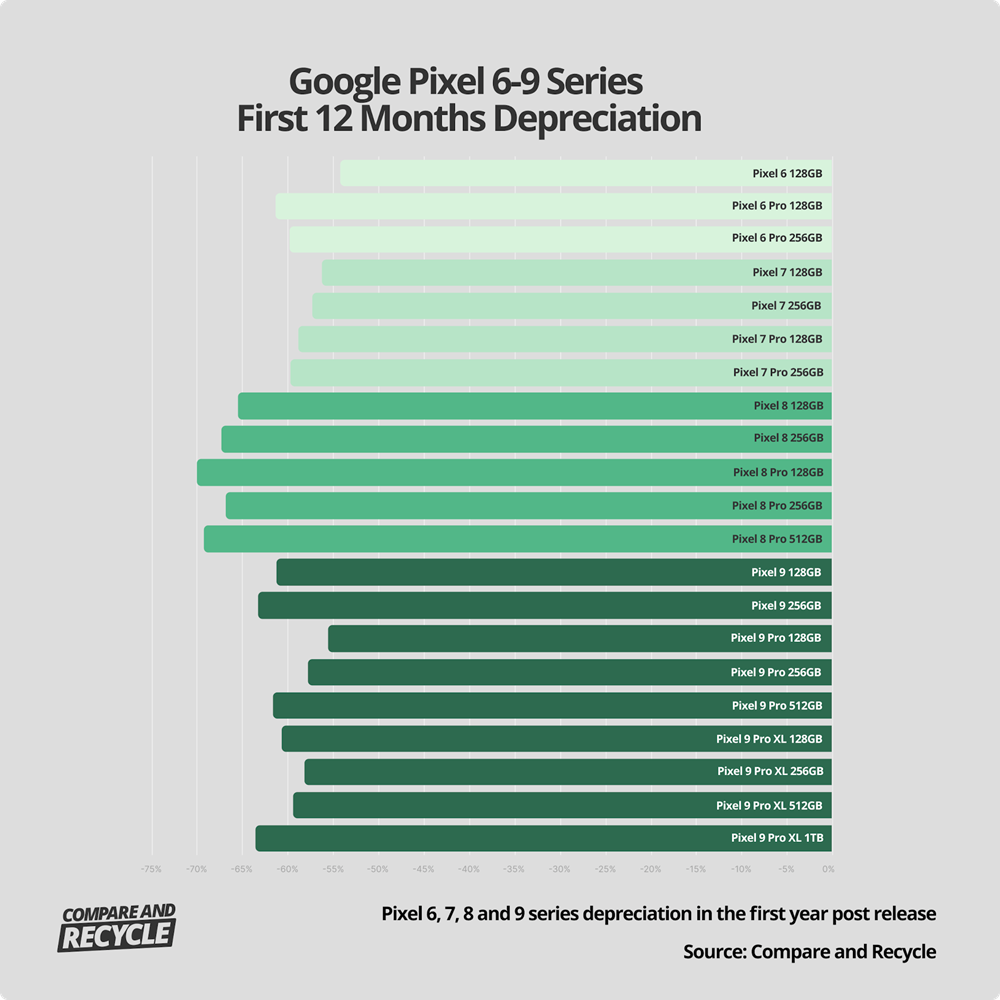
The single worst performer across four generations is the Pixel 8 Pro 128GB, which lost a staggering -69.96% of its value (nearly three-quarters!) in the first 12 months. The rest of the Pixel 8 line followed closely, with the average depreciation for the generation spiking to 67.7%.
This massive depreciation is highly counterintuitive. The Pixel 8 was the first generation to come with Google’s game-changing 7-year software update commitment. The report suggests the market, at the 12-month mark, simply does not yet value long-term software support as highly as other factors, such as the initial 14% higher retail price compared to its predecessor, the Pixel 7.
Pixel 9 shows a modest rebound, but not a full recovery
Contrast the Pixel 8’s tragic performance with the Pixel 7 generation, which the report crowns the “clear winner” for value retention, averaging a relatively modest 58% depreciation across the series. The reigning best value-retaining model is the Pixel 6 128GB, losing only -54.16% of its value in the first year. The Pixel 7 128GB was not far behind, maintaining the same RRP as the 6 and losing -56.20%.
The newer Pixel 9 series showed a positive trajectory following the Pixel 8’s stumble, averaging 60% depreciation—a notable improvement. However, this figure still didn’t manage to beat the benchmark set by the older Pixel 6 lineup. For those who opted for the high-end, the Pixel 9 Pro 128GB was a strong performer, becoming the first Pixel Pro model to retain over 45% of its original value (-55.54%).
Foldables and A-series models lose value even faster
The report didn’t spare the A-series or the Foldables, offering brutal news for consumers.
Despite the Pixel A-series being marketed as “good value,” they consistently outperform base flagship models in terms of depreciation. The budget Pixel 6a lost -62.97% of its value, nearly identical to the worst-performing flagship model, the Pixel 9 Pro XL. But by the far the worst performance came from thr Pixel 8a 256GB, which lost 67.44% of its original value in 12 months. The report’s takeaway is stark: what you save on purchasing an A-series device, you quickly lose to depreciation.
But the absolute financial disaster belongs to the Pixel Fold series. Both generations of Google’s foldables have seen their value completely tank in the first 12 months, easily setting a new record for the entire Pixel family.
The base Pixel Fold 256GB lost a staggering -79.42% of its value while the 512GB model took things a notch higher with -79.67%. The astronomical RRP coupled with a lack of market valuation means owning a Pixel Fold is equivalent to costing you £117 per month in lost trade-in value alone. The Pixel 9 Pro Fold, on the other hand, eased things a little bit with the base model losing 76.75% while the 512GB model lost 74.85% of its original value after just 12 months. This is still nothing to smile about, though.
Tips for upgraders? Go base and keep the Pro
For consumers bracing for the likely depreciation hit of the Pixel 10, the report offers crucial guidance:
- For value retention, go base: Annual or bi-annual upgraders should choose the lowest-RRP, lowest-capacity base model (e.g., Pixel 10 128GB). This choice minimizes the absolute cash loss while delivering the best percentage value retention.
- Pro models are for keepers: If you’re eyeing a Pro model like the Pixel 10 Pro, only purchase it if you plan to keep the device for 3+ years. The long-term keeper benefits the most from the guaranteed longevity, mitigating the massive initial depreciation hit.
- Avoid foldables: The data warns that buying any Google foldable at launch is a financial catastrophe if you plan to trade it in after one year.
For context, the report notes that Samsung’s Galaxy S series depreciates at a slower rate than Google’s flagships, a sign that despite Pixel’s growing popularity, the brand still struggles with long-term value perception.
If the trend continues, the Pixel 10 may face an uphill battle convincing upgraders, especially those burned by steep value drops in recent years. Compare and Recycle’s advice for buyers is clear: choose base models for better value retention, avoid foldables for now, and don’t overpay for extra storage.

Hillary Keverenge
2467 Posts
Tech has been my playground for over a decade. While the Android journey began early, it truly took flight with the revolutionary Lollipop update. Since then, it's been a parade of Android devices (with a sprinkle of iOS), culminating in a mostly happy marriage with Google's smart home ecosystem. Expect insightful articles and explorations of the ever-evolving world of Android and Google products coupled with occasional rants on the Nest smart home ecosystem.
Next article View Article