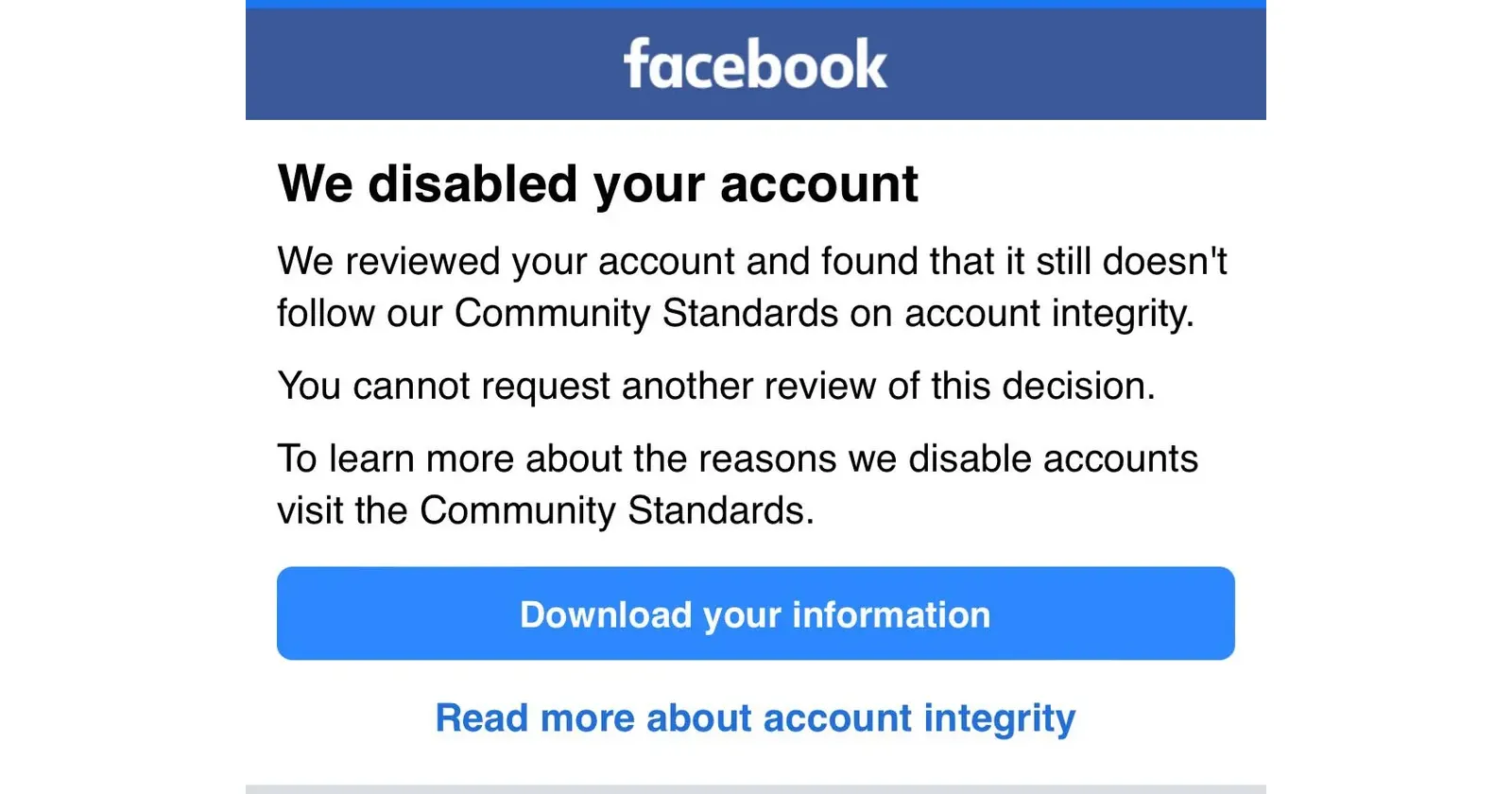
Waking up to find your Facebook account suspended can feel like a punch to the gut. Years of photos, conversations, and connections vanish in an instant, often with nothing more than a vague violation notice and no clear path forward. If you’re reading this because it happened to you, you’re far from alone in this mess.
For several months now, I’ve been tracking Meta’s ongoing ban wave through my reporting on our sister site Tech Issues Today. What started as scattered complaints has turned into thousands of users getting wrongfully suspended, often with little to no explanation. The pattern is consistent and frustrating: Meta’s automated systems flag accounts, people lose access, and the appeals process feels like shouting into a void.
Even the mainstream media caught on and highlighted the growing problem, but to this date, Meta hasn’t publicly apologized or seems to be doing anything to stop the mess.
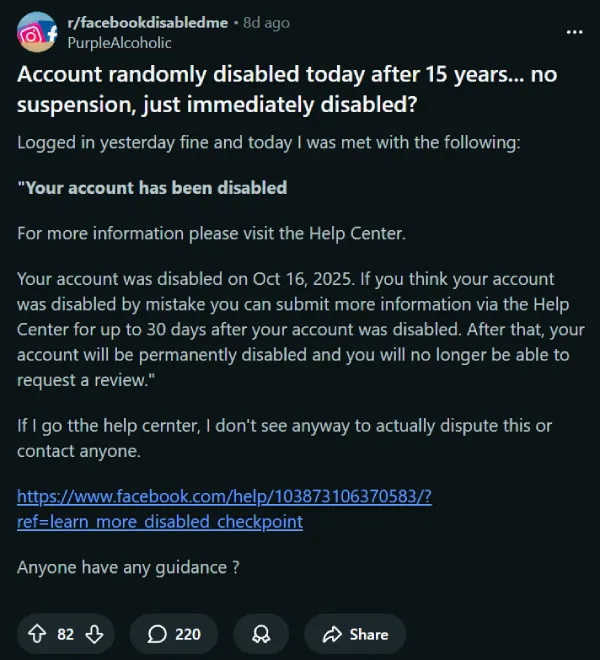
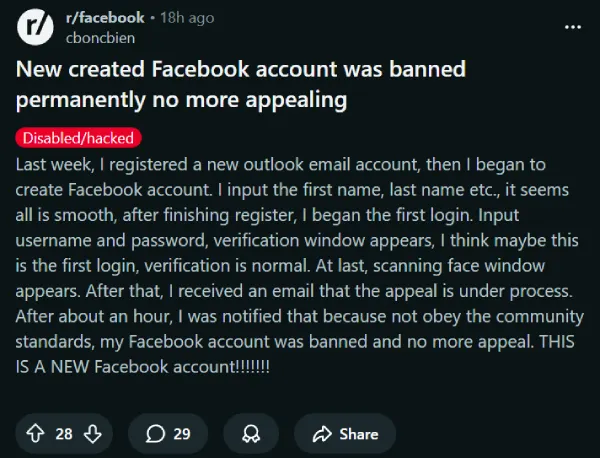
Account suspensions happen constantly, regardless of how you use the platform. Users report getting suspended out of nowhere, sometimes finding themselves shadowbanned even after creating fresh accounts. The age of your account doesn’t seem to matter either. Brand new profiles get disabled before users even finish setting them up, with people getting banned within minutes of joining just to access a class group.
On the flip side, accounts that have existed for nearly two decades aren’t safe either. An 18-year-old developer and marketing account got wiped, and longtime users are watching Meta destroy its own platform by randomly disabling 15-year-old accounts.
The finger keeps pointing back at Meta’s AI moderation system. Users describe being “zucked” by algorithms that nuke accounts without human oversight, with Meta’s “rogue AI” targeting people over harmless old posts. Our coverage at Tech Issues Today has documented just how widespread this problem is.
We’ve reported on 10 million Facebook profiles being removed during this ban wave, and Meta continues refusing to acknowledge the full scale of what’s happening. People have responded by taking action themselves: filing petitions, organizing for class action lawsuits, and even successfully pursuing legal action to get their accounts back. Even Meta’s own response to Facebook Groups bans and a state legislator getting suspended shows how out of control this situation has become.
Since account suspension cases keep piling up, it makes sense to compile a comprehensive recovery guide based on everything available. But before diving in, understand that appealing isn’t always an option. Sometimes Meta’s systems simply don’t provide an appeal pathway, especially for newer accounts that get flagged immediately.
Facebook offers different account recovery options depending on your situation. If your account has been suspended or deactivated for violating community standards, you typically have 180 days to file an appeal. This timeframe can vary by region, so don’t wait. If you miss that window or your appeal gets denied, the account becomes permanently disabled with no further review options. That’s it. Your decade of memories could vanish for good.
Start by checking your account status to see exactly what Meta is claiming you violated. Then cross-reference that against Meta’s Community Standards to understand what rules they think you broke. Often, these suspensions result from accounts getting locked for security reasons rather than content violations. Facebook provides steps for unlocking accounts when this happens, which includes explaining why your account might have been flagged in the first place.
ID verification becomes essential in many recovery attempts. Users have successfully recovered disabled accounts within days by properly verifying their identity, and Facebook’s official ID verification process walks you through what documents they accept. If you’ve lost access to your phone number or email, there’s a separate recovery path for that. Some people run into issues getting confirmation codes, while others find themselves dealing with limited access to their accounts.
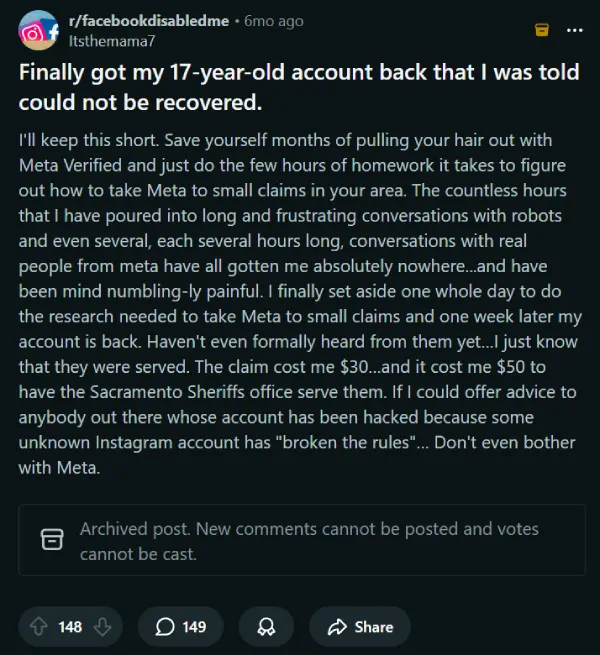
Meta Verified has become another recovery route, though it costs money. Multiple users report that Meta Verified actually works for getting reinstated after being disabled. People who were ready to give up found success with this paid service, including someone who recovered a 17-year-old account they’d lost for a year.
You can learn more about what Meta Verified offers and sign up through their official page.
If you’ve exhausted standard recovery options, legal routes have proven surprisingly effective. Some users successfully recovered hacked accounts by contacting their state attorney general, while others filed small claims court cases and got hearing dates. One person actually took Meta to small claims court and won, which shows this strategy can work when nothing else does.
Throughout this process, watch out for scammers who claim they can recover your account. They prey on desperate people who’ll pay anything to get their digital lives back. I’ve personally seen multiple comments from scammers under posts of users seeking help to get back their disabled accounts while actively following the situation. So stick to official channels and legitimate legal options. If your account got hacked rather than suspended, Facebook has a dedicated page for that situation.
One final warning: accounts can get banned again even after being successfully reinstated. Meta’s automated systems don’t always learn from their mistakes, so getting your account back doesn’t guarantee it stays back. Some people go through this nightmare multiple times.
The reality is that Meta’s moderation system has serious problems, and regular users are bearing the cost. Whether your account is hours old or pushing two decades, you could wake up tomorrow and find it gone. Having a recovery plan ready matters because the appeals process is far from perfect. Document everything, save important photos elsewhere, and know your options before you need them. This ban wave isn’t slowing down anytime soon.

Dwayne Cubbins
1858 Posts
My fascination with Android phones began the moment I got my hands on one. Since then, I've been on a journey to decode the ever-evolving tech landscape, fueled by a passion for both the "how" and the "why." Since 2018, I've been crafting content that empowers users and demystifies the tech world. From in-depth how-to guides that unlock your phone's potential to breaking news based on original research, I strive to make tech accessible and engaging.
Next article View Article