Update 15/10/25 – 01:05 pm (IST): GrapheneOS also provided additional clarification about their upcoming OEM partnership, addressing concerns about driver licensing and device requirements.
The team confirmed there won’t be licensing issues with the partnership, as this is an official collaboration where the OEM will provide official GrapheneOS support. According to GrapheneOS moderators on Reddit, they can likely obtain source code access to Snapdragon firmware and userspace components, though this isn’t a hard requirement for the initial device launch. The source access would enable additional security hardening in future updates.
Regarding Play Integrity API compatibility, GrapheneOS clarified that device and strong integrity levels aren’t actual security checks. The OEM partnership won’t change Google’s stance on permitting non-Google Mobile Services operating systems to pass these integrity checks, as GrapheneOS doesn’t license or integrate GMS with privileged access.
The team also noted that future support will likely remain focused on flagship models due to required security features and support costs involved.
Update 14/10/25 – 03:10 pm (IST): The GrapheneOS team has ruled out Fairphone as a possible OEM to which it will extend support. Responding to a query on Bluesky about the potential extension of GrapheneOS to Fairphone devices, the team said:
No, those aren’t not secure devices meeting our requirements. Fairphone lags far behind on support for current Android versions and providing important privacy/security patches for drivers/firmware. Important hardware-based security features are also missing.
They followed up with an example, noting:
Pixel 6 and Fairphone 4 were both released in October 2021. Pixel 6 launched with Android 12 and received each monthly, quarterly and yearly release. It has Android 16 QPR1 and moved to Linux 6.1. Fairphone 4 is on the initial yearly release of Android 13, which is end-of-life soon. Pixel 6 launched with the Linux 5.10 LTS branch and then moved to the Linux 6.1 LTS branch. Pixel 8 and later have 7 years of support from launch so they’ll update to new kernel branches multiple times rather than once. Pixel 8 went from 5.15 to 6.1 but will need to move to newer kernels.
So well, there goes one OEM plenty of people assumed would be the “major OEM” the team was going to partner with.
Original article published on October 13, 2025, follows:
GrapheneOS, the privacy-focused Android operating system that has spent years exclusively supporting Google Pixel devices, might finally be breaking free from its Google hardware dependency. The project recently confirmed it has been working with a major Android manufacturer since June 2025, with plans to support at least one of their next-generation devices.
The announcement came through a series of social media responses where GrapheneOS addressed longtime criticism about only working on Pixel phones. When users questioned this limitation, the project clarified that Pixels currently remain the sole devices offering the necessary security updates and hardware-based security features they require. However, that exclusivity window appears to be closing.
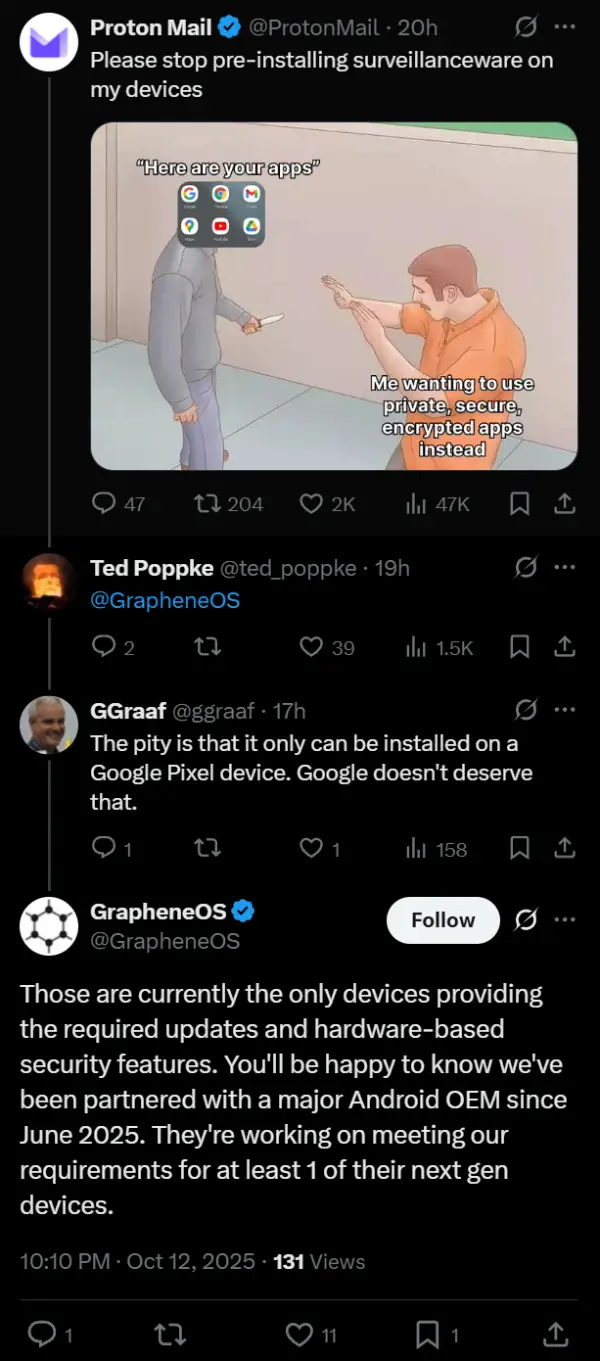
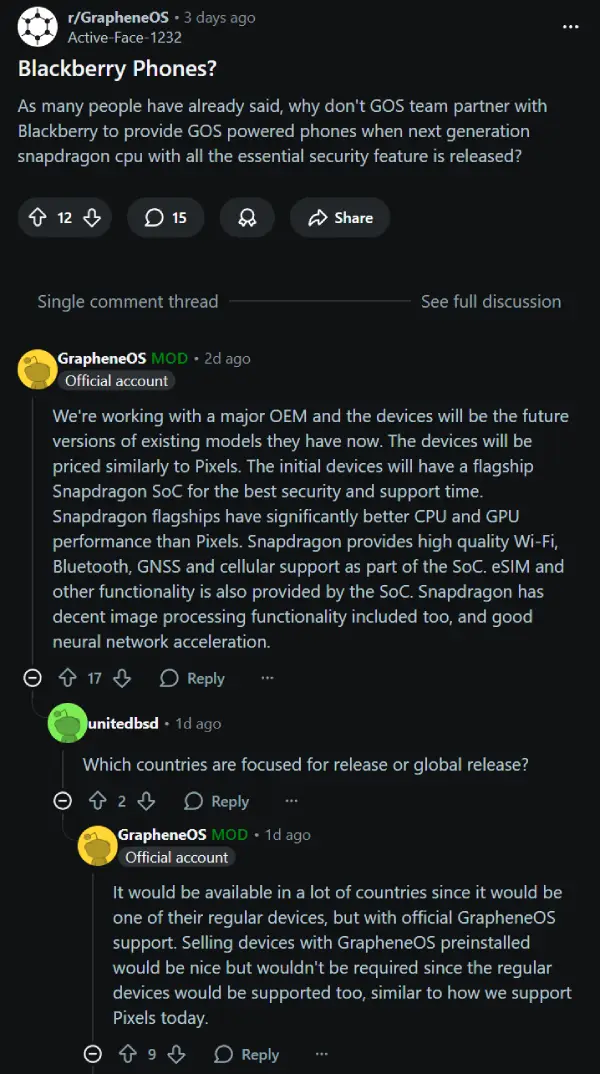
According to details shared on Reddit, the partnered manufacturer will offer GrapheneOS support on future versions of their existing models, priced similarly to Pixels. These initial devices will feature flagship Snapdragon processors, which GrapheneOS notes provide significantly better CPU and GPU performance compared to Google’s Tensor chips. The Snapdragon platform also bundles high-quality wireless connectivity, eSIM support, and decent image processing capabilities directly into the system-on-chip.
GrapheneOS has maintained strict hardware requirements that go beyond simple bootloader unlocking, which explains why brands like OnePlus haven’t made the cut despite offering unlockable devices. The project prioritizes security and privacy over broad device compatibility, refusing to compromise these principles for wider hardware support.
The new partnership devices should be available in numerous countries since they’ll be part of the manufacturer’s regular lineup with official GrapheneOS support. While selling phones with GrapheneOS preinstalled would be ideal, the project confirmed it wouldn’t be mandatory since users could install it themselves on supported devices, similar to the current Pixel arrangement.
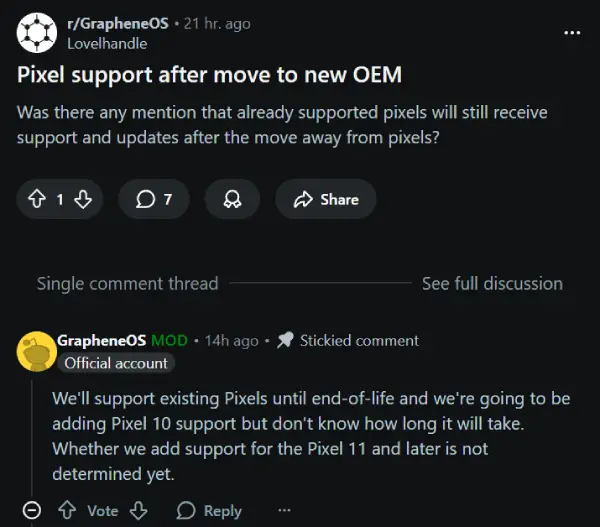
For existing Pixel users, GrapheneOS plans to maintain support for current devices until their end-of-life dates. The team is working on adding Pixel 10 support, though the timeline remains unclear. Whether they’ll support Pixel 11 and beyond hasn’t been decided yet.
This isn’t surprising given GrapheneOS’s recent criticism of Google’s security patch handling. The project has been vocal about Google extending early patch access to manufacturers from one month to four months, which potentially exposes vulnerabilities to bad actors for longer periods. Having secured early patch access through their OEM partner helps GrapheneOS work around some of these delays.
The partnership represents a turning point for GrapheneOS, potentially opening the door to users who want robust privacy protections without committing to Google hardware. Whether the first supported device launches in 2026 or slips to 2027 remains uncertain, but the groundwork is clearly being laid for GrapheneOS to part ways with Pixel phones.
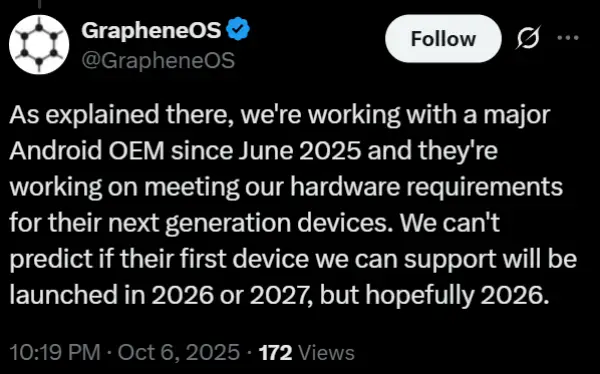
I, for one, can’t wait to know which “major Android OEM” the team is partnering with to break away from Google Pixel exclusivity. Which Android OEM’s hardware do you think is the best candidate for GrapheneOS privacy-focused software? Share your thoughts in the comments below.

Dwayne Cubbins
1853 Posts
My fascination with Android phones began the moment I got my hands on one. Since then, I've been on a journey to decode the ever-evolving tech landscape, fueled by a passion for both the "how" and the "why." Since 2018, I've been crafting content that empowers users and demystifies the tech world. From in-depth how-to guides that unlock your phone's potential to breaking news based on original research, I strive to make tech accessible and engaging.
Next article View Article