A wider clampdown on third‑party YouTube clients appears to be taking shape, with fresh token checks and other integrity hurdles now surfacing in ways that are already tripping up popular tools. And of course, users and developers are worried about how this will affect them.
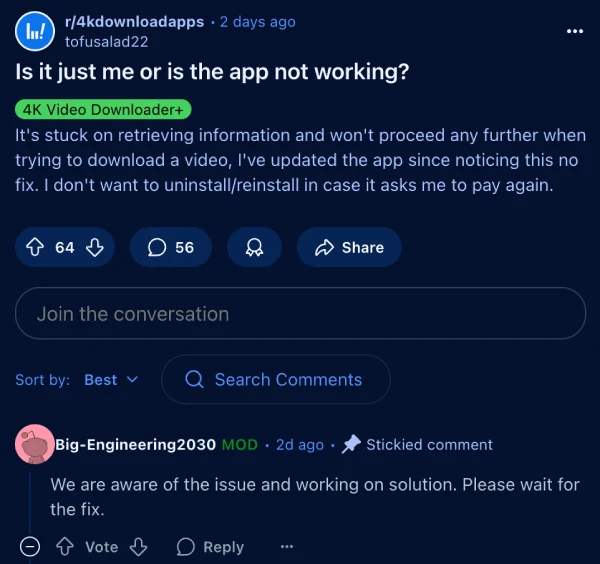
If you’ve tried using a YouTube downloader recently, you might have noticed it getting stuck on “retrieving information” when you paste a link. Many people have been complaining about the problem on Reddit in the past couple of days, with still no fix in sight for the most part. But what looks like a random outage is lining up with a bigger shift behind the scenes on YouTube’s side, where the technical bar to act like a “real” client is getting higher.
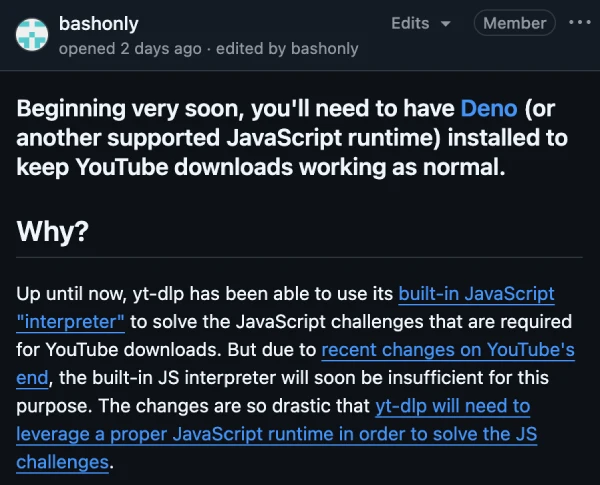
The people behind yt-dlp, which is the backbone technology that many YouTube downloaders rely on, just announced some major changes coming. Soon, these tools will need to run a full JavaScript engine like Deno just to keep working. This is a big shift from the simpler methods they used before, which are no longer reliable enough to get around YouTube’s new defenses.
The main culprit here is something called a “proof-of-origin” token – basically, YouTube now requires apps to prove they’re legitimate before they can access videos. YouTube is rolling this out gradually, starting with certain types of streams and subtitles, but it’s expected to expand everywhere eventually.
Without these tokens, apps get blocked with error messages or might even get their IP addresses temporarily banned. The yt‑dlp maintainers add that a few formats like web_safari HLS may continue to work without the token for now, though this is framed as a temporary reprieve rather than a stable path forward.
That said, some developers, like those of 4K Video Downloader, have already confirmed they are working to fix the problem users are facing when trying to download videos.
It seems this could become yet another cat-and-mouse game, like with ad blockers, where YouTube makes backend changes to break unofficial clients until the developers manage to figure out another way to get around the blocks.
In short, token checks are arriving in earnest, and with them, a tougher road for third‑party YouTube clients that want to keep things running smoothly without the official app


Dwayne Cubbins
2924 Posts
I cover fast-moving stories across apps, online platforms, and everyday tech — phones, wearables, consoles, and whatever else people are fighting with this week. Bugs, rollouts, scams, policy enforcement, and the occasional internet-culture rabbit hole are all fair game. My goal is simple — make confusing tech news readable. When I'm not working, I'm working out or chilling with my dog. Got a tip? You can find me on X @dcubbins.
Next article View Article