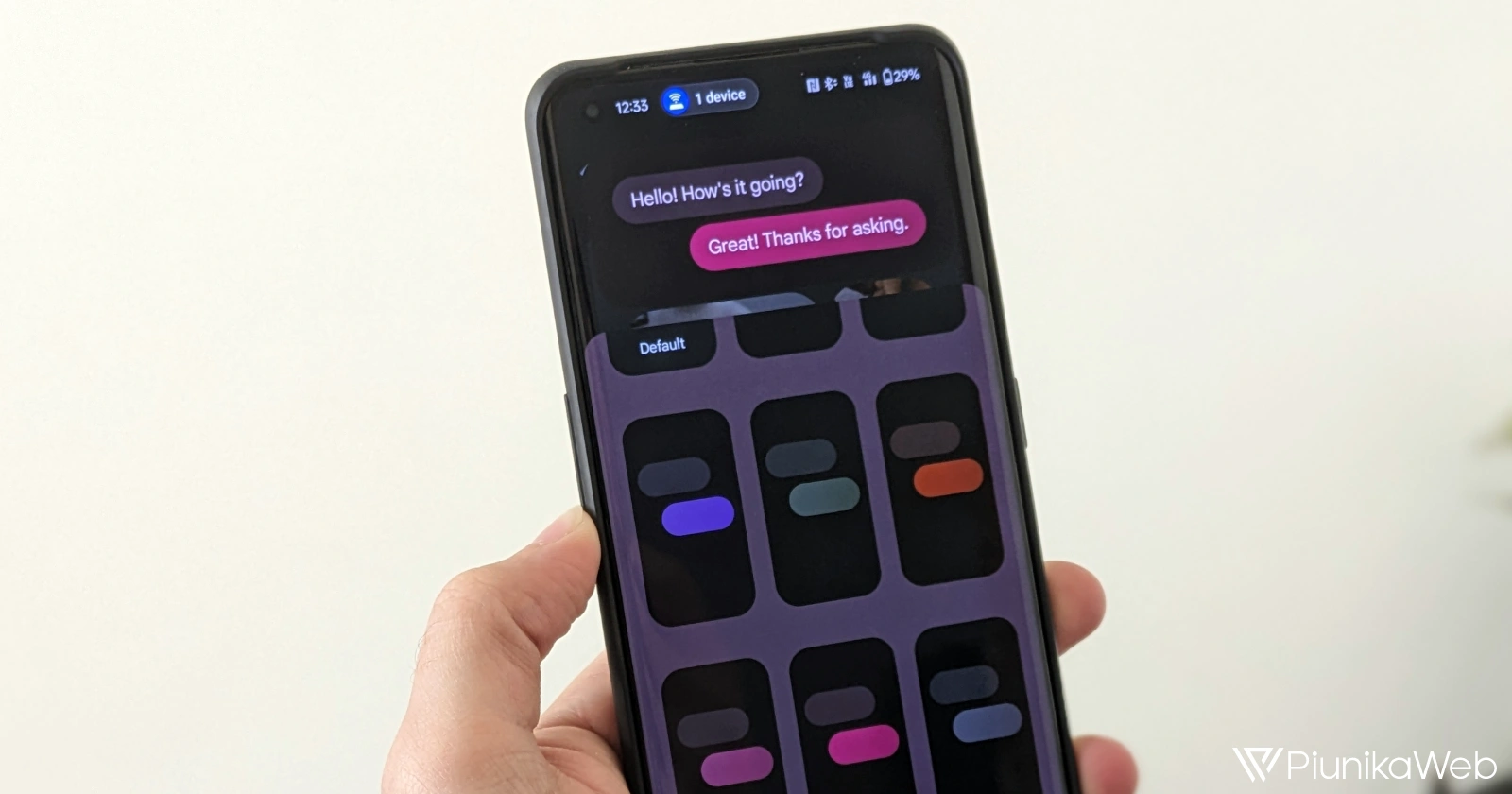
If your Android messages have felt a bit broken lately, you’re not imagining things. For many users, RCS has been unreliable or has stopped working entirely. The situation has been a source of growing frustration, and now the team behind the privacy-focused GrapheneOS has jumped into the fray, pointing fingers directly at Google and mobile carriers for the mess.
This isn’t a sudden overnight problem. In fact, we highlighted the beginnings of this issue about a month ago when reports first started trickling in from users who found their “chat features” mysteriously disabled. Since then, other media outlets have also picked up on the trend, with widespread outages reported in countries like Kenya, Pakistan, and Bangladesh since early August, leaving users without a clear explanation.
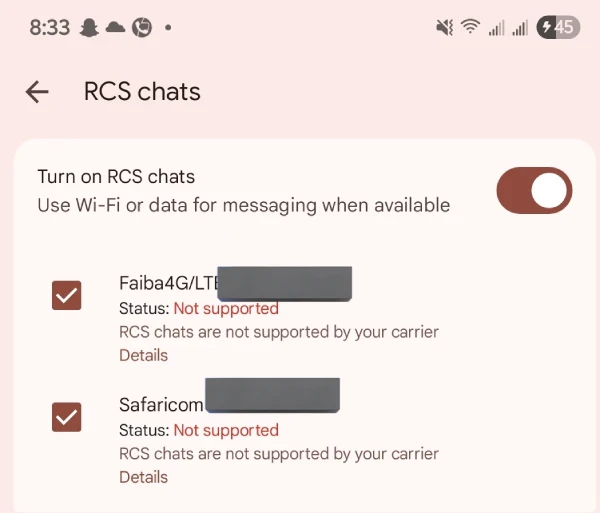
Here’s an example of what people see when trying to turn on RCS:
Now, a new statement from the GrapheneOS project sheds more light on what’s going on. In a post on X, the team stated, “Google and carriers deployed changes to RCS which have been breaking it for many users on the stock OS including with certain carriers and in whole countries.”
They were quick to clarify that the issue isn’t related to their own software updates, but rather to server-side changes pushed by the very companies responsible for the messaging protocol.
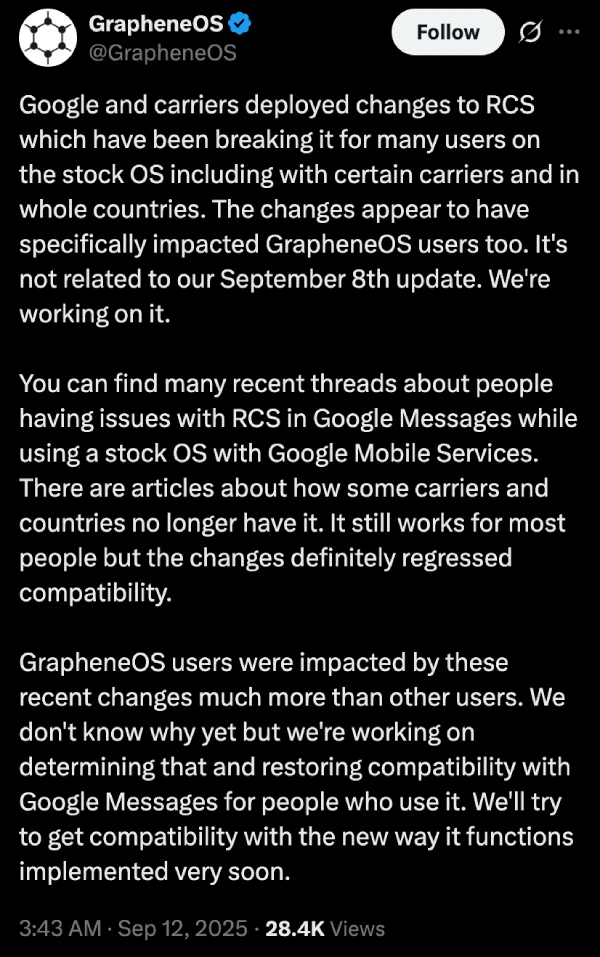
Interestingly, the GrapheneOS team notes that their user base seems to be more heavily impacted than the general Android population, a mystery they are currently investigating. However, they stress that this is not exclusively a custom ROM problem, with many on standard Pixel phones also reporting bizarre behavior with their messages. This aligns with the earlier reports from August, where users on various devices and networks found themselves suddenly cut off.
The underlying reason for the disruption appears to be a shift in how RCS is being delivered. Previously, Google’s Jibe service helped provide RCS in regions where carriers hadn’t built their own infrastructure. The prevailing theory is that Google may be pulling back its Jibe support in some areas, forcing carriers to either implement RCS themselves or let it fail.
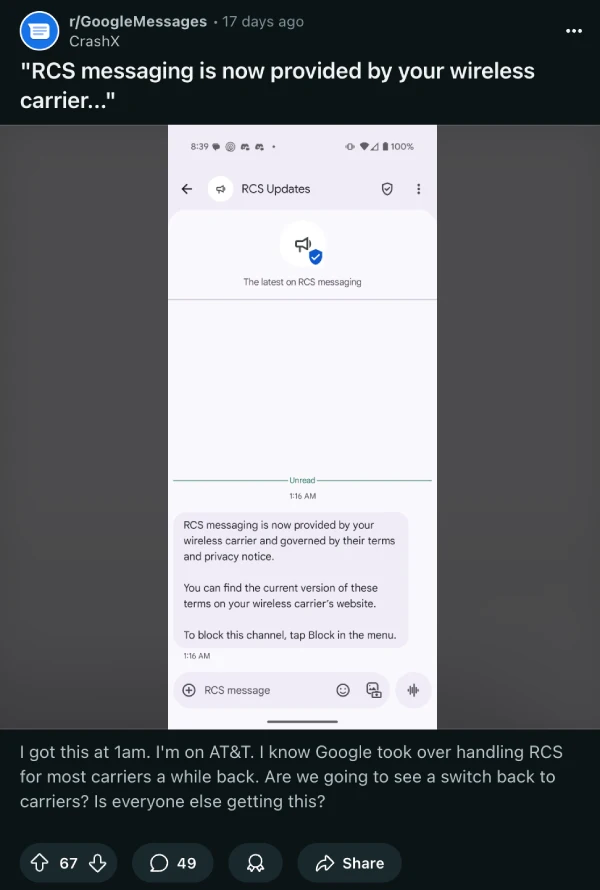
For users, the result is the same: a downgraded messaging experience. The GrapheneOS team is actively working to restore compatibility, but the situation highlights the fragile and complex nature of the RCS rollout, which stands in stark contrast to more centralized services like iMessage or WhatsApp.
If this is how Google keeps handling RCS, I feel there’s no way the feature is going to replace iMessage, WhatsApp or other dedicated messaging apps.


Dwayne Cubbins
3036 Posts
I cover fast-moving stories across apps, online platforms, and everyday tech — phones, wearables, consoles, and whatever else people are fighting with this week. Bugs, rollouts, scams, policy enforcement, and the occasional internet-culture rabbit hole are all fair game. My goal is simple — make confusing tech news readable. When I'm not working, I'm working out or chilling with my dog. Got a tip? You can find me on X @dcubbins.
Next article View Article