
In what can only be described as a shocking admission, Google has told a federal court that “the open web is already in rapid decline.” This statement came buried in a 25-page legal filing as the tech giant fights to avoid breaking up its advertising business.
Let me be clear about what’s happening here. The company that essentially built the modern web’s infrastructure is now arguing that same web is dying — and they’re using this claim to defend against antitrust action.
The statement appeared in Google’s memorandum opposing the government’s request to force divestiture of its AdX and DFP advertising tools. According to the filing, only 11% of display advertising impressions purchased by AdWords advertisers were for open-web display in January 2025, down from over 40% in January 2019.
Jason Kint highlighted this revelation, noting it’s “pretty rich” considering Google has dominated the distribution, design, and monetization of the open web for years. I couldn’t agree more. It’s like an oil company claiming climate change is natural while ignoring their own emissions.
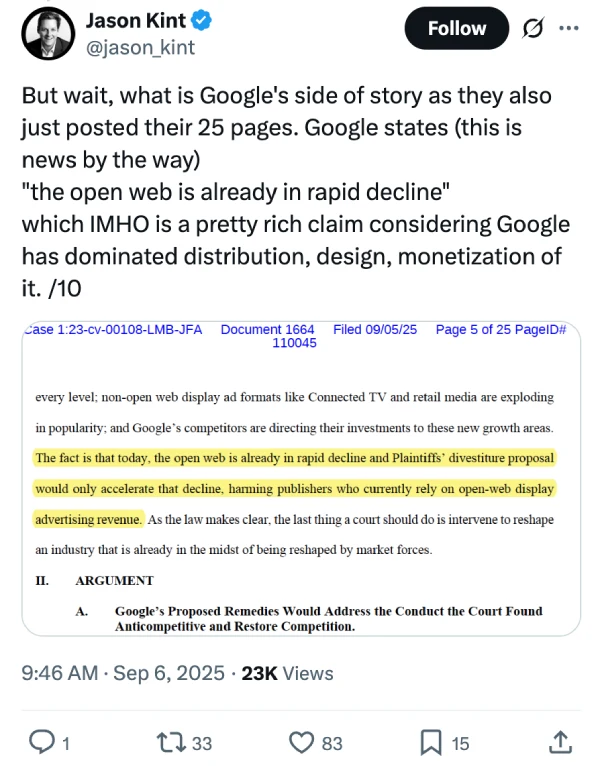
Google argues that forcing them to divest their advertising tools would accelerate this decline and harm publishers who currently rely on open-web display advertising revenue. They claim the market is already being reshaped by AI and Connected TV advertising, making their proposed remedy counterproductive.
Here’s where things get really interesting. Just last weekend, I covered how Google is preparing to make AI mode the default in Search, which would fundamentally change how users interact with web content. Now they’re telling a court the open web is dying naturally.
Hmm! Interesting, isn’t it?
But here’s what bothers me, and many others, about Google’s argument. For many years, they’ve controlled how publishers monetize content and how advertisers reach audiences. Basically, they’ve made almost everyone dependent on their platform and services. Now they’re claiming the decline is inevitable and their monopolistic practices aren’t to blame.
The court filing reveals Google’s proposed alternative remedies, including breaking ties between their AdX exchange and DFP publisher tools. They argue these behavioral changes would restore competition without the “radical” step of divestiture.
What happens next will likely shape how we access information online for years to come. Google’s lawyers are clearly playing defense, but their admission about the web’s decline feels like they’re already taking the necessary steps to avoid the blame once things actually take a turn when their AI takes over.
I can’t help but think this whole situation shows just how much power one company has accumulated over the basic infrastructure of the internet. That’s the real story here.
For those interested, you can read the whole memorandum in the embed below or by heading here.

Dwayne Cubbins
1853 Posts
My fascination with Android phones began the moment I got my hands on one. Since then, I've been on a journey to decode the ever-evolving tech landscape, fueled by a passion for both the "how" and the "why." Since 2018, I've been crafting content that empowers users and demystifies the tech world. From in-depth how-to guides that unlock your phone's potential to breaking news based on original research, I strive to make tech accessible and engaging.
Next article View Article