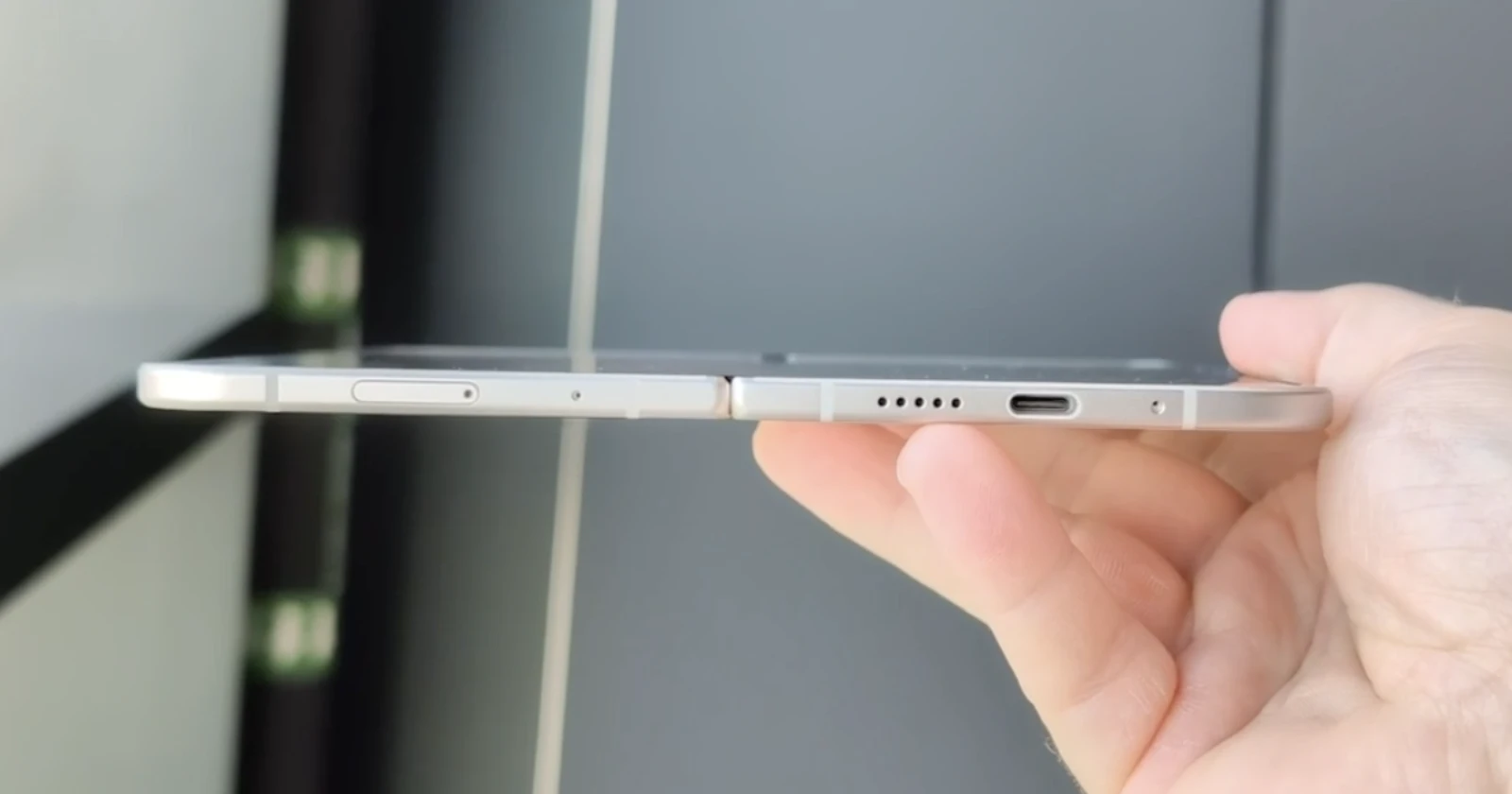
In a fresh blog post, Google has coughed up some interesting details on how it managed to make the new Pixel 9 Pro Fold thinner. This is one aspect of Google’s latest foldable that has got many tech enthusiasts and fans excited about the device. When unfolded, the phone is thinner than any mainstream candy bar style phone, around at 5.1 mm in thickness. But even when it’s folded, the Pixel 9 Pro Fold is just 10.5 mm thick, compared to the Galaxy Z Fold 6 and OG Pixel Fold, both of which are 12.1 mm thick when folded. Plus, it’s just 2 mm thicker than the Pixel 9 Pro XL too, which is pretty respectable for a foldable phone.
Google’s team had their work cut out for them when designing the Pixel 9 Pro Fold. They knew they needed to go thinner, but weren’t sure how much or what it would take to get there. George Hwang, a Pixel product manager, admitted, “We knew when we made the second one, it had to be thinner. But we didn’t know how much thinner, and we didn’t know what we’d have to do to get there.”
The design process started with a crucial insight: people were often using the original Pixel Fold while closed. This led to a “phone first” approach, aiming to create a foldable that felt and acted primarily like a regular smartphone. Claude Zellweger, director of industrial design, explained, “You have to make a great phone, and then you can make a great foldable.”
To achieve this, the team focused on several key areas. The aspect ratio of the main display was adjusted to 20:9, matching the Pixel 9 Pro. They also implemented premium finishes and smaller bezels to mimic the look and feel of the latest Pixel phones.
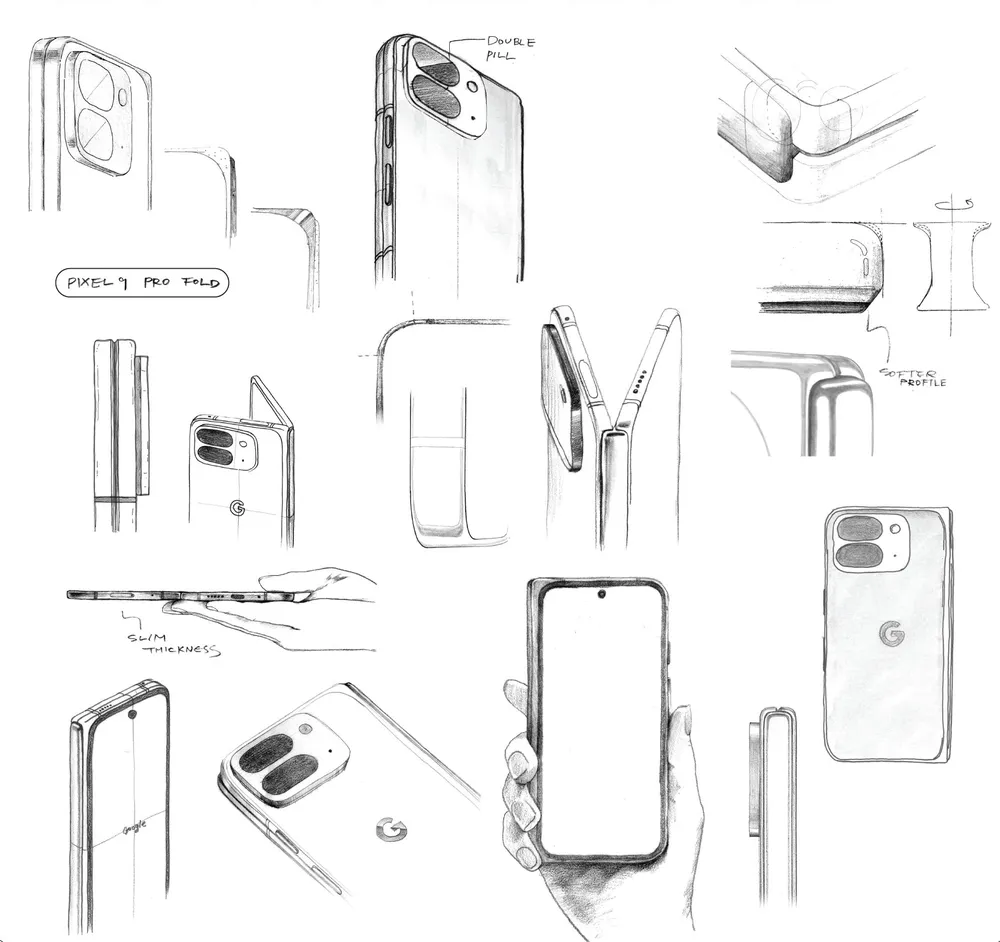
But the real challenge was creating a thinner device without sacrificing functionality. This meant completely redesigning the hinge, a crucial component of any foldable. The new hinge, made from multi-alloy steel and high-strength aluminum, not only snaps shut but also opens fully flat with a satisfying click. It’s more durable than its predecessor while maintaining the pleasant feel that users loved in the original Pixel Fold.
The camera system also underwent a major overhaul. Despite the thinner profile, Google managed to upgrade the ultrawide camera and both selfie cameras. Jon Prowse, another Pixel product manager, noted, “We chose to completely redesign the camera bar and include customized optical modules.” This allowed them to maintain Pixel’s reputation for excellent camera quality while working within tighter space constraints.
Interestingly, many small tweaks added up to make a big difference. The team implemented a custom, thinner haptics driver that actually improved the feel of vibrations. They used a smaller USB-C port and redesigned the speakers. Even the thermal management system was re-engineered with a new vapor chamber and graphite thermal spreader to overcome the challenges of cooling a thinner device.
All these changes culminated in a device that’s not just thinner, but also more capable. The Pixel 9 Pro Fold boasts pro-level camera features like Video Boost and Pro Controls, making it arguably the best camera on a foldable phone to date. For those interested in checking out the device’s camera capabilities, you can watch this video:
As Prowse summed up, “It takes a lot of incremental change to result in this big change.” Or in this case, this thin change. Google’s detailed breakdown of the design process shows just how much thought and engineering goes into creating a cutting-edge foldable phone that doesn’t compromise on features or usability. Given the massive leap in hardware design from the OG Pixel Fold, I’m excited to see how Google takes on Samsung, Vivo, and Huawei in the foldable smartphone space in the next few years.

Dwayne Cubbins
1856 Posts
My fascination with Android phones began the moment I got my hands on one. Since then, I've been on a journey to decode the ever-evolving tech landscape, fueled by a passion for both the "how" and the "why." Since 2018, I've been crafting content that empowers users and demystifies the tech world. From in-depth how-to guides that unlock your phone's potential to breaking news based on original research, I strive to make tech accessible and engaging.
Next article View Article