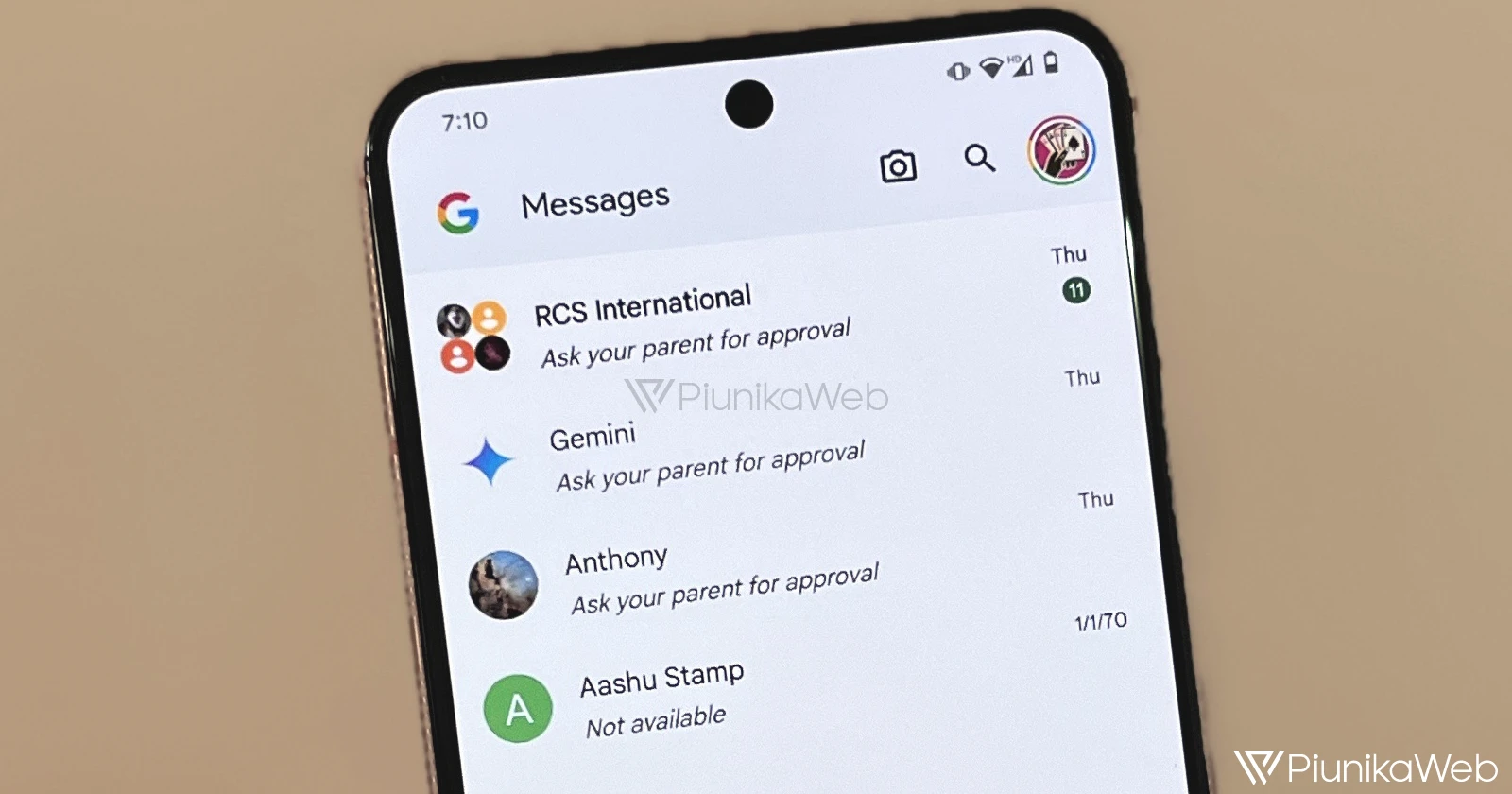
Google appears to be working on a significant update to its Messages app that will give parents much tighter control over their children’s messaging activities. This upcoming feature, uncovered by the diligent code explorer AssembleDebug and shared with PiunikaWeb, introduces strict parental oversight capabilities within the Google Messages app. The tipster notes that the function has been in development for a while now, but they managed to activate it with flags on version 20240416_00_RC01 of the app.
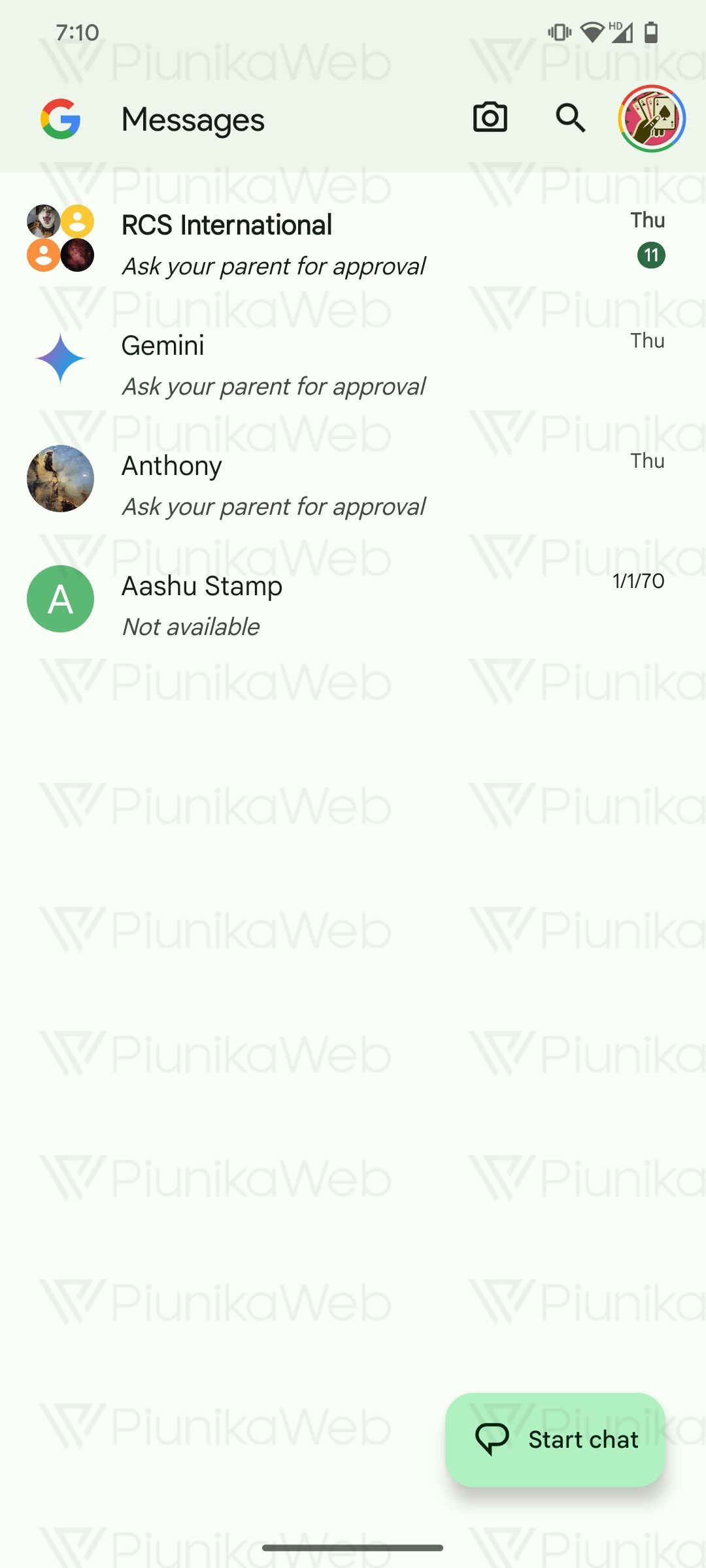
We have two screenshots that offer a glimpse into how these new parental controls will function. In the main conversation list view, certain conversations are marked with a telling message: “Ask your parent for approval.” This simple line indicates that the child or teen will be unable to send or receive messages within that particular conversation thread unless explicit approval is granted by their parent or guardian.
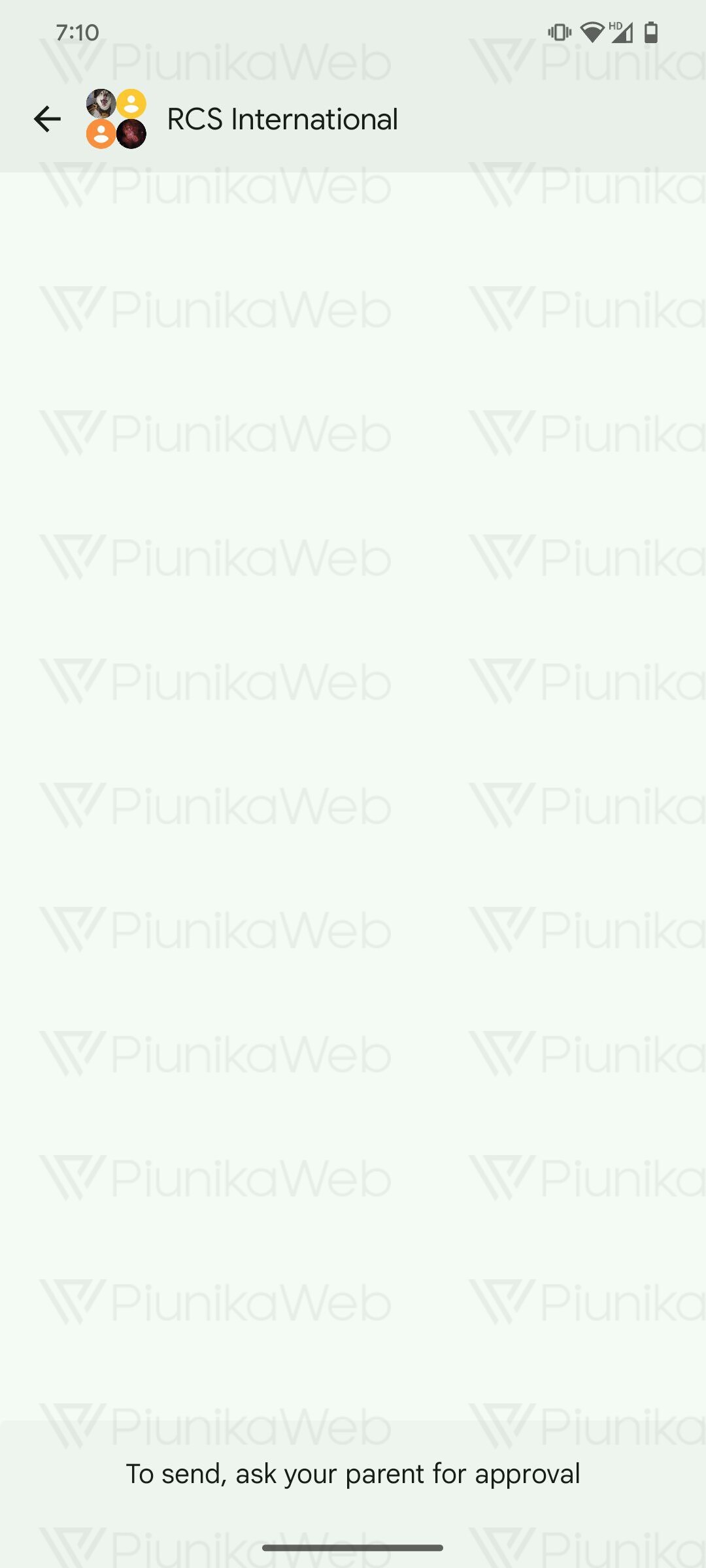
Diving deeper into one of these restricted conversation views reveals an even clearer message: “To send, ask your parent for approval.” This unambiguous statement reinforces the new approval requirement, ensuring that no messages can be sent or received without parental consent being provided first.
Importantly, these parental control measures seem to apply universally across both RCS (Rich Communication Services) and traditional SMS/MMS messaging within the Google Messages app. No messaging protocol is exempt from the new oversight capabilities being developed.
We presume this new feature will be managed by the Family Link app or web interface where parents can granularly manage permissions and approvals for their children’s conversations and contacts within Google Messages.
The potential implications of this update are significant. Parents may finally have the ability to approve, restrict, or even completely block their children’s messaging activities on a per-contact or per-conversation basis. No more messaging “blind spots” – every interaction could potentially be subject to parental review and consent.
Of course, such tight controls over private communications will likely reignite debates around balanced privacy rights and appropriate monitoring levels for children. But in an era of rising online risks, from cyberbullying to exploitation, many parents will undoubtedly welcome these enhanced safeguarding capabilities.
As the development of this parental control feature within Google Messages continues, more specifics around its implementation, settings, and parental interfaces will surely emerge. So stay tuned to PiunikaWeb for more details.


Dwayne Cubbins
3105 Posts
I cover fast-moving stories across apps, online platforms, and everyday tech — phones, wearables, consoles, and whatever else people are fighting with this week. Bugs, rollouts, scams, policy enforcement, and the occasional internet-culture rabbit hole are all fair game. My goal is simple — make confusing tech news readable. When I'm not working, I'm working out or chilling with my dog. Got a tip? You can find me on X @dcubbins.
Next article View Article