





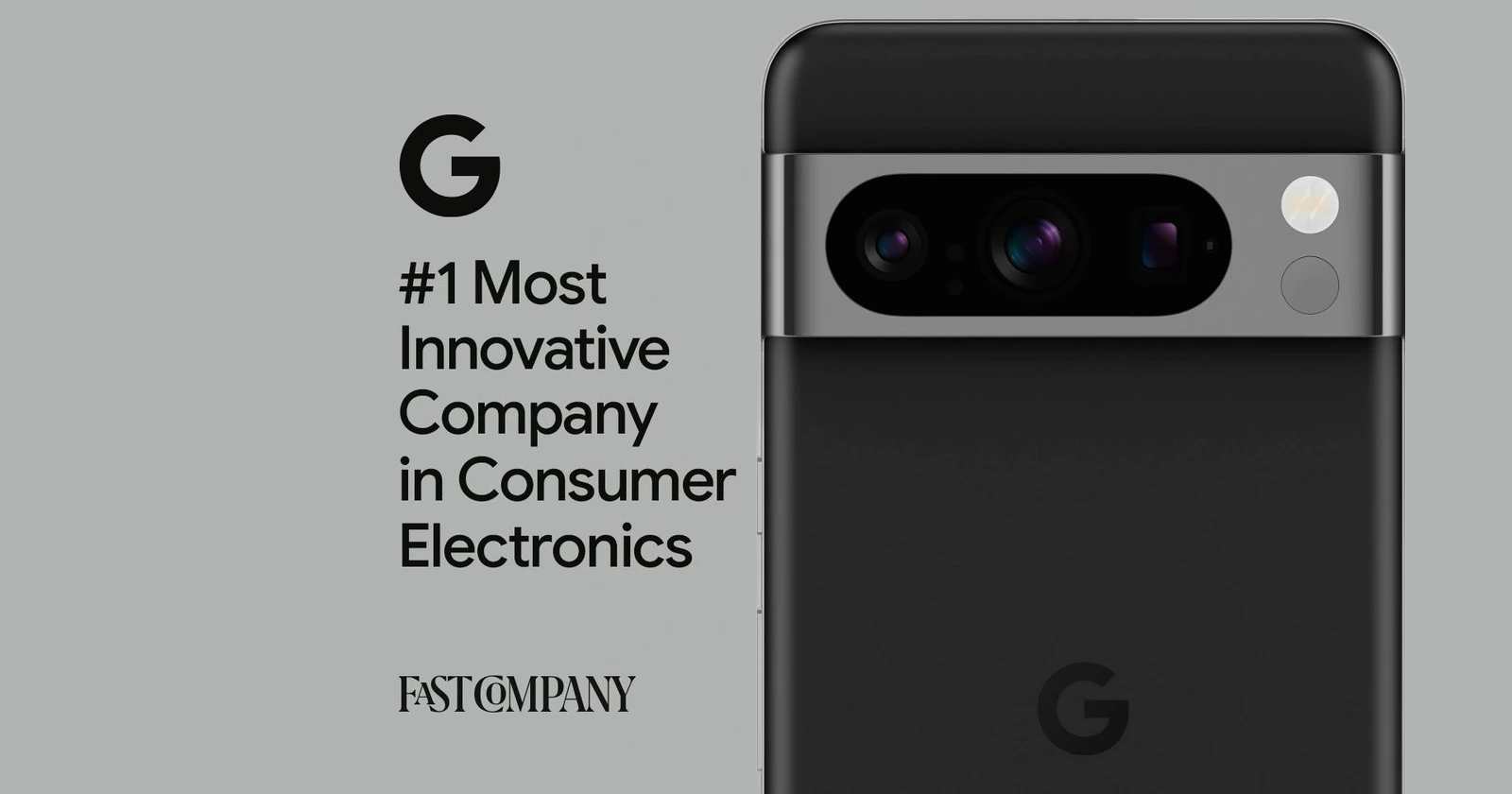
Honored to be named 2024’s Most Innovative Company in consumer electronics by @FastCompany for pushing smartphones into the generative AI age! 🎉
— Made by Google (@madebygoogle) March 25, 2024
We’re proud to continue delivering helpful experiences for our users through AI-powered devices like #Pixel8 and Pixel 8 Pro. pic.twitter.com/lYPVQ3Akxm
Google has done it again! A few weeks ago, the Pixel 8 series bagged the best smartphone of 2023 award at MWC. Now, Fast Company has crowned the tech giant 2024’s Most Innovative Company in consumer electronics, and the star of the show is undoubtedly the groundbreaking Pixel 8 series. Google took to social media to share their excitement, celebrating their AI-powered smartphones as a catalyst for pushing the industry into the generative AI age.
Fast Company’s justification for the award highlights Google’s trailblazing advancements in AI-powered devices. The Pixel 8 and 8 Pro burst onto the scene in October 2023 with features that seemed straight out of science fiction.
Magic Editor: This feature lets users manipulate photos even after they’re taken. Move or resize objects, and powerful AI seamlessly fills in the background in a way that would make even Photoshop experts jealous.
Best Take: Say goodbye to imperfect group photos. Best Take creates stunning composite images, letting you choose the best expressions from multiple shots.
Generative AI Zoom: This particular feature was promised by the end of the year in 2023, but we’ve still not seen any signs of Zoom Enhance. So while the folks over at Fast Company highlighted this is an exciting upcoming feature, I’m sure most Pixel users probably forgot about it already.
“Pixel is the ultimate vessel for Google’s cutting-edge AI,” says Alexander Schiffhauer, head of Pixel’s AI initiatives. Google’s dedication to collaboration across its hardware, AI, and product teams has been instrumental in making these advancements possible.
Google’s AI ambitions don’t stop at stunning photography. The Pixel 8 Pro’s Recorder app now summarizes audio recordings for easy digestion. The company’s even testing generative AI in chat apps like WhatsApp, suggesting contextually relevant replies. Powered by a streamlined version of Google’s Gemini language model running on the Tensor G3 chip, these features are executed seamlessly within the device itself. One must, however, note that these on-device AI features are powered by Gemini Nano, which isn’t coming to the standard Pixel 8.
Schiffhauer hints that this is just the start for Google’s vision: “AI will break us out of our current computing limitations, and Pixel will be where this future becomes real.”
Google’s unwavering commitment to innovation, particularly its bold embrace of AI in consumer devices, justifies Fast Company’s decision. As AI continues to evolve, we can expect Google and its Pixel line to remain at the forefront, reshaping how we interact with technology. I’m excited to see what crazy new AI features Google brings to the table with its upcoming Pixel 9 series.

We stand out from the tech-media crowd because we break news stories; we mainly bring you stuff that you won’t find anywhere in the mainstream tech media. Our stories have been picked up by some of the world’s most popular websites and media outlets—more info is available here.

Dwayne Cubbins
3101 Posts
I cover fast-moving stories across apps, online platforms, and everyday tech — phones, wearables, consoles, and whatever else people are fighting with this week. Bugs, rollouts, scams, policy enforcement, and the occasional internet-culture rabbit hole are all fair game. My goal is simple — make confusing tech news readable. When I'm not working, I'm working out or chilling with my dog. Got a tip? You can find me on X @dcubbins.
Next article View Article

[U: It's finally here] Fitbit app still missing dark mode support, but you can enable it on Android using this workaround
Update 21/08/25 - 5:55 pm (IST): After making users wait a long time, Google has finally introduced native dark mode support on the Fitbit app. This new eye...
Aug 21, 2025 4 Min Read